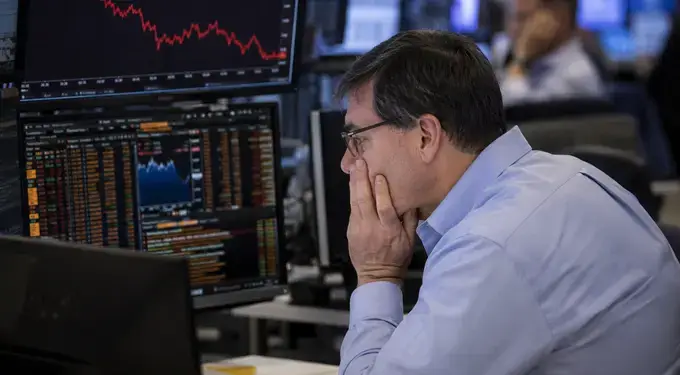
US stocks opened lower on Thursday as US oil prices climbed above $100 a barrel and stronger-than-expected annual producer inflation increased concerns about interest rates.
The Dow Jones Industrial Average fell 153 points while the S&P 500 declined 0.56%. The Nasdaq Composite stumbled 0.81%. The major averages were coming off a three-day losing streak.
Oil prices added to pressure on markets as the conflict between the US and Iran entered its seventh month, disrupting energy supply routes through the Strait of Hormuz and the Red Sea.
Oil prices rise above $100
US West Texas Intermediate crude rose more than 4.3% to move above $100 a barrel, while Brent crude climbed above $105.
Brent crude had already risen above $100 in the previous session, extending a rally driven by concerns over further supply disruptions.
The prolonged conflict has increased worries about global energy supplies and the potential inflationary impact of higher fuel costs.
The Strait of Hormuz and Red Sea remain heavily disrupted, while the conflict has shown little sign of easing.
The rise in oil prices has also pushed Treasury yields higher, adding another source of pressure for equities.
Higher yields can make stocks relatively less attractive by increasing the return available from government bonds.
Producer inflation keeps Fed in focus
The Labor Department’s Producer Price Index rose 0.4% in August from the previous month, in line with economists’ expectations.
On an annual basis, however, PPI increased 5.4%, slightly above the 5.3% expected by economists surveyed by Reuters.
The data comes ahead of Friday’s Consumer Price Index, which investors will closely watch for further indications of the Federal Reserve’s interest-rate path.
The PPI report has increased attention on the possibility of another rate increase at the Fed’s meeting next week.
Fed funds futures were pricing in a 70% chance of a 25-basis-point hike following the data, compared with about 64% before the report, according to the CME FedWatch Tool.
Two-year Treasury yields, which are particularly sensitive to expectations for monetary policy, rose to 4.490%, their highest level since 2024.
Treasury yields weigh on stocks
The benchmark 10-year Treasury yield climbed to 4.901%, its highest level since 2023, despite the Treasury Department’s plan to buy back up to $6 billion in longer-dated government bonds.
The buyback is intended to help manage longer-term Treasury yields, but the increase in yields indicates that its immediate impact has been limited.
Higher long-term yields have added pressure to stocks as investors assess the outlook for borrowing costs and economic growth.
High-beta semiconductor stocks that have helped lead the broader market also came under pressure.
Intel shares fell 4.5% in trading, while Micron Technology declined 3.6%.
Among other notable movers, Macy’s shares fell 2.84% despite raising its annual forecasts following stronger performance at its Bloomingdale’s and Bluemercury chains.
American Eagle Outfitters dropped 12.14% after maintaining its annual comparable-sales forecast and warning that current-quarter gross margins could remain unchanged from a year earlier.
Apple shares edged 1.93% higher after launching its $1,999 folding Duo iPhone a day earlier.
Investors now await Friday’s CPI report for further clues on whether the Fed will raise rates next week.
The post Dow opens 150 pts lower as oil tops $100 and Fed rate hike bets rise appeared first on Invezz