When people think of Walmart, low prices and massive stores stocked with inventory tend to come to mind. But it’s important to remember that Walmart’s workforce is what keeps the operation going.
Now, Walmart is making a change to its workplace benefits.
The move evokes a key Costco strategy that’s long worked well and helped the warehouse club giant stand out in the competitive retail industry.
Walmart boosts its healthcare benefits package
Walmart has announced major enhancements to its U.S. employee benefits package in October, including free prescription medications for hundreds of drugs, expanded access to specialists for rare conditions, and dedicated paid leave for eligible employees whose newborns require intensive care.
The changes will begin in 2027, except for neonatal intensive care unit (NICU) leave, which begins Nov. 17, 2026.
“We’re adding even more ways for our associates and their families to live better through comprehensive and affordable healthcare and benefits,” said Walmart Chief People Officer Donna Morris in the press release.
The new health benefits are designed to target a wide range of employees.
Walmart’s Zero Dollar prescription tier, for example, applies to more than 250 generic, brand-name, and specialty medications.
The move comes on top of Walmart’s already affordable health insurance options. The company says full-time and eligible part-time employees can access medical coverage starting at $39.80 per biweekly pay period.
The above changes, however, give employees additional financial protection and support during some of life’s most expensive and stressful healthcare situations.
Walmart has enhanced its U.S. employee benefits package.
Shutterstock
Walmart aims to follow Costco’s lead with top-tier employee benefits
Walmart’s boosted healthcare benefits reflect a broader lesson from Costco, which has long been a huge competitor.
Costco has built a reputation for offering competitive pay and benefits, including affordable health insurance, helping it retain employees for years rather than constantly replacing workers who leave for other opportunities.
The company’s fiscal 2026 annual report said approximately 94% of its U.S. and Canadian employees who had been with the retailer for at least one year remained with the company.
Costco also reported an average hourly employee wage of approximately $33 in the United States at the end of the fiscal year.
Those figures reflect a workforce strategy built around competitive compensation, benefits, and opportunities for advancement.
But strong workplace perks don’t just benefit employees. They benefit customers indirectly.
When employees are happy with their benefits, they tend to stay longer. That stability can translate into a more consistent shopping experience.
A more stable workforce can reduce the disruption associated with frequent hiring and training. Experienced employees may also be better equipped to answer questions, resolve problems, and help customers navigate a busy store.
For Costco, those benefits support a business model that depends on high sales volumes, operational efficiency, and members who believe their annual fees are worth paying.
Walmart’s new benefits do not mean it will automatically achieve Costco’s retention levels. The retailers have different workforces and operating structures, and benefits are only one factor influencing employee turnover.
Still, Walmart’s investment underscores the reality that employee welfare and customer satisfaction are not necessarily separate goals. When retailers help workers manage healthcare expenses and family responsibilities, they may also improve their ability to attract and retain experienced employees.
A better-supported workforce can help create a more reliable, efficient, and pleasant shopping experience that gives customers another reason to return.
Tesla stock jumped about 5% on Monday, October 26, closing near $392 after Barclays upgraded the electric-vehicle maker to Overweight from Equal Weight and raised its price target to $450 from $370. Analyst Dan Levy identified a potential combination with SpaceX as a key part of Tesla’s bullish investment case, arguing that a transaction could deliver a premium to TSLA shareholders.
The move followed a premarket gain of more than 2%, when Tesla shares traded around $380.45. By the close, the stock had advanced substantially further from Friday’s $372.22 finish, although it remained below Barclays’ new target. The $450 target implies approximately 15% upside from Monday’s closing level, compared with about 21% from Friday’s close.
Barclays’ thesis combines the prospect of a SpaceX transaction with improving automotive growth, Robotaxi expansion and demand for energy storage. However, while both companies have established independent board committees to examine a potential combination, no transaction terms have been agreed and a deal is not certain.
Barclays Sees a Potential SpaceX Merger Premium
Levy’s central argument is that a SpaceX combination could create additional upside for Tesla shareholders beyond the company’s standalone operating performance. Barclays views the prospect of a transaction as an important component of the bull case, rather than merely a speculative possibility disconnected from its valuation framework.
According to the analyst’s assessment, a deal would likely carry a premium for Tesla holders. The prospect of an announcement could also limit downside risk in the near term if short sellers become reluctant to establish or maintain positions ahead of a potential transaction.
That is Barclays’ market thesis, not a guarantee that Tesla shareholders would receive a particular premium. The eventual outcome would depend on the transaction structure, relative valuations, exchange ratio, financing arrangements and the terms approved by both companies.
The merger discussion has also moved beyond market speculation. On October 20, Elon Musk confirmed that Tesla and SpaceX had formed independent special committees at shareholders’ request to examine a possible combination. Musk said he was excluded from the discussions because of his conflicts of interest.
He also cautioned against treating a merger as inevitable. The committees had not agreed on transaction terms, and Musk said approval would require support from holders of 50% of Tesla’s outstanding shares, not merely a majority of votes cast.
Automotive Growth and Robotaxi Add to the Bull Case
Barclays‘ upgrade does not rest exclusively on a potential merger. Levy also expects Tesla’s automotive business to return to growth in 2026 after two years of declines.
The analyst pointed to what he described as a sharp inflection in Robotaxi miles driven. Greater autonomous-driving activity could strengthen the investment case for Tesla’s software and mobility ambitions, although the financial significance will depend on how quickly activity translates into commercial services and revenue.
Energy storage provides another potential growth driver. Barclays said orders for 2027 are nearly sold out, reflecting strong demand for Tesla’s energy-storage products. That outlook could support shipment growth and broaden the company’s growth profile beyond vehicle sales.
These operating expectations matter because a merger premium alone cannot establish Tesla’s long-term standalone value. Investors still need to assess automotive demand, margins, autonomous-driving commercialization and the contribution from energy storage against the company’s market valuation.
Tesla’s latest quarterly disclosures also remain relevant to that assessment. FinanceFeeds’ post-earnings analysis examined the company’s third-quarter results, cash generation and the timelines attached to its longer-term growth initiatives.
What the $450 Target Means for TSLA Investors
Barclays’ revised target represents a substantial increase from its previous $370 estimate. Against Monday’s closing price near $392, the new target suggests roughly 15% potential upside, before considering changes in market conditions or the risks surrounding a possible transaction.
The distinction between the price target and a merger valuation is important. Barclays has raised its assessment of Tesla’s shares, but the $450 figure is an analyst target, not an announced acquisition price or a proposed value for Tesla under a SpaceX transaction.
The reported Mizuho $460 target would be slightly higher than Barclays’ new estimate, but it should not be interpreted as a newly announced increase without confirmation of the change and its timing.
For now, the next decisive development would be progress from the independent committees toward agreed transaction terms. Any definitive agreement would also need to address shareholder approval and the competing interests associated with Musk’s leadership of both companies.
Until then, Barclays’ upgrade gives Tesla investors a clearer expression of the potential upside from a SpaceX combination, but the investment case remains conditional. The $450 target rests on both expectations for Tesla’s operating businesses and the possibility of a transaction that has yet to be agreed.
The Dow Jones and Nasdaq 100 have remained under intense pressure in recent days as concerns about the artificial intelligence (AI) sector persist. The tech-heavy Nasdaq 100 Index (NDX) slumped to 28,840, its lowest level since September 16 and about 8% below this year’s peak.
The Dow Jones has also retreated, falling to 52,220, a modest decline from its year-to-date high of 54,757. This article examines some of the top stock market news this week.
Earnings season is the main event
The main event that will move the stock market this week will be the earnings season, which will see hundreds of American companies publish their numbers. The most notable ones will be companies in the Magnificent Seven group, including popular names like Amazon, Microsoft, Google, and Apple.
These companies are important because they account for a big share of the stock market as they have a market capitalization of over $15.2 trillion. They will also provide more hints on whether they will continue spending in the artificial intelligence sector.
In addition to these companies, other big names like GE Vernova, KLA Corporation, SK Hynix, ServiceNow, Eli Lilly, Mastercard, and Intel will publish their earnings.
Federal Reserve interest rate decision
The other important catalyst for US stocks will be the upcoming Federal Reserve interest rate decision on Wednesday. Economists expect the bank to leave interest rates unchanged between 3.75% and 4%.
Kevin Warsh has already hinted that the Fed will not deliver a second consecutive interest rate hike this meeting. Besides, recent data showed that the labor market softened last month, with the economy adding 29k jobs, much lower than the expected 90k.
The challenge, however, is that inflation has remained at an elevated level, with the headline and core CPI moving above 2% in the last five years.
In addition to the Fed decision, the stock market will react to the upcoming macro data, including personal consumption expenditure (PCE), GDP, and consumer confidence.
Soaring crude oil prices
The Dow Jones and Nasdaq 100 indices will also react to the ongoing crude oil prices,with Brent trading at $117. The West Texas Intermediate (WTI) has soared to $103 as investors anticipate another US strike against Iran.
Recent reporting suggests that Trump aims to launch major attacks after next week’s midterm elections. Iran, on the other hand, has warned that it has more targets to attack, including desalination plants, data centers, airports, and energy infrastructure.
With the midterm elections over, there are concerns that Trump will aim to escalate to force Iranians to capitulate. Such a move will lead to higher oil prices, affecting the stock market.
AI jitters
The stock market has been under pressure recently because of the ongoing jitters on the artificial intelligence (AI) industry. Some popular analysts like Ken Griffin and Ray Dalio have warned about the sector, with Gartner flagging the divergence between AI spending and revenue.
Gartner believes that impairments worth billions of dollars will be announced in the next few years. These jitters have pushed most AI stocks much lower, affecting the broader market. It has also led to a big increase in their dividend yields. Therefore, markets will react to any new developments on this.
Updated Sunday 25 October 2026. IBM (NYSE: IBM) closed Friday 23 October at $253.56, up $1.45 or 0.58 percent, and was $253.00 after hours (StockAnalysis). The stock is 9.2 percent higher than a week ago and above the $251.46 it closed at on 21 October, the day it reported, even though it fell 5.11 percent after hours that night to $238.60 and opened the next session at $241.25 (Investing.com, StockAnalysis). The third quarter beat on every headline line: revenue $17.1 billion against $16.82 billion expected, operating EPS $2.95 against $2.86, software up 9 percent at constant currency, free cash flow $3.0 billion and the full-year free cash flow outlook raised to more than $1 billion of growth. What sold the stock was a revenue guide held at 4-5 percent, a quarter of the software growth coming from deals that slipped out of Q2, and chief executive Arvind Krishna saying large enterprises are asking “what is the true ROI of all of their AI spend”. Verdict: a $253.56 close is just above the $250.45 200-day average and within 1.5 percent of the $257.22 consensus target, so this week the shares trade on the Fed and on what Microsoft, Alphabet and Amazon say about enterprise AI budgets rather than on IBM’s own numbers. Reference levels: $240 below, $269 above.
Key facts
Friday 23 October close: $253.56, up $1.45 or 0.58 percent, range $247.03-$254.71, volume 5.89 million, after hours $253.00. Market cap $239.6 billion, 52-week range $199.19-$332.46, 50-day average $233.04, 200-day average $250.45, trailing P/E 21.6, forward P/E 19.4, dividend $6.76 a year for a 2.67 percent yield, next ex-dividend date 10 November (StockAnalysis).
The week’s path: $232.14 on 16 October; $241.92 on 20 October; $251.46 on 21 October, up 3.94 percent into the print; after hours $238.60, down 5.11 percent; 22 October opened $241.25, low $240.00, high $256.30, closed $252.11, up 0.26 percent on 11.5 million shares; 23 October $253.56 (StockAnalysis, Investing.com).
Q3 2026 headline numbers: revenue $17.1 billion, up 5 percent as reported and 6 percent at constant currency; GAAP EPS $2.31, operating EPS $2.95, up 11 percent; GAAP gross margin 56.8 percent, operating gross margin 58.5 percent; adjusted EBITDA $4.9 billion, up 7 percent; free cash flow $3.0 billion in the quarter, up $0.7 billion, and $7.8 billion year to date, up 8 percent; cash $11.1 billion, debt $63.8 billion including $12.7 billion of financing debt (IBM 8-K, Investing.com).
Software, $7.8 billion, up 8 percent (9 percent constant currency): Hybrid Cloud and Red Hat up 11 percent, Data up 19 percent (20 percent constant currency), transaction processing up 10 percent, Automation down 3 percent; software ARR $24.9 billion, up 8 percent; OpenShift ARR up more than 30 percent; segment margin up 210 basis points. Confluent bookings grew about 20 percent and HashiCorp grew bookings in every geography (IBM 8-K, Investing.com, earnings call via Motley Fool).
Consulting, $5.3 billion, flat (2 percent constant currency): Strategy and Technology up 4 percent, Intelligent Operations flat; segment margin 12.2 percent, down 60 basis points; signings about $5 billion, down 2 percent, quarterly book-to-bill about 0.94 and trailing twelve months 1.04. AI was about 30 percent of consulting revenue in the quarter and 35 percent of backlog (CFO James Kavanaugh).
Infrastructure, $3.7 billion, up 4 percent (5 percent constant currency): Distributed Infrastructure up 32 percent, Hybrid Infrastructure up 9 percent, IBM Z down 19 percent as the z17 cycle matures, Infrastructure Support down 2 percent; segment margin up 120 basis points (Investing.com).
Guidance: full-year revenue growth held at 4-5 percent constant currency with currency now neutral; free cash flow growth raised to more than $1 billion year over year; operating pre-tax margin expansion of 100 basis points reiterated; software growth 7-8 percent for the year with about 7 percent the base case, up from 6-8 percent; transaction processing flat for the year with a moderation from Q3 into Q4; consulting a “modest acceleration to low to mid-single digit revenue growth for the year” (IBM 8-K, earnings call).
The caveats the market priced: Kavanaugh said about a quarter of the software growth came from the roughly $400 million of deals that slipped out of Q2, about two-thirds of which closed; BofA estimated the catch-up at about $250 million; UBS estimates organic software growth at about 1 percent once the catch-up and acquisitions are excluded, and calculates that the 100 basis point margin target implies about 180 basis points of Q4 expansion. Krishna said some enterprises are “getting worried if some of the AI spending completely out of control with no real return” and declined to discuss 2027: “Right now, we do not really want to comment on 2027 growth” (Investing.com, earnings call).
Targets after the print, 22 October: Goldman Sachs (James Schneider) Buy, $270 to $300; Jefferies Buy, $270 to $280; RBC (Matthew Swanson) Buy, $270; JPMorgan Overweight, $250 to $269; BMO (Keith Bachman) Hold, $230 to $265; Truist (Arvind Ramnani) Hold, $240 to $260; Stifel (David Grossman) Buy, $235 to $260; Baird Neutral, $260; Susquehanna Neutral, $235 to $256; UBS Neutral, $236 to $243. Morgan Stanley went to $238 Equal-weight on 15 October, before the print (StockAnalysis, GuruFocus, MarketBeat, ad-hoc-news).
Consensus: 25 analysts at StockAnalysis rate the stock Buy, with 9 Strong Buy, 3 Buy, 11 Hold, 1 Sell and 1 Strong Sell; average target $257.22, median $260, high $300, low $174. 2026 consensus is $70.56 billion of revenue and $12.42 of EPS; 2027 $73.22 billion and $13.24 (StockAnalysis).
The sell-off that lasted one session
The after-hours tape on 21 October looked like a verdict: down 5.11 percent to $238.60 on a beat. By 12:45 pm ET the next day the stock was $248.72 and by the close it was $252.11, 65 cents above where it had been before anyone saw the numbers, on the heaviest volume of the week. Friday added another 0.58 percent. So the week’s story is not a sell-off but a repricing of what the beat was worth: enough to hold the $251 pre-print level, not enough to extend a run that had already taken the shares from $232.14 to $251.46 in the three sessions before the report. That matters for how to read the week ahead, because the stock now sits almost exactly on its 200-day average of $250.45 and within 1.5 percent of the Street’s average target, with the 50-day at $233.04 well below. The easy move, the one from oversold to fair, is done.
What the software number is worth
Nine percent constant-currency software growth is the best print IBM has shown since the Q2 stumble, and the company raised the low end of its full-year software guide to 7 percent from 6 percent on the back of it. The debate is how much of it repeats. Kavanaugh’s own split is that about three-quarters was net new business and a quarter was the Q2 slip deals; BofA puts the slip-deal catch-up at about $250 million, and UBS strips out both the catch-up and the acquired revenue from Confluent and HashiCorp to arrive at organic growth of about 1 percent. Transaction processing, the mainframe software line, grew 10 percent on z17 demand and Krishna himself expects “a moderation from 3Q going into the fourth quarter”, with the line flat for the full year. Red Hat at 11 percent and Data at 20 percent are the parts that need no asterisk, and OpenShift ARR growing more than 30 percent is the number the bulls will quote. UBS adds the 2027 problem: Confluent’s contribution laps in March 2027, after which software growth could fall below the roughly 7.5 percent the Street has pencilled in, and management has said only that it will quantify 2027 in January.
Consulting and the AI question
Consulting was flat as reported, up 2 percent in constant currency, with margin down 60 basis points to 12.2 percent and a quarterly book-to-bill below 1. AI is now 30 percent of consulting revenue and 35 percent of backlog, which is the point: IBM’s consulting arm is the part of the company most exposed to the budgets Krishna described when Jefferies’ Brent Thill asked about demand. His answer, that the largest enterprises are focused on “what is the true ROI of all of their AI spend” and that some worry spending is “completely out of control with no real return”, is the same message that has weighed on Palantir since Gartner’s forward-deployed-AI warning. It is also why this week’s calendar matters more to IBM than usual: Microsoft and Alphabet report after Wednesday’s close and Amazon after Thursday’s, and their cloud growth and capex lines are the clearest read the market gets on whether enterprise AI budgets are being cut or merely scrutinised. Our Amazon page sets out what AWS needs to show.
IBM stock this week: bull, base and bear
Scenario
Level
What has to happen
Anchor
Bear
$240
Microsoft, Alphabet or Amazon flag slower enterprise AI spending or guide capex in a way that reprices the whole group, a hawkish Warsh press conference lifts the 10-year back toward 5 percent, and the shares give back the post-results recovery.
The $240.00 intraday low of 22 October, the session the after-hours drop was bought; also just below UBS’s $243 Neutral target. About 5.3 percent below Friday’s close and below the 200-day average.
Base
$248-$258
The megacap prints confirm cloud demand without changing the AI-budget debate, the Fed holds as priced, and IBM trades around its 200-day average and the consensus target while the software-sustainability argument is unresolved.
Friday’s $253.56 plus or minus about 2 percent, bracketing the $250.45 200-day average and the $257.22 average target (StockAnalysis).
Bull
$269
Azure, Google Cloud and AWS growth re-accelerate and capex guides are taken as demand rather than excess, the 10-year eases after the Fed, and the Buy-rated houses’ targets pull the stock through the median $260.
JPMorgan’s $269 Overweight target, just under RBC’s $270 and Goldman’s path to $300; about 6.1 percent above Friday’s close.
The bear case sits below Friday’s price. These are reference levels measured from the verified quotes and published targets, not forecasts.
What to watch this week
Wednesday 2 pm ET: the Fed. CME FedWatch prices a hold at 91-92 percent and a hike at 8-9 percent after September’s increase; Chair Kevin Warsh’s press conference and the December language move a 2.67 percent-yielding stock with a 0.72 beta more than most.
Wednesday after the close: Microsoft and Alphabet. Azure and Google Cloud growth, capex guides and any comment on enterprise AI budgets are the read-across to IBM’s consulting backlog and Red Hat.
Thursday after the close: Amazon, with AWS the third cloud read; the same day brings Q3 GDP and September PCE.
$250.45 and $257.22: the 200-day average and the consensus target; the stock closed between them on Friday.
Further out: ex-dividend 10 November for the $1.69 quarterly payment; Q4 and full-year results tentatively 27 January 2027, when management has said it will quantify 2027, against a consensus of $4.62 EPS on $20.47 billion of revenue (Investing.com).
Quick take: IBM goes into Fed week at $253.56, up 9.2 percent in five sessions, after a Q3 beat whose after-hours sell-off was fully bought back within a day. The shares sit on the 200-day average and within 1.5 percent of the Street’s target, so the next move comes from Microsoft, Alphabet and Amazon’s read on enterprise AI budgets and from Wednesday’s Fed. Strong cloud prints and a calm Warsh open $269; an AI-budget warning or a hawkish Fed opens $240.
FAQ
What is the IBM stock price today?
IBM closed at $253.56 on Friday 23 October 2026, up 0.58 percent, and was $253.00 after hours (StockAnalysis). Markets are closed on Sunday 25 October.
Did IBM beat earnings in Q3 2026?
Yes. Revenue was $17.1 billion against $16.82 billion expected and operating EPS $2.95 against $2.86. Software grew 9 percent at constant currency, free cash flow was $3.0 billion and the full-year free cash flow outlook was raised (IBM 8-K, Investing.com).
Why did IBM stock fall after earnings?
The shares fell 5.11 percent after hours on 21 October because the full-year revenue guide was held at 4-5 percent, about a quarter of the software growth came from deals delayed out of Q2, and Krishna described enterprises scrutinising the return on AI spending. The drop was bought the next day and the stock closed higher than before the report (Investing.com, StockAnalysis).
What are analysts’ price targets for IBM?
The StockAnalysis average is $257.22 across 25 analysts, median $260, with a $174-$300 range. After the print Goldman Sachs went to $300, Jefferies $280, RBC $270, JPMorgan $269, BMO $265, Truist, Stifel and Baird $260, Susquehanna $256 and UBS $243.
Is IBM’s software growth sustainable?
Management guides 7-8 percent for the year. About a quarter of Q3’s growth came from slipped Q2 deals, UBS estimates organic growth near 1 percent excluding that and acquisitions, and transaction processing is expected to moderate in Q4. Red Hat at 11 percent and Data at 20 percent are the organic drivers (earnings call, Investing.com).
What is IBM’s dividend and when is the next ex-dividend date?
$6.76 a year, or $1.69 a quarter, for a 2.67 percent yield at Friday’s close. The next ex-dividend date shown is 10 November 2026 (StockAnalysis).
When does IBM report next?
Q4 and full-year 2026 results are tentatively scheduled for 27 January 2027, when management has said it will quantify its 2027 outlook. Consensus is $4.62 of EPS on $20.47 billion of revenue (Investing.com).
Sources: StockAnalysis (closing, after-hours and daily history prices 16-23 October 2026, statistics, analyst consensus and target changes); IBM Form 8-K exhibit 99.1 (Q3 2026 results and outlook, 21 October); Investing.com (Q3 slides summary and after-hours move, 21 October; earnings analysis by Luke Juricic with UBS, BofA, Bernstein and consensus figures, 22 October); Motley Fool (Q3 2026 earnings call transcript: Krishna and Kavanaugh quotes); GuruFocus, MarketBeat and ad-hoc-news (Stifel, Baird, Susquehanna, JPMorgan, Jefferies and Morgan Stanley target changes, 15-22 October); CME FedWatch and Reuters poll (Fed probabilities, 24-25 October); Seeking Alpha, TradingKey and FXEmpire (week-ahead calendar: Fed, Microsoft, Alphabet, Amazon, GDP, PCE).
Disclaimer: This article is for informational purposes only and does not constitute financial or investment advice. Stocks are volatile and you can lose money. Do your own research and consult a licensed financial adviser before making investment decisions.
Cutting your daily latte to save money has become a personal-finance cliché.
In fact, it even has a name, “The Latte Factor,” taken from a book by author David Bach, who notes that the advice really isn’t about the coffee drink.
“This classic snippet of personal finance advice isn’t specifically anti-Starbucks. ‘Lattes’ are a metaphor for the tiny expenses that leak money from our pockets, often without us realizing how much we’re spending,” according to Bach, speaking on the Afford Anything podcast.
The math makes sense: Save $6 per day for 365 days a year, and you have $2,190. Do that for 10 years at a 6% interest rate, and you will end with $32,787.90. Make it 30 years, and you end up with $185,715.67.
In reality, however, coffee is about more than just caffeine. For me, it’s a valuable daily ritual, and even though I have a high-end espresso machine and make coffee most mornings, I also go to Starbucks nearly every day.
And while I enjoy that part of my day, Starbucks is not my only choice for coffee. So, although I’m not going to drop my daily drink (usually an almond milk shaken espresso), I thought it was worth exploring whether there were better, cheaper choices that might bring me just as much joy.
Coffee prices vary by chain
I visited a number of chains to compare the price of a medium iced vanilla latte. It’s important to remember that prices vary by location and that even two stores in the same chain might charge different amounts for the same item.
A Starbucks spokesperson shared some color on those nuances in an email exchange with TheStreet.
“Depending on the market, pricing varies. There are many factors that contribute to pricing decisions, including various rising operating and occupancy expenses (i.e., labor, rent, local mandates and regulations, competition, distribution, marketing, and commodities, including coffee, but also other commodities associated with beverages, food, materials, and operations),” the chain shared.
An informal poll of my coworkers across the country showed some variation in prices, but the range was within about $0.75, and my price was actually on the higher end of the range.
There are also some situations where prices are out of the chain’s control.
“In airports, hotels, and certain other non-traditional locations, Starbucks stores are often operated by licensed partners rather than Starbucks directly. Those operators determine their own pricing, which may also reflect airport or venue-specific fees, surcharges, and operating costs,” Starbucks added.
For this test, I visited stores in the same South Florida market in an approximately 10-mile area. We ordered a medium iced vanilla latte as presented on the menu, which, in most cases, included whole milk as the default choice.
All visits were on Oct. 24, and calorie counts came either from the chain’s app, website, or in-store menu board. For the purpose of this comparison, we only went to chains where a person makes your coffee.
7-Eleven, Fresh Market, and other chains with machines that can make you a latte (albeit not an iced one) were not included.
Here’s how the chains stacked up:
Starbucks: $6.05, 190 calories
Dunkin’: $4.59, 170 calories
7 Brew: $5.20, 260 calories
Wawa: $2.99, 140 calories
McDonald’s: $3.89, 200 calories (McDonald’s calls its latte an Iced Vanilla Coffee and makes it with light cream rather than whole milk)
Taste also matters when it comes to coffee
While I could save significant money getting my daily iced latte at Wawa, I did not enjoy the drink as much as the Starbucks version. That, of course, is very subjective.
For many people, the cheaper options might make sense. In my case, the only iced latte I enjoyed as much as the Starbucks version was one at 7 Brew. Dunkin’ and Wawa were, in my opinion, fine in a pinch, while I simply do not enjoy McDonald’s coffee and find its sweeteners too sweet.
As someone who has written about money, investing, and personal finance for decades, the savings aren’t worth the sacrifice in this case.
That doesn’t mean cutting or substituting your daily latte doesn’t work for some people, but in my case, there are likely other areas of spending I could cut back on that make more sense than giving up something I enjoy at the place I most enjoy it.
The Federal Reserve goes into Wednesday’s rate decision with almost none of the suspense markets were pricing a month ago.
A Reuters poll conducted October 16-20 found 94 of 100 economists expect the Fed to leave its target range unchanged at 3.75%-4.00% on October 28. All 100 expect a rate increase at the December meeting.
That is a dramatic shift from September 23, when CME FedWatch pricing put the probability of another October increase at about 73%. By Friday, October 23, market-based estimates had reduced the chance of a hike this week to roughly 7%-10%.
The Fed itself confirms that the current target range is 3.75%-4.00%, after unanimously raising rates by 25 basis points on September 16.
So the decision at 2:00 p.m. ET Wednesday is unlikely to be the main event. The language in the statement, followed by Chair Kevin Warsh’s 2:30 p.m. ET press conference, will decide whether markets leave the meeting treating a December increase as nearly inevitable or merely the most likely next step.
October Went From a 73% Hike to Roughly a 90% Hold
The change in pricing has happened quickly.
On September 23, markets put the probability of an October rate increase near 73% after the September hike and a series of strong economic and inflation readings. By October 20, one CME FedWatch snapshot put the chance of an October hike around 17%. An October 22 reading had it at 9.4%, with a 90.6% probability of no change.
Economists have moved the same way. In the Reuters poll, 94 of 100 expect a hold this week. But the unanimity disappears only when looking beyond the next meeting: all 100 respondents expect the Fed to raise rates in December.
Morgan Stanley chief U.S. economist Michael Gapen told Reuters that “the risks are in the direction of a Fed that ultimately needs to hike rates more than we expect.”
There Is No New Dot Plot, So Warsh’s Words Matter More
The October meeting does not include a new Summary of Economic Projections. The next scheduled projections arrive with the December 8-9 meeting.
That removes one of the market’s normal shortcuts. There will be no fresh median rate dot showing how many officials expect another move this year.
Warsh has also deliberately reduced forward guidance. Speaking in Bangkok on October 16, he said he would not prejudge the October or December meetings and has repeatedly argued against signalling rate decisions in advance.
That leaves investors listening for relatively small wording changes.
If the statement continues to emphasize elevated inflation, solid economic activity and the need to deliver price stability without adding concern about tightening financial conditions, markets could read a hold as a pause before December rather than the end of the cycle.
A softer assessment of inflation, growth or financial conditions would work the other way.
The distinction matters because the Fed is deciding just six days before the November 3 midterm elections and only one day before two of the most important U.S. macro releases of the quarter.
Gold Below $4,000 Needs a Less Hawkish December Signal
Gold enters Fed week having already broken below the $4,000 level.
Spot gold ended Friday around $3,996 after touching its weakest level since July. The move came despite falling October hike expectations because investors have continued to price another increase later in the year while Treasury yields remain elevated and oil keeps inflation risk alive.
That makes Wednesday’s messaging more important than the hold itself.
If Warsh reinforces the case for December, gold receives little relief from an October pause because the expected path of rates remains restrictive. If he stresses optionality and refuses to validate December market pricing, real yields and the dollar could give bullion more room to recover.
Brent crude settled Friday at $116.72 a barrel, up 3.14% on the day and around 6% for the week, as escalating Middle East tensions increased concern about supply disruptions.
That creates a different problem for the Fed.
The central bank cannot produce more oil, but sustained energy inflation can feed into transportation, goods and consumer inflation. Warsh made that distinction after September’s hike: monetary policy cannot control an individual commodity price, but the Fed can respond if the shock begins generating broader second-round inflation.
If crude remains around these levels through Wednesday, it becomes harder for the Fed to sound relaxed about December.
Bitcoin at $80,000 Is Trading the Rate Path, Not Just the Hold
Bitcoin enters the meeting from almost the opposite position to oil.
BTC briefly fell below $80,000 on Saturday as $404 million of crypto long positions were liquidated in four hours. It recovered back around $80,000 on Sunday, but remains near the bottom of its recent range.
For bitcoin, a hold is already largely priced. The more important question is whether December still looks like another tightening step.
A statement that strengthens December hike expectations would keep Treasury yields and the dollar as competitors for capital. A more neutral Warsh press conference could instead remove some of that pressure, particularly after the weekend leverage flush reduced futures positioning.
Thursday Can Rewrite Everything the Fed Says Wednesday
The awkward part of the calendar is that the Fed decides before seeing two major pieces of new data.
At 8:30 a.m. ET Thursday, October 29, the Bureau of Economic Analysis releases both the advance estimate of third-quarter GDP and September Personal Income and Outlays, including the Fed’s preferred PCE inflation indexes.
Reuters’ economist poll expects third-quarter growth around 3.2% annualized, following 2.2% in the second quarter. Inflation remains well above the Fed’s 2% objective.
That means Wednesday can establish the Fed’s reaction function, while Thursday immediately tests it.
The week’s sequence is therefore unusually clean: the Fed holds Wednesday at 2:00 p.m. ET, Warsh explains the decision at 2:30 p.m., GDP and PCE arrive Thursday at 8:30 a.m., and markets then decide whether December’s widely expected hike still deserves to be priced as the next move.
For gold, oil and bitcoin, Wednesday’s rate decision is almost the known part. The trade is in what the Fed says comes after it.
US stocks may have seen immense volatility lately but they are heading into the final quarter of 2026 after a strong run, with the S&P 500 on track for a fourth consecutive year of double-digit gains, according to BlackRock Fundamental Equities.
Such a streak has occurred only three times in the past 100 years, it says.
Carrie King, managing director and global chief investment officer of BlackRock Fundamental Equities, said historical patterns suggest a strong first three quarters more often precede further gains than a reversal during the final quarter.
The fourth quarter has also typically been the strongest period of the year for US equities.
However, King said investors must assess the specific economic and market conditions shaping the outlook rather than rely solely on historical trends.
Four questions are particularly relevant as investors position their portfolios for the remainder of 2026: whether artificial intelligence spending is generating returns, how long earnings growth can continue, where opportunities are emerging beyond AI and which international markets offer attractive prospects.
AI investment begins to show returns
BlackRock sees evidence that the enormous investment in artificial intelligence infrastructure is beginning to generate financial benefits.
The firm’s Global Technology team estimates that AI computing infrastructure investments by hyperscalers and AI cloud providers can now achieve payback in less than three years, compared with periods of up to four years just months ago.
Revenue growth at major cloud providers accelerated in the second quarter, with the growth rate twice that of the year-earlier period.
This suggests businesses are increasingly using AI services, helping justify continued investment in computing capacity.
The spending requirements remain substantial.
AI infrastructure investment is estimated to exceed $10 trillion by 2030 as demand for AI tokens and the computing power needed to generate them expands.
The benefits are also spreading beyond infrastructure providers.
The number of large-cap US companies citing AI-related financial improvements increased by 77% over the past year, according to the figures cited by BlackRock.
That trend suggests companies adopting AI are beginning to realise productivity gains, improve competitiveness and generate additional revenue, potentially sustaining the next phase of investment.
Earnings growth could support equities into 2027
Corporate earnings provide another source of support for the market outlook.
Consensus estimates point to the third consecutive year of double-digit earnings growth for the S&P 500 in 2026, a run not seen in two decades.
Early forecasts suggest the streak could extend into 2027.
Longer-term expectations are also elevated.
Five-year forward earnings growth estimates stand at 18%, compared with a historical average of 12%, according to BlackRock.
The outlook is constructive outside the US as well.
Europe is recording its strongest earnings growth in three years, while emerging markets are forecast to deliver earnings growth of nearly 50% in 2026.
South Korea and Taiwan, both beneficiaries of AI-related demand, are expected to contribute significantly to that performance.
The breadth of earnings growth matters because it could help reduce reliance on a narrow group of large technology companies to drive equity market returns.
Cyclical sectors offer opportunities beyond AI
BlackRock also sees a cyclical recovery developing in the US, creating opportunities in sectors that are not directly tied to artificial intelligence.
Industrials, financials and non-AI analogue semiconductors are showing signs of improvement.
While companies supplying equipment and services for AI data centres have attracted considerable investor attention, King sees improving earnings prospects in traditional cyclical businesses, including logistics, airlines and packaging.
Analogue semiconductor companies could benefit from an industrial recovery and improving inventory cycles.
Financial companies also have several potential tailwinds.
Major US banks are benefiting from investment banking, trading and capital markets activity, alongside subdued loan delinquencies and a recovery in loan growth from depressed levels.
Consumer finance companies could see earnings accelerate as credit conditions normalise, funding costs decline and consumer spending remains resilient.
These areas offer investors opportunities to participate in broader economic growth without concentrating their exposure entirely in AI-related stocks.
Japan and Europe provide diversification
Outside the US, BlackRock is particularly interested in Japan and Europe, which have delivered strong equity performance without relying on the same scale of AI investment driving US markets.
Japan’s year-to-date return stood at 21%, compared with gains of around 13% for both the US and Europe, according to the figures cited by BlackRock.
The country is undergoing structural reforms supported by government and corporate initiatives. BlackRock’s Japan team also finds that a substantial proportion of Japanese stocks continue to trade below book value, potentially creating opportunities for investors.
Specialty materials companies supplying the AI infrastructure buildout are another area of interest.
In Europe, improving earnings are being led by the energy sector.
The region has a greater share of companies positioned to benefit from rising investment in energy and infrastructure associated with AI development.
European companies also generate a significant portion of their revenue outside the continent, providing exposure to a broader range of economic drivers.
BlackRock sees European equities as a way to complement US technology-heavy portfolios, with European stocks trading at a 25% discount to their US counterparts.
BlackRock favours a risk-aware approach
Despite the constructive outlook, King cautioned that investors must remain alert to geopolitical uncertainty, Federal Reserve policy, the effects of higher interest rates on long-duration assets and the sustainability of earnings growth beyond AI.
The combination of elevated market expectations and concentrated investment in certain themes makes diversification and stock selection particularly important.
BlackRock’s position is to remain constructive on equities while acknowledging that volatility could persist through the fourth quarter and beyond.
The firm believes an active, fundamentals-driven investment approach can help investors navigate market fluctuations while seeking opportunities across sectors and regions.
Meta’s Friday close is not a verdict that the advertising engine failed. Nasdaq’s official daily close on Friday 23 October 2026 was $642.62, after Thursday 22 October closed at $648.85, down $48.67, or 6.98 percent, from Wednesday’s $697.52. Friday fell another $6.23, or 0.96 percent, and did not repeat the drop. The obvious reading is that investors punished a higher capital-spending floor, now $135 billion to $145 billion for 2026. The missing fact is that the new non-voting Class C share raises no cash on the day it is created. It is a stock dividend, one share for each Class A share and each Class B share, and Meta expects the Class A price to reflect a two-for-one split after payment. Chief financial officer Susan Li said the company has no specific financing plans to announce. From this Friday close, 47 sessions through 31 December 2026 put the bull at $910.82, the base at $665.95, and the bear at $540.47.
Those three prices are the distribution around Friday’s print. They are not a broker target, and they are not the $1,158.56 bull and $676.09 bear that used the 14 October close of $737.54. The cash question sits in the commitments note and in a free-cash-flow line that is already negative, not in the $5 billion lift at the bottom of the capex range.
Key facts
Friday 23 October 2026 official close: $642.62. Thursday 22 October: $648.85, down 6.98 percent from Wednesday’s $697.52. Friday then fell 0.96 percent. Source: Nasdaq official daily closes, fetched 24 October 2026.
The 20-day average is $717.65 and the 50-day average is $663.81. Friday sits 10.45 percent under the shorter average and 3.19 percent under the longer one. Same Nasdaq file.
Third-quarter revenue was $64.60 billion, up 26 percent. Diluted EPS was $3.83, or $7.40 excluding a $9.89 billion legal charge. Source: Meta earnings release, 21 October 2026, exhibit 99.1.
2026 capital expenditures, including finance-lease principal, narrowed to $135 billion to $145 billion from $130 billion to $145 billion. Quarterly capex was $34.91 billion. Free cash flow was negative $2.12 billion. Same release.
The board approved non-voting Class C stock effective 19 January 2027, plus a one-for-one stock dividend. Source: Form 8-K, filed 21 October 2026.
Non-cancelable contractual commitments were $454.52 billion at 30 September 2026. Leases not yet commenced were about $355.73 billion. Source: Form 10-Q.
Family daily active people were 3.64 billion in September, up 3 percent. Reality Labs lost $4.13 billion on $443 million of revenue. Earnings release, 21 October 2026.
The bull, base, and bear use 47 sessions and the last 90 log-returns. TipRanks on 22 October listed broker targets from $845 to $995.
The drop is not a vote on the ad print
The quarter reported on 21 October was an advertising quarter. Family of Apps revenue was $64.2 billion, up 26 percent, and advertising was $63.06 billion of the $64.60 billion total, about 97.6 percent. Ad impressions rose 10 percent and the average price per ad rose 14 percent. Fourth-quarter revenue guidance is $73 billion to $76 billion. The midpoint, $74.5 billion, is about 15.3 percent above third-quarter revenue, with foreign exchange guided as about a 1 percent headwind.
Operating income was $12.99 billion, down 37 percent, and the margin was 20 percent against 40 percent a year earlier. A $9.89 billion charge, tied to an August agreement with 52 state attorneys general, sits inside costs. Payments can reach about $18.59 billion. Excluding the charge, operating income would have been $22.88 billion and diluted EPS $7.40. Net income of $9.86 billion rose 264 percent because a year earlier the tax rate was 87 percent. This quarter’s rate was 24 percent.
Thursday fell from $697.52 to $648.85, and Friday closed at $642.62. Wednesday to Friday was down $54.90, or 7.87 percent. Volume and the lows are in the table below. The largest down day in the last 90 sessions remains 30 July 2026, from $585.61 to $539.03, a 7.95 percent decline, with a $524.49 low. Thursday stays in that sample.
In late July the floor moved from $125 billion to $130 billion and the shares were sold while a larger Microsoft figure was not. FinanceFeeds laid out that split then. October repeats it: the floor moved from $130 billion to $135 billion, and the $145 billion ceiling did not move.
Who has to live with the new share
Written consent, not the listed holders, approved the charter. The preliminary information statement says CZI Holdings and six Chan Zuckerberg entities consented on 20 October 2026 with 315,826,951 Class B shares, about 56.1 percent of the vote. Class A holders are not being asked for a proxy. The 10-Q counted 2,214,472,367 Class A shares and 341,768,886 Class B shares as of 16 October. The record date is unset, so a dividend on that count is arithmetic.
As of 1 October, Mark Zuckerberg held about 60.6 percent of the vote. The committee wrote that he would not support a large Class A sale that cut that power, and that the debt under discussion could hurt credit ratings. The alignment agreement makes 20 percent of his Class C freely saleable, including for a potential California Proposition 40 tax if enacted, and staples the other 80 percent. For eight years in a full-time leadership role, he agreed to reside in California or wherever the headquarters sits.
Advertisers remain the cash engine. Li said nearly 10 million used a generative AI tool in the quarter, video-generation adoption rose 25 percent, and partnership ads grew more than 97 percent year over year past a $15 billion run-rate. Shopping is the most common Muse use, above a quarter of users, with purchases averaging over $200. Zuckerberg said Plaid had not seen this connector activity, and Stripe limits were raised in the first week. Li named Sierra, Walmart, Stripe, and Shopify. Headcount was 66,775, down 15 percent, and CJ Desai leads inference sales. No priced Class C sale attaches to those names.
What the tape and the filings actually show
Friday’s $642.62 is $95.87 under the prior five-session high of $738.49 on 16 October and $2.93 above Thursday’s $639.69 low. Friday’s low of $633.27 went under that mark. The close is 17.36 percent, or $134.97, under the 24 September close of $777.59. That day’s high of $779.82 is the top of the fetched 52-week range, and $520.26 on 27 March is the low. The 20-day average is $717.65 and the 50-day is $663.81, so Friday is under both and $21.19 under the longer one.
Nasdaq official daily closes for META through Friday 23 October 2026. The top panel includes the daily lows and the Thursday 22 October drop. FinanceFeeds chart, 24 October 2026.
Session
Close
Change
Low
Volume
Wednesday 21 October
$697.52
Earnings released that day
$689.68
29,203,900
Thursday 22 October
$648.85
Down $48.67, or 6.98 percent
$639.69
40,571,020
Friday 23 October
$642.62
Down $6.23, or 0.96 percent
$633.27
14,791,600
Free cash flow in the release is operating cash flow minus equipment purchases minus finance-lease principal. Both readings below are negative. A year earlier the same definition was positive $10.63 billion. Nine-month free cash flow was still positive at $11.05 billion.
Line, third quarter 2026
Amount
Operating cash flow
$32,786 million
Purchases of property and equipment
$33,942 million
Finance-lease principal
$964 million
Free cash flow, company definition
Negative $2,120 million
Operating cash flow minus equipment only
Negative $1,156 million
Capex including finance-lease principal
$34.91 billion
Nine-month equipment purchases of $83,055 million plus $2,769 million of lease principal leave about $49.18 billion to $59.18 billion of the $135 billion to $145 billion range still ahead, above the $34.91 billion just reported. The 10-Q, signed 21 October by Li and chief accounting officer Aaron Anderson, lists $454.52 billion of non-cancelable commitments, about $45.85 billion due in the rest of 2026 and $121.41 billion in 2027, plus about $355.73 billion of leases not yet started and up to $14.72 billion of contingent cloud. Those lines stay separate. Cash and marketable securities were $82.45 billion against $80.92 billion of long-term debt, including $24.91 billion from May notes. Restricted funds of $10.80 billion release from 2028 to 2030. Nine-month buybacks were zero, against $26.25 billion a year earlier, and the quarter’s dividend line was $1.36 billion.
What Zuckerberg and Li said, and what they would not date
Founder, chairman, and chief executive Mark Zuckerberg used the call for Muse. “In just a month and a half, more than 10 million people in the US and Canada have set up Muse personal agents,” he said. About 25 percent of people who set it up use it on a given day. On cost: “In the near term, Muse is very compute-intensive to run. But we expect to improve its cost efficiency by more than 10x in the next year, which will enable it to be profitable once the revenue lines are at scale.” The source is the 21 October earnings call. He did not give a 2027 capex number.
Chief financial officer Susan Li said Class C is a publicly traded non-voting stock for capital raising, compensation, acquisitions, and general purposes, preserving Class A and Class B votes, with trading expected in late January 2027. Answering Eric Sheridan of Goldman Sachs, she said: “We don’t have any specific financing plans to announce at this time but we thought it was prudent to establish the appropriate capital structure framework to ensure that we have access to a diverse pool of funding sources.”
On the follow-up call, Li said the hundreds of billions “was really a theoretical maximum” for the equity raise that would cost founder control. “It is not actually a description of our present equity financing needs or plans. And we don’t have anything to announce on that front.” She told Ken Gawrelski of Wells Fargo that compute “remains pretty constrained.” Reality Labs losses are guided at $18 billion to $19 billion for 2026 and around $15 billion next year. Fourth-quarter tax is guided at 15 percent to 17 percent.
The financing tension is the charter, not the $5 billion
The committee says AI investment is unprecedented, that raises by Alphabet, SpaceX, Anthropic, and OpenAI have made capital harder to find, and that Class C should be ready before more of it is absorbed. Management wanted it by the end of 2026. The charter is effective 19 January 2027. Offerings are expected from time to time, subject to market conditions. That is a tool. Non-voting stock also, the committee says, allows equity from sovereign institutions under US foreign-investment rules. The dividend is meant to build a market so later sales avoid a steep discount to Class A.
Eighty percent of his dividend shares sell only if, within two business days, he sells or converts matching voting stock. A breach converts Class B into Class A. While he leads, 2.5 percent of that Class C releases each quarter, and the rest after 32 quarters. Further dividends need a doubling from the 10 September 2026 Class A price of $580.60 and a 10 percent compound return. He can end the agreement if the charter misses 19 January 2027 or the dividend misses the fifth business day after. Moelis advised the committee and Morgan Stanley advised Meta. Neither is an underwriter of a launched sale.
A separate path is already open. The 10-Q describes a Louisiana venture from October 2025 and a Texas venture from July 2026, with Meta at 20 percent of each. Maximum exposure was $68.40 billion at 30 September, including $41.49 billion of residual-value guarantees. Texas formation contributed $2.26 billion of net assets held for sale and returned a $1.04 billion distribution.
Bull, base, and bear through 31 December
Count the sessions after Friday. From 26 October through 30 October is 5. November has 20 weekdays once Thanksgiving, 26 November, is removed, and the 27 November early close still counts. December has 22 weekdays once Christmas, 25 December, is removed, and the 24 December early close still counts. Five plus 20 plus 22 is 47.
The last 90 daily log-returns have a mean, mu, of 0.00075860 and a sample standard deviation, sigma, of 0.03045088, divisor 89. Base is $642.62 times e to the power of 47 times 0.00075860, which is $665.95. Bull adds 1.5 times 0.03045088 times the square root of 47 inside that exponent, which is $910.82. Bear subtracts 1.0 times sigma times the square root of 47, which is $540.47. The 30 July session stays inside sigma.
Versus Friday, the bull is up 41.74 percent, or $268.20, the base is up 3.63 percent, or $23.33, and the bear is down 15.90 percent, or $102.15. Neither rounded price sits within a dollar of a bull or bear already printed in an English FinanceFeeds title, including the $1,158.56 and $676.09 pair, so the horizon stays 31 December.
Case
Price
Versus Friday’s $642.62
What has to be true
Bull
$910.82
Up 41.74 percent, or $268.20
Forty-seven sessions realize the recent drift plus 1.5 standard deviations, with no discounted Class C sale in the window.
Base
$665.95
Up 3.63 percent, or $23.33
Only the drift. The year ends a little above Friday because mu is slightly positive.
Bear
$540.47
Down 15.90 percent, or $102.15
The same drift minus one standard deviation. A 30 July-sized session would do it. The split alone would not.
TipRanks wrote on 22 October that Bank of America moved from $810 to $845, TD Cowen from $865 to $850, Barclays from $780 to $880, Citi from $895 to $905, and Wells Fargo from $1,000 to $995. All five sit above this base. The lowest, $845, is $202.38 above Friday. This $910.82 bull sits between Citi’s $905 and Wells Fargo’s $995 by coincidence. The title is the distribution, not those notes.
What happens next
Through 31 December 2026 the table is the call. Forty-seven sessions of this drift compound to roughly 3.6 percent before volatility. If the $73 billion to $76 billion fourth-quarter range holds and no Class C offering is filed, a finish near $665.95 is the drift path. A finish near $910.82 needs the upside shock. A finish near $540.47 needs a downside shock already inside sigma, or a priced sale.
On 19 January 2027 the charter is scheduled to take effect, and the dividend is due by the fifth business day after, unless the date slips and the agreement ends. Meta says Class A should then reflect a two-for-one split, with votes unchanged. A print near half the pre-dividend price is the unit change, not cash raised and not, by itself, the bear case.
Late January 2027 is when Li expects Class C to trade. If no primary sale is on file, the hundreds-of-billions line stays the control math she described and the year-end band still reads the stock. If a sale is filed, a new share count changes the claim and the band stops being sufficient. The dated item is 19 January.
Frequently asked questions
Where do the sessions through 31 December 2026 put Meta after the drop?
The sessions through 31 December 2026 put the bull at $910.82, the base at $665.95, and the bear at $540.47, from Friday’s $642.62 Nasdaq close over 47 sessions. The path uses the last 90 daily log-returns, not a broker target. The base is only 3.63 percent above the close because daily drift is small. The bull adds 1.5 standard deviations and the bear subtracts one. The older start was the 14 October close of $737.54.
Did the shares fall 7 percent, and did Friday repeat it?
Thursday’s official close was $648.85, down $48.67, or 6.98 percent, from Wednesday’s $697.52. That is the session behind the about-7-percent headlines. Friday’s official close was $642.62, down a further $6.23, or 0.96 percent, on about 14.8 million shares against about 40.6 million on Thursday. Friday did not repeat the drop. This calculation uses Friday, the last completed daily bar.
Does the Class C dividend raise cash?
No. The board declared one Class C share for each Class A share and each Class B share, after a charter effective 19 January 2027. Meta expects Class A to reflect a two-for-one split, and voting power does not change. Susan Li said on 21 October there are no specific financing plans to announce. A later sale of new shares would be a separate event.
What is 2026 capex, and what is free cash flow?
The 21 October release narrowed 2026 capital expenditures, including finance-lease principal, to $135 billion to $145 billion from $130 billion to $145 billion. Third-quarter capex on that definition was $34.91 billion. Free cash flow was negative $2.12 billion. Leaving out $964 million of lease principal still leaves a negative $1,156 million. Both readings are in the same reconciliation.
How do these bull and bear numbers differ from analyst targets?
They measure a different object. The $910.82 bull and the $540.47 bear are the 47-session distribution around Friday’s close. TipRanks posted on 22 October that Bank of America moved to $845, TD Cowen to $850, Barclays to $880, Citi to $905, and Wells Fargo to $995. Each sits above the $665.95 base. This bull is not Citi’s $905.
What happens to the Class A price when the dividend is paid?
Meta says that after the payment date the Class A price should reflect a two-for-one split, and that voting power does not change. A print near half the pre-dividend price would be the unit change, not by itself the bear case. The record date is not set. Li expects Class C trading in late January 2027. If the charter misses 19 January, Zuckerberg can end the alignment agreement.
Cheap clothes are only a bargain if they actually show up.
That is the quiet trade-off behind ultra-low-price online shopping. The $9 price looks like a steal until the package is marked delivered and never reaches your door.
Most shoppers shrug it off. A few dollars feels too small to fight over, and chasing a refund through an overseas customer service chat can take longer than the order itself.
Plenty of shoppers keep coming back anyway, drawn by prices traditional stores can’t touch. Multiply those small losses by millions of orders, though, and they add up fast.
Now one of the world’s biggest online fashion sellers is paying to put an investigation behind it.
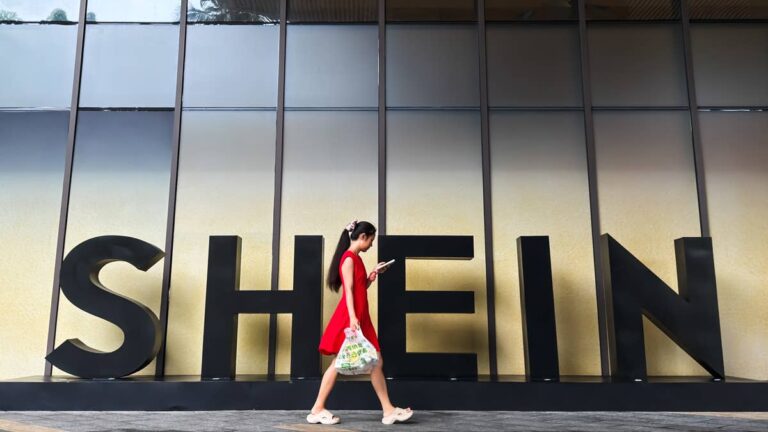
Shein has agreed to pay $100 million to settle a U.S. Federal Trade Commission probe into delivery delays and other customer complaints, Reuters reported on Oct. 23, citing a source with direct knowledge of the matter.
Shein said in a statement to Reuters that it had “reached a constructive outcome with the FTC” and would share more information soon. An FTC spokesperson declined to comment.
What the FTC investigated at Shein
The complaints were piling up for years. Consumers filed more than 12,000 complaints about Shein over more than $11 million in purchases from January 2020 to June 2026, according to FTC records reviewed by Reuters.
Some customers told the FTC and the Better Business Bureau that they “never received packages that Shein had marked as delivered,” Reuters reported. Reuters said it could not independently verify the complaints or whether they were resolved.
The $100 million is not pocket change for Shein. It equals about 44% of the company’s second-quarter profit, according to Reuters.
The full settlement terms have not been released. That means it’s still unclear how much, if any, of the money will go back to customers.
Will Shein customers get money back?
Nobody knows yet, and you shouldn’t assume you qualify until the official terms come out. FTC settlements don’t always include direct payments to shoppers.
Some do. In Amazon’s FTC settlement over Prime sign-ups, eligible customers could claim payments, with a claim deadline of July 27, TheStreet reported.
If the Shein deal does include refunds, the FTC typically announces how to claim on its website. Watch for that, and be wary of any email or text promising a Shein settlement payment if you click a link, since scammers often copy real settlements.
Shein to pay $100 million to settle an FTC probe after 12,000+ complaints involving $11 million+ in purchases.
The FTC has gone after online fashion sellers over shipping before, but never at this scale.
More Retail:
Here is how the reported Shein deal stacks up against earlier cases, according to Reuters:
Fashion Nova (2020): Paid $9.3 million for missing shipping promises and handing out gift cards instead of refunds.
Hey Dude (2023): Paid $1.95 million for failing to disclose shipping delays and suppressing negative reviews.
Shein (2026): Agreed to pay $100 million, according to Reuters’ source.
That jump in scale sends a message to every retailer that sells cheap goods shipped from overseas. Shipping promises are a legal obligation, not marketing copy.
Your rights if a Shein order never arrives
You don’t have to wait for the settlement details to protect yourself. The FTC’s Mail, Internet, or Telephone Order Merchandise Trade Regulation Rule already spells out what online sellers owe you.
If a seller doesn’t say when it will ship, the FTC’s rules presume shipment will be within 30 days, and merchants must normally be capable of shipping within 30 days, according to the FTC’s business guide to the rule.
If it can’t ship on time, the merchant must offer you the choice to either accept the delay or cancel. The notice must tell you that you “can cancel the order and obtain a full and prompt refund,” the guide says.
Refunds also have a deadline. For a card issued by a bank, the seller has seven working days after cancellation to send your money back, according to the FTC. Store credit or vouchers don’t count as a refund.
Here is what to do if an order goes missing:
Save everything. Keep order confirmations, tracking pages and any chat or email with customer service.
Ask for a refund in writing. Use Shein’s official refund process first, and note the date you asked.
Dispute the charge if needed. If the seller won’t fix it, contact your card issuer and ask about a billing dispute.
File a complaint. You can report problems to the FTC at ReportFraud.ftc.gov.
What the fine means for Shein investors
Shein, which was founded in China and is headquartered in Singapore, is now a public company, so the settlement lands on shareholders too. Its shares are down 22% from the Sept. 1 listing price in Hong Kong, Reuters reported.
The company had flagged this risk. Its Hong Kong IPO filings in July warned that the U.S. probe could lead to significant fines, according to Reuters.
Investors have bigger worries than one fine. New European Union fees on e-commerce packages have hurt Shein’s European business, Reuters reported.
Demand signals are soft too. App downloads across 10 markets fell 42% in September from a year earlier, according to Jefferies analysts cited by Reuters.
Regulators elsewhere are still circling. Shein remains under a European Commission investigation into illegal products on its marketplace, and France’s data protection authority fined it €150 million, or about $168 million, last year over its use of cookies, Reuters reported.
Why cheap shipping comes with a cost
This is the part I think matters most for your wallet. Ultra-low prices depend on long supply chains, and long supply chains make delays more likely.
That doesn’t mean you should stop shopping for deals. It means you should treat delivery promises as part of the price, and know that the law backs you when a seller misses them.
Before you check out, look at the estimated delivery window and screenshot it. If you need something by a set date, such as a wedding or a trip, a seller that ships from inside the U.S. may be worth a few extra dollars.
A $100 million settlement suggests regulators are taking those small, easy-to-ignore losses seriously. The cheapest order is still the one that actually arrives.
US stocks ended lower on Friday as losses spread beyond technology shares, while rising oil prices and renewed concerns over the US-Iran conflict added pressure to markets.
Investors also looked ahead to a busy week of corporate earnings and the Federal Reserve’s upcoming interest-rate decision.
The Dow Jones Industrial Average fell 1.25%, or about 659 points, to 52,209.16.
The S&P 500 declined 0.52% to 7,623.86, while the Nasdaq Composite lost 0.21% to close at 25,955.34.
Despite Friday’s declines, the Dow gained 0.4% over the week. The S&P 500 fell 0.5%, while the Nasdaq lost 0.7%.
Oil prices rise as Middle East tensions weigh on stocks
Energy prices climbed as renewed concerns about the conflict involving the US, Israel and Iran raised the risk of further disruption to Middle Eastern oil supplies.
West Texas Intermediate crude futures rose 3.8% to settle at $103.34 a barrel, while Brent crude gained 3.25% to $116.85. Brent’s settlement was its highest since April.
The rally followed reports that the US and Israel could be preparing plans for renewed attacks on Iran.
Iran has indicated that it is prepared to retaliate, adding to uncertainty over the conflict’s potential impact on energy markets.
The energy sector reached a record high on Friday, making it a notable exception to the broader market weakness.
However, higher oil prices also raised concerns about inflation and the potential pressure on household spending.
University of Michigan data showed US consumer sentiment slipped close to a record low in October as rising prices linked to the Middle East conflict weakened households’ views of the economy.
Dow stocks fall as weakness spreads beyond technology
Selling pressure extended across several sectors on Friday, including consumer staples, utilities and healthcare.
Financial stocks also weakened, contributing to the Dow’s decline.
American Express fell more than 3% after announcing plans to reduce its global workforce by about 5%, citing preparations for the growing use of artificial intelligence.
Caterpillar declined around 2%, while Goldman Sachs lost more than 1%.
Telecommunications stocks also came under pressure following a report that SpaceX was seeking access to thousands of cellular sites as it explores plans to become a fourth nationwide wireless carrier.
Technology shares were comparatively resilient after the previous session’s sell-off.
Investors have been reassessing the outlook for AI-related stocks amid concerns about the scale of borrowing required to finance data centres and the potential impact of higher interest rates.
However, recent corporate earnings have provided some support for the sector.
The 10-year US Treasury yield rose more than four basis points to around 4.999% on Friday, returning above the 5% level after briefly falling below it a day earlier.
Fed decision and Big Tech earnings in focus
Investors are preparing for a significant week of corporate results and monetary policy developments.
About one-third of S&P 500 companies are scheduled to report quarterly earnings next week, including Alphabet, Microsoft and Amazon.
Their capital expenditure forecasts will be closely watched for indications of whether spending on AI infrastructure will continue to expand at its current pace.
LSEG IBES data indicated that S&P 500 companies were on track to increase earnings by more than 32% in the third quarter, supporting the broader market’s gains this year.
The Federal Reserve is widely expected to leave interest rates unchanged at its Wednesday meeting.
Investors will nevertheless look for signals about whether policymakers could raise rates in December.
Markets are also monitoring the November 3 US midterm elections, which will determine control of Congress.
Together, corporate earnings, interest-rate expectations and geopolitical risks could shape the direction of US stocks in the coming week.
We use cookies to ensure that we give you the best experience on our website. If you continue to use this site we will assume that you are happy with it.Ok