JCPenney isn’t waiting until Thanksgiving to roll out its Black Friday deals. But shoppers who remember lining up outside stores before sunrise will still have a reason to set their alarms.
The department store chain kicks off its Black Friday sale Friday, Nov. 20, a full week before the traditional shopping holiday on Nov. 27.
The promotion runs through Sunday, Nov. 29, giving customers 10 days to shop Black Friday deals instead of squeezing their shopping into a single day.
But JCPenney isn’t abandoning the early-morning traditions that once defined the shopping holiday.
The retailer is bringing back its “5, 9, 1, 5” surprise giveaways on Nov. 27, with stores opening at 5 a.m. local time.
There’s also a collectible Harry Potter snow globe, giving shoppers another incentive to show up when doors open.
The combination reflects how Black Friday has evolved. What was once a one-day shopping frenzy has become a weeks-long competition for holiday spending, with retailers rolling out discounts well before Thanksgiving.
That shift has made it easier to find deals without leaving home, but it has also changed the experience of shopping on Black Friday itself.
For longtime JCPenney shoppers, the deals may start earlier, but some of the old excitement remains.
When does JCPenney’s Black Friday sale start?
JCPenney’s Black Friday promotion runs from Nov. 20 through Nov. 29, 2026, according to the retailer’s holiday shopping announcement.
The sale is part of a broader holiday calendar that includes thousands of items priced at $20 or less through Christmas Day, with deals on clothing, beauty gifts, home merchandise, and jewelry.
A separate Price Lock promotion runs Dec. 1 through Dec. 25.
JCPenney stores will open at 5 a.m. local time on Friday, Nov. 27, after remaining closed on Thanksgiving Day.
The retailer is bringing back its “5, 9, 1, 5” surprise giveaways at four times:
5 a.m.
9 a.m.
1 p.m.
5 p.m.
The staggered giveaways give shoppers multiple opportunities to participate without having to arrive before sunrise. Prizes include coupons, a Ninja air fryer, diamond earrings, and Samsonite luggage, with different giveaways scheduled throughout the day.
JCPenney will give away free prizes in stores on Black Friday, Nov. 27, starting with a Harry Potter mini snow globe and coupons at 5 a.m.
Graphic: TheStreet; Source: JCPenney
JCPenney brings back collectible Black Friday snow globe
JCPenney says a limited number of shoppers entering stores at opening on Nov. 27 will receive a free miniature Hogwarts Express snow globe, part of its Harry Potter holiday collection.
Full-size versions will also be available for purchase.
The giveaway follows previous collectible snow globes, including a Snoopy-themed version in 2025.
I’ve covered Black Friday for years, but I’ve also been among the shoppers waiting outside JCPenney for its giveaways.
I’ve participated multiple times and somehow always seem to walk away with a $10 coupon instead of one of the bigger prizes. Last year, though, I scored one of the coveted Snoopy snow globes.
That’s part of the fun. You never know what you’ll get, and the giveaways offer a reason to shop in person even as Black Friday deals increasingly start before Thanksgiving.
Why retailers still want Black Friday crowds
“Black Friday is still a huge day, but it’s not as special as it used to be,” Neil Saunders, managing director of GlobalData Retail, told TheStreet.
With more shoppers hunting for deals online and discounts stretching across weeks, retailers face a tougher challenge drawing crowds into stores.
“Lining up outside stores still happens but it is much less common than it used to be,” Saunders said.
Sandisk shares fell roughly 14% on November 20 as a new forecast for declining NAND flash prices in 2027 raised concerns about the sustainability of the memory manufacturer’s record profitability. The decline coincided with the company’s eight-for-one stock split, but the split itself did not reduce shareholder value.Sandisk traded around $81 on Friday, compared with a split-adjusted November 19 closing price of $94.40. The previous day’s unadjusted close was $755.16, meaning the apparent collapse between the two quotations largely reflected the mechanical adjustment.
The actual selling pressure followed a November 19 forecast from TrendForce that NAND contract prices could begin falling in the first quarter of 2027 as additional supply meets weaker demand from Chinese cloud providers.
Sandisk’s November 19 SEC filing confirmed that its forward split became effective after Thursday’s close. Shareholders received seven additional shares for each existing share, without changing their proportional ownership.
Why Does TrendForce Expect NAND Prices to Fall in 2027?
TrendForce expects global NAND capital expenditure to increase 26.7% to $29.9 billion in 2027, supporting projected annual bit-supply growth of 25%–30%.
The expansion reflects manufacturing upgrades, higher-density memory technologies and growing investment in storage infrastructure. However, the research firm expects supply growth to exceed demand as Chinese cloud service providers reduce enterprise solid-state-drive orders.
Chinese operators are facing GPU shortages, elevated inventories and pressure on the economics of AI services. TrendForce estimates that their reductions in enterprise SSD purchases will exceed additional demand from North American cloud providers.
Consumer electronics manufacturers face a separate challenge. Higher memory costs could encourage smartphone and PC producers to reduce storage capacity per device, weakening demand even without a comparable decline in unit shipments.
TrendForce lowered its fourth-quarter 2026 NAND contract-price growth forecast to 8%–13%. It now expects prices to range from unchanged to 5% lower in the first quarter of 2027, with declines extending across all product categories from the second quarter.
Spot prices have already corrected by more than 20%, although those transactions do not establish an equivalent decline in prices paid under long-term supply agreements.
The risk is not necessarily a collapse in AI storage demand. NAND prices can fall while datacenter consumption increases if manufacturers produce more bits than customers collectively purchase. The timing and scale of that imbalance determine how quickly Sandisk’s margins could contract.
How Exposed Are Sandisk’s Record Earnings to Lower Prices?
Sandisk reported fiscal first-quarter 2027 revenue of $11.03 billion, up 378% from $2.31 billion a year earlier. Non-GAAP gross margin climbed from 29.9% to 85.1%, reflecting exceptionally favorable industry conditions.
Datacenter revenue increased from $269 million to $4.80 billion, lifting its contribution to total sales from 11.7% to 43.5%. Edge revenue reached $5.83 billion, while consumer revenue declined to $397 million.
Management’s fiscal second-quarter guidance remained exceptionally strong, calling for revenue of $12.2 billion–$12.6 billion and a non-GAAP gross margin of 84.5%–85.5%.
However, earnings at those levels are particularly sensitive to changes in selling prices.
At the $12.4 billion revenue midpoint and an assumed 85% gross margin, quarterly gross profit would reach approximately $10.54 billion. A hypothetical 5% decline in average selling prices, holding unit shipments and production costs constant, would reduce gross profit by $620 million.
A 10% price decline under the same assumptions would cut gross profit by $1.24 billion. These calculations illustrate sensitivity rather than predict Sandisk’s results, since actual performance also depends on product mix, shipment volumes and contracted pricing.
As FinanceFeeds previously examined, memory manufacturers can appear unusually inexpensive on earnings multiples precisely when profitability approaches a cyclical peak.
Investor Takeaway
Sandisk’s fiscal second-quarter adjusted earnings guidance of $55–$57 per share was issued before the split, equivalent to approximately $6.88–$7.13 afterward. Annualizing that unusually profitable quarter would produce a misleadingly low valuation multiple if NAND prices and margins subsequently normalize.
Can Sandisk’s $88.9 Billion Backlog Protect Margins?
Sandisk has sought to reduce exposure to traditional memory cycles through long-term customer arrangements known as New Business Models.
The company reported $88.9 billion in remaining performance obligations as of October 2, with approximately 20% expected to become revenue over the following 12 months. These obligations represent contracted future revenue, not cash already collected.
Sandisk disclosed agreements with eight customers covering approximately half its fiscal 2027 NAND bit supply and two-thirds of fiscal 2028 supply.
The arrangements include minimum financial guarantees and structured pricing mechanisms intended to improve revenue visibility. However, the contracted percentages represent supply volumes rather than guaranteed profit margins across the business.
The disagreement between management’s long-term growth expectations and TrendForce’s industry forecast therefore concerns the durability of pricing power rather than whether enterprise storage remains an expanding market.
What Should Investors Watch After the Selloff?
The next important indicators are enterprise SSD contract prices, Sandisk’s realized average selling prices and datacenter shipment growth.
Investors will also need to examine whether long-term customer agreements preserve profitability as industry supply expands, particularly for production volumes not covered by existing commitments.
Friday’s decline reflects uncertainty about how much of Sandisk’s exceptional profitability can survive a less favorable NAND cycle. The stock split changed the number and quoted price of shares, but the 2027 supply-demand balance will determine whether current earnings represent a sustainable level or a cyclical high.
Investor Takeaway
Sandisk’s contracted backlog provides greater revenue visibility than conventional short-term NAND sales, but it does not eliminate commodity pricing exposure. The critical test is whether datacenter growth and contractual protections can preserve margins as additional industry supply enters the market.
Anthropic’s Class A shares, ticker ANT, closed at $97.17 on their first day on the Nasdaq Global Select Market on 19 November 2026.
That is about 17% above the $83.00 IPO price set a day earlier, and about 13% below the $111.50 opening print.
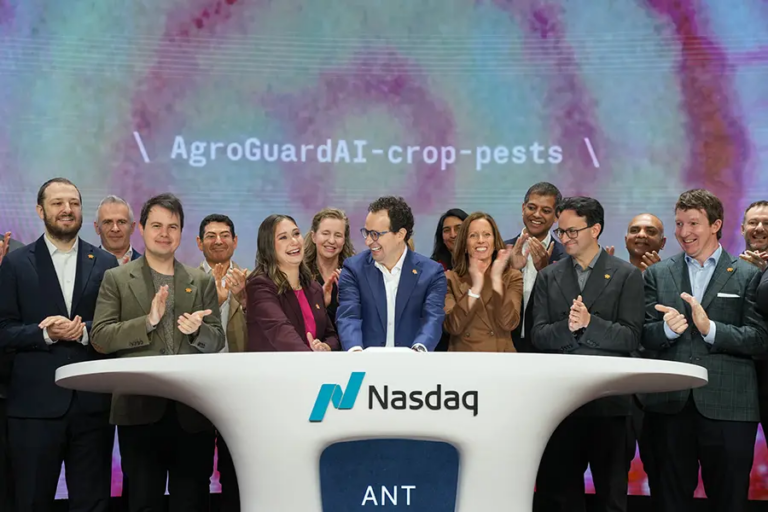
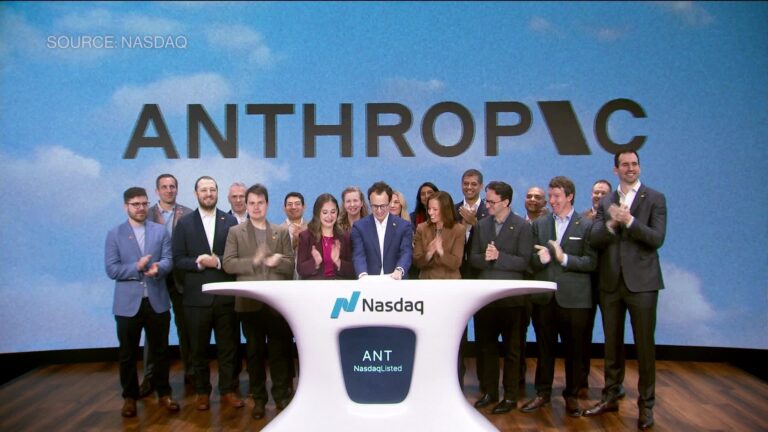
The day began in Times Square, where co-founders Dario and Daniela Amodei rang the Nasdaq opening bell at 9:30am ET. The ceremony itself did not start trading in ANT. The first trade came later, at 16:50 GMT (11:50am ET), when the shares opened at $111.50, about 34% above the offering price.
Indications had been climbing through the morning, from about $99.60 to $105, then $110 and $111, before the stock opened slightly above that last level. The early burst did not last.
ANT peaked at $115.10 just before noon ET and slipped as low as $92.72.
By mid-afternoon the shares were changing hands around $95.60, still about 15% above the IPO price. The $97.17 close left the debut comfortably above the offering, but well short of the opening pop.
Even so, a 17% first-day gain on the largest IPO on record is a strong debut, the more so on a session in which the main US indexes finished more than 2% lower. The market took some of the opening froth off, but buyers who received stock at $83 still ended the day well in the money.
More than 846 million shares changed hands, ahead of the 522 million traded on SpaceX’s opening day in June, and enough to make ANT the most actively traded name on the Nasdaq. Volume had already passed 640 million by mid-session.
At the $111.50 open, Reuters put Anthropic’s market value at about $2 trillion, a level exceeded by only a handful of US-listed firms, and ahead of the $1.96 trillion it assigned to SpaceX at its June opening trade. That is a reported valuation at the open, not a closing figure.
The fade came as the wider market turned lower. US stocks ended more than 2% down. The Dow Jones Industrial Average lost 1,101.11 points, or 2.19%, to 49,097.06, the S&P 500 fell 2.02% to 7,175.83, and the Nasdaq Composite dropped 2.25% to 23,879.20.
AI shares were mixed as investors weighed worries about higher interest rates. The Nasdaq itself had been up as much as 2% after the open before those gains were given back.
The listing is the first by a frontier AI lab and sets a public-market benchmark for the group, with OpenAI still private. Ordinary investors now have a listed way to take a direct view on a stand-alone model developer, rather than only through the chipmakers and cloud groups that have dominated the trade.
Anthropic sold 980 million Class A shares at $83.00 on Wednesday, of which 956,351,354 were sold by the company and 23,648,646 by selling stockholders. The deal raised about $81.3 billion, making it the largest initial public offering on record, above SpaceX’s initial $75 billion.
The size and price had already been lifted once before the open. Last week the company had marketed 825 million shares at $70 to $78; on Wednesday it sold more stock, and at a higher price, than that range implied. SpaceX later reached $85.7 billion after its overallotment was exercised.
Anthropic’s underwriters have the option to buy up to a further 147 million Class A shares, which would bring in another $12.2 billion and take the IPO total to $93.5 billion if exercised. They have until 20 November to take up that option. The offering itself is expected to close on 20 November, subject to customary conditions.
The banks on the deal are due about $550 million in underwriting fees, according to the company’s filing, more than the roughly $500 million paid on the SpaceX IPO.
The company priced the offering above its marketed range and increased the number of shares being sold, initially valuing the Claude developer at $1.5 trillion. Investors who received an allocation pay the $83 offering price. Anyone buying once the shares are listed pays the market price, which closed at $97.17.
Demand was unusually lopsided. Retail interest in the IPO was the largest in history. Anthropic prioritized institutional investors it already knew, and roughly half of the firms that placed orders were left empty-handed, a higher share than usual.
Retail allocation came in at around 15%, below the roughly 20% the company had targeted, though still above the 5% to 10% typical in most IPOs.
Analysts who opened coverage stayed above the close. Melius started at Buy with a $155 price target; Ben Reitzes, the firm’s head of technology research, said that assigned value could even be “conservative”. Needham’s Scott Berg has a Buy rating and a $150 target. The average target across five Buy ratings was about $116.
Wolfe Research, in a Thursday note, said cybersecurity could match Anthropic’s coding opportunity and reach $500 billion annually.
The company has given a sense of the scale behind that interest. In its prospectus, Anthropic said it generated $33.24 billion of revenue in the nine months to 30 September, up about 1,200% from the same period a year earlier, and that its run-rate revenue was about $81 billion by the end of October.
What comes next is tightly timetabled. Index funds will not add the stock immediately. The Morningstar US Total Market Index will include it after five trading days, the Nasdaq-100 after 18 December, and the S&P 500 will not add it for at least a year.
About 15.5 billion insider shares are subject to lock-up agreements that run until after Anthropic reports results in the third quarter of next year. No date has been set for the first earnings report.
AI disclosure: AI tools assisted with research and drafting of this piece. An Invezz editor reviewed the facts, sources and wording before publication. Any opinions or analysis are Invezz’s, not those of an automated system.
Anthropic (ANT) stock closed its first day on the Nasdaq at $97.17, up 17.1% on the $83 IPO price, according to Nasdaq. That headline gain hides the real story of the session: the shares opened at $111.50, touched $115.10 and then gave back 12.9% from the first trade by the bell. The “$2 trillion” figure that ran across every screen this morning was a fully diluted number at the opening price. Nasdaq’s own listing page, which counts only shares outstanding, put Anthropic at about $1.27 trillion at the close. The gap between those two numbers, and the calendar of index buying and insider selling that starts next month, is what will set where ANT trades next.
Having tracked Anthropic’s private marks, its S-1 and the pricing week for FinanceFeeds, my read is simple. Day one priced the company as a growth stock that has already earned its IPO multiple, and not much more. At $97.17, investors are paying roughly 25.9 times Anthropic’s annualised third-quarter revenue on a fully diluted basis, up from 22.1 times at $83 and down from 29.7 times at the open. The afternoon fade was the market taking back the premium that opening-cross euphoria had added, while keeping the premium that the order book had already justified when the deal priced $5 above its range.
Key facts: ANT on day one
Close: $97.17, up 17.1% on the $83 offer price; first trade $111.50 at about 11:48 a.m. ET; range $92.72 to $115.10 (Nasdaq, 19 November 2026)
Volume: about 840 million shares, equal to 86% of the 980 million shares sold in the IPO (Nasdaq)
Market value at the close: about $1.27 trillion on Nasdaq’s listing page (shares outstanding) and about $1.76 trillion fully diluted (FinanceFeeds arithmetic on the $1.5 trillion fully diluted value at $83 reported by Fortune)
IPO size: $81.3 billion from 980 million Class A shares at $83, plus a $26 billion Class N private placement, for $107.3 billion combined (CNN)
Free float: 7.4% of shares, or up to 9.8% including Class A shares held by non-founder employees (Renaissance Capital via CBS News)
X: Anthropic’s listing-day video drew about 3.7 million views and 52,800 likes by the afternoon (Anthropic on X)
ANT’s first session on Nasdaq and the FinanceFeeds scenario levels for the next 30 days and the next six months.
What actually happened on ANT’s first day
A Nasdaq IPO does not open with the rest of the market. Goldman Sachs and Morgan Stanley, the lead underwriters, spent the morning matching buy and sell orders in the opening cross, as we set out in our pre-open guide to ANT’s first trade. The match came at about 11:48 a.m. ET, at $111.50, 34% above the offer. Within minutes the stock printed its high of $115.10, which briefly valued the company above $2 trillion on a fully diluted basis, as CBS News reported.
Then the supply arrived. By 12:18 p.m. the shares had slid to about $95, and they spent the rest of the afternoon in a band between roughly $93 and $98, according to Nasdaq’s one-minute data. The low of the day was $92.72. The close at $97.17 left the stock 15.6% below its high.
That shape, a hot open followed by a long fade that holds well above the offer price, is the classic signature of an IPO where the book was real but the opening cross was crowded. Think of a concert where the ticket was priced fairly, the resale market opened at a silly premium, and the price drifted back once everyone who wanted a seat had one. The investors who bought at $83 are still sitting on a 17.1% gain. The buyers who chased the first print are not.
Two features of this deal made the fade more likely than usual. The first is the staggered lock-up. Non-founder directors, officers and certain employees could sell up to about 316 million shares from the first trading day, roughly a third of the size of the offering itself, as our pre-open piece set out. The second is the market backdrop. Stocks opened higher and then turned lower as ANT began to trade; by the afternoon the S&P 500 was down 1.6% and the Dow was off more than 900 points, according to CNN, and the Nasdaq Composite finished the session -2.25%. Some traders were plainly selling other holdings to fund ANT.
Volume tells the same story. About 840 million shares changed hands, equal to 86% of the shares sold in the offering. With only 7.4% of the company in the public float, according to Renaissance Capital, a large share of the float turned over at least once on day one.
Jay Ritter, the University of Florida professor whose IPO data is the industry’s reference set, put it plainly: “Both the jump from the offer price and the high volatility are not surprising, given the enormous potential of the company and the wildly different opinions about how profitable the company will become,” he told CBS News.
Quick take: ANT closed up 17.1% on its offer price but 12.9% below its first trade. The book held; the opening premium did not.
What Anthropic, Nasdaq and the market said
Anthropic’s executive team rang the opening bell at Nasdaq MarketSite in Times Square, with co-founders Dario and Daniela Amodei at the podium. Nasdaq’s own account posted the ceremony images to X (Nasdaq on X), and Anthropic’s listing-day video passed 3.7 million views with about 52,800 likes and 6,400 reposts by mid-afternoon (Anthropic on X). A text post of Dario Amodei’s full remarks had about 427,000 views (Anthropic on X). The single most-viewed market post we found, a one-line note from the account StockMKTNewz that Anthropic had just rung the opening bell, passed 1.3 million views (X).
The company kept its message on mission rather than money. “An obsession with safety and public benefit has been built into Anthropic’s DNA from the start,” Dario Amodei said before ringing the bell, in remarks posted by Yahoo Finance. Daniela Amodei framed the listing as a way to widen ownership: “A big part of why we’re going public is to have more people invested in building AI well,” she said in a clip shared by Nasdaq.
That framing matters for shareholders. Anthropic is a public benefit corporation, which means its board is required to balance shareholder returns against its stated mission. Gil Luria, head of technology research at D.A. Davidson, told CNN that Anthropic has been explicit that there will be cases where it chooses not to maximise shareholder value.
The wider industry reaction split along familiar lines. Dan Ives of Yorkville Ives & Co. called the deal an “A-plus success” and said it should help restore confidence that the AI growth thesis is not waning (CBS News). Sam Grelck, an equity strategy analyst at Truist Advisory Services, was more guarded, describing the reception as “another indication of investors’ appetite for the AI theme after what’s been a challenging few weeks.” The strategic investors who bought $26 billion of Class N shares at $83, a group that includes Google, Nvidia, Microsoft, AMD, Broadcom and Micron, closed the day with a paper gain of 17.1% on that stake. Amazon, an early backer, now holds a listed asset whose value its own shareholders never voted on, a point we examined in our report on Amazon’s Anthropic stake. The pricing week also moved the chip names; see our Micron (MU) outlook from the morning of the debut.
David Fetherstonhaugh, chief investment officer at VistaShares, summed up the two-way pull on the rest of the market: “We could see both play out, with some near-term selling pressure even as Anthropic’s fundraising helps finance the next wave of AI infrastructure investment,” he told CNN.
Data analysis: the $2 trillion headline versus the $1.27 trillion print
The most useful number from day one is not the closing price. It is the gap between the two market values in circulation, and it is where a lot of money was lost or made today.
The “$2 trillion” figure is a fully diluted value: it counts every share, option and convertible that could become stock, about 18.1 billion shares on our arithmetic from the $1.5 trillion value at $83. Nasdaq’s listing page uses shares outstanding, about 13.1 billion at the close by our calculation. On that basis ANT was worth about $1.27 trillion, not $2 trillion, even at its high.
That distinction decided one of the largest prediction-market contracts of the year. Polymarket’s “Anthropic IPO Closing Market Cap” event, with about $17.8 million traded on its upper brackets, resolves on the primary exchange’s official listing page (Polymarket). Two hours before the close, traders priced a 64% chance that the closing value landed between $1.25 trillion and $1.5 trillion, and only about 0.6% on $1.5 trillion to $1.75 trillion, despite the $2 trillion headlines. On Nasdaq’s share count, the $1.25 trillion line sat at about $95.52 a share. At the close, Nasdaq’s page showed about $1.27 trillion, inside the $1.25 trillion to $1.5 trillion bracket, which traders priced at 98% straight after the bell.
The second piece of data synthesis is the revenue multiple. Anthropic’s filing showed revenue of $4.73 billion in the first quarter of 2026, $11.56 billion in the second and $16.96 billion in the third. Annualise the third quarter and the run rate is about $67.8 billion. Divide the fully diluted value by that run rate and the multiple moved like this through the day:
Price point
ANT
Fully diluted value
Multiple of Q3 run rate
IPO price
$83.00
$1.50 trillion
22.1x
First trade
$111.50
$2.02 trillion
29.7x
Intraday high
$115.10
$2.08 trillion
30.7x
Close
$97.17
$1.76 trillion
25.9x
Fully diluted values scale the reported $1.5 trillion at $83 in proportion to the share price. Run rate is third-quarter 2026 revenue multiplied by four. FinanceFeeds arithmetic.
The pattern is clear. The market paid up to about 31 times run-rate revenue in the opening minutes and settled near 26 times by the close. Growth is the variable that justifies any of these numbers, and it is slowing in percentage terms: revenue rose about 144% from the first quarter to the second, and about 47% from the second to the third. A 47% quarter is still extraordinary for a company of this size, but every forward price depends on how much of it survives into the fourth quarter.
For a higher ANT price
Against
Index inclusion: Russell 1000 as early as 11 December and the Nasdaq-100 from 21 December force passive buying into a 7.4% float.
Lock-up tranches release more stock on days 27, 48, 62 and 76 after listing, before the founders’ 180-day window.
Underwriter research starts when the quiet period ends, typically 25 days after listing.
Truist found more than half of the 32 largest IPOs fell at least 50% at some point in their first year.
Revenue grew 47% quarter on quarter in Q3, and operating losses narrowed sharply.
About $900 billion of compute commitments, and a PBC board that can put mission ahead of returns.
Quick take: Ignore the $2 trillion headline. On Nasdaq’s count ANT closed at about $1.27 trillion, or 25.9 times run-rate revenue fully diluted.
Regulation and governance: the tension the market has not priced
Anthropic lists into a regulatory climate that is turning less friendly to the AI trade. CBS News noted that AI stocks have swung on concerns about the debt financing the data-centre build-out and the prospect of a Democratic-led crackdown on the sector after the midterms. Any federal rules on model safety, compute export controls or AI liability would land on Anthropic first and hardest, because it is now the only frontier lab whose share price reacts in real time.
The irony is that Anthropic has spent years asking for exactly that kind of oversight. Its PBC status and its public safety commitments are the reason some investors bought the deal, and the reason others fear the company will leave money on the table. Speaking at Nasdaq, Dario Amodei told the room that “the most difficult safety work lies ahead of us” (Yahoo Finance on X). For a listed company, that sentence is a disclosure as much as a mission statement: it tells shareholders that safety spending will not be cut to hit a quarterly number.
There is also a market-structure question regulators will watch. Index providers changed their rules this year to fast-track mega IPOs. Nasdaq’s fast entry rule, effective from 1 May 2026, tests a new listing at the close of its seventh trading day and announces the addition after the tenth, according to Bloomberg via Stock Analysis. FTSE Russell’s notice flagged a potential Russell 1000 inclusion on 11 December (FTSE Russell). Retirement savers in index funds will therefore buy ANT within weeks of its debut, at whatever price the market sets, a point protesters from the New York City Democratic Socialists made outside MarketSite this morning, according to CNN. If ANT trades sharply lower after inclusion, expect that criticism to reach Washington.
ANT price prediction: what happens next
Our pre-open levels were $104 above and $78 below. The stock blew through the upper level at the open and closed below it, which tells us the demand side was stronger than we expected but that the supply side, the day-one insider shares, was as heavy as we feared. Here are the new levels, with the reasoning behind each.
By 21 December 2026 (Nasdaq-100 entry):
Bull $115. A retest of the $115.10 day-one high. This needs the index calendar to do the work: Russell 1000 buying from 11 December, the first underwriter research after the 25-day quiet period around 14 December, and Nasdaq-100 inclusion on 21 December, all chasing a float of about 7.4%.
Base $100. The stock holds the $93 to $98 band it built this afternoon and drifts up as index demand absorbs the first lock-up tranche. Renaissance Capital’s Matthew Kennedy had pencilled in about $100 for the first day (CBS News).
Bear $83. A full round trip to the IPO price. That is where the underwriters’ 147 million share greenshoe becomes a support tool: below $83, the banks can buy stock in the market rather than exercise the option. It would take heavy insider selling into the day-27 tranche, or a broad AI sell-off, to get there.
By mid-May 2027 (first results as a listed company and the founders’ first unlock window):
Bull $143. Fourth-quarter revenue repeats the third quarter’s 47% growth and the market keeps today’s 25.9 times multiple. That lifts the price in line with the run rate.
Base $102. Growth halves to about 23% and the multiple falls back to the 22.1 times investors paid at $83. Revenue growth and multiple compression roughly cancel out.
Bear $57.55. Half the day-one high. That is the drawdown Truist found in more than half of the 32 largest IPOs at some point in their first year (CBS News). A first quarterly report showing a sharp growth slowdown would be the trigger.
The single number to watch is the fourth-quarter revenue figure in Anthropic’s first earnings report. Everything above is a multiple of it. Until then, the index calendar favours buyers through December, and the lock-up calendar favours sellers from late December into February. These are reference levels, not forecasts or investment advice, and newly listed stocks often move far beyond any range.
What was Anthropic’s closing price on its first day?
Anthropic (ANT) closed its first Nasdaq session on 19 November 2026 at $97.17, up 17.1% from the $83 IPO price. The stock opened at $111.50, hit a high of $115.10 and a low of $92.72, according to Nasdaq data.
Is Anthropic worth $2 trillion?
Only on a fully diluted basis near the open. At the close, Anthropic was worth about $1.76 trillion fully diluted and about $1.27 trillion on Nasdaq’s listing page, which counts shares outstanding. Prediction markets such as Polymarket settle on the listing-page figure.
What is the ANT stock price prediction?
FinanceFeeds sets bull $115, base $100 and bear $83 for ANT by its expected Nasdaq-100 entry on 21 December 2026, and bull $143, base $102 and bear $57.55 by mid-May 2027. These are scenario levels tied to index buying, lock-up expiries and revenue growth, not investment advice.
When does the Anthropic lock-up expire?
Anthropic uses a staggered lock-up. About 316 million shares held by non-founder insiders could be sold from day one, with further tranches on days 27, 48, 62 and 76. Co-founders can sell up to 29% after 180 days or after first-quarter 2027 results; the largest holders stay locked for up to a year.
When will Anthropic join the Nasdaq-100?
Bloomberg reports that Anthropic is on track to join the Nasdaq-100 at the open on 21 December 2026 under Nasdaq’s fast entry rule. FTSE Russell has flagged a potential Russell 1000 inclusion on 11 December. Index funds tracking both benchmarks will need to buy ANT shares.
How much did Anthropic raise in its IPO?
Anthropic raised $81.3 billion by selling 980 million Class A shares at $83, the largest IPO on record by base deal size. Including a $26 billion private placement with Google, Nvidia, Microsoft and others, the total reached $107.3 billion, according to CNN.
This article is for information only and does not constitute investment advice.
Cato Fashions has followed its rival Torrid in shrinking its store count because customers don’t use brick-and-mortar locations the way they used to.
Both of those retailers serve plus-sized women, and while I can’t speak for their audience, I can speak about buying clothes when you perhaps weigh a little more than you want to. As someone in the slow process of losing weight on a GLP-1, shopping for clothes has often been a traumatic experience.
I recently had to rent a tuxedo for a wedding, and the jacket I picked almost fit, but when I asked for the next size, the young, skinny clerk said the next one was in the “husky” line.
“That can’t possibly be the name,” I replied, and it wasn’t. It was actually the “Executive Line,” but the damage was done.
On one hand, I was proud to almost fit into the non-husky size, which is progress, but I was also fairly mortified at having my huskiness pointed out in a crowded public store.
My tale likely isn’t unique, and while Cato and Torrid probably have more sensitivity than Men’s Warehouse, clothes shopping can be triggering for some customers. That has at least partially pushed some clothing sales online, which has lowered the demand for physical stores.
Torrid has closed stores, just as Cato now plans to do.
“Year-to-date, the company has closed 22 stores and opened two stores. The company is in the process of closing approximately 90 additional stores in the fourth quarter,” the company posted.
As of Oct. 31, 2026, the Company has 1,049 stores in 31 states, compared to 1,101 stores in 31 states as of Nov. 1, 2025.
The company also lost money in Q3.
The Cato Corporation reported a net loss of $10.4 million or ($0.54) per diluted share for the third quarter ended Oct. 31, 2026, compared to a net loss of $5.2 million or ($0.28) per diluted share for the third quarter ended Nov. 1, 2025.
Sales for the third quarter ended Oct. 31, 2026 were $148.0 million, a decrease of 4% from sales of $153.7 million for the third quarter ended Nov. 1, 2025. The Company’s same-store sales for the quarter decreased 1% compared to 2025.
“Although our overall sales trend improved compared to the second quarter, the effect of persistent inflation and higher fuel costs continues to erode our customers’ discretionary income,” CEO John Cato said. “The continued negative sales trend caused us to take more markdowns, which impacted our gross margins.”
He does not see the situation improving.
“We believe the pressure on our customers’ discretionary spending will continue into the fourth quarter and the foreseeable future. We will continue to manage our expenses and inventory levels as we navigate through this difficult economic environment,” he added.
Cato, it should be noted, sells plus-size clothing but serves a broader women’s apparel market, while Torrid focuses exclusively on plus-size fashion.
TheStreet
Torrid blames digital sales
Cato does not break out its digital sales. Torrid, however, shared a June 2025 plan to close about 180 underperforming stores from its fleet of just over 620, blaming the decline on customers shopping online.
“Digital continues to be our customers’ preferred channel, now approaching 70% of total demand. We’re accelerating our transformation to a more digitally-led business, which includes optimizing our retail footprint,” Torrid CEO Lisa Harper shared in the company’s first-quarter earnings release.
Consumers still like stores, but they simply don’t need them as much.
“The opportunity to try on clothes and test products is a major driver of store traffic, with 52% of consumers surveyed saying they go to stores instead of shopping online because of this. References to trying on/testing products surged 32% YoY on average at retailers and were up 58% at beauty retailers,” according to a Chatmeter report published last year.
Physical stores deliver a better experience because they introduce customers to merchandise and allow them to leave the store with their size. But if customers buy in-store once and then order online, that dramatically changes the economics for brick-and-mortar locations.
Cato might just be too small
Both Cato and Torrid have struggled to figure out the right mix of retail and digital.
RTM Nexus CEO Dominick Miserandino thinks these chains also face another issue that’s harder to fix.
“I think the problem for chains like Cato is that they’ve gotten stuck in retail’s version of the middle seat on an airplane. Nobody really wants to be there,” he told TheStreet.
It’s a question of not being big enough or niche enough to really matter.
“If I want cheap clothes, I’ve got Walmart, Target, or a dozen other places. If I want a bargain, I’ve got TJ Maxx, Ross, and Burlington. If I want something specific, I can sit on my couch and find it online in about 30 seconds. So why am I making a special trip to Cato?” he added.
It may be a problem, he noted, that these chains can’t solve.
“That’s the question these smaller chains have to answer, and I’m not sure they have a good answer anymore,” he wrote.
President Donald Trump said the United States could allow Nvidia (NASDAQ: NVDA) to sell its Blackwell artificial intelligence chips to China in two or three years, once newer processors have surpassed them. The comments, made during a Fox News interview from Shenzhen, China, and reported by Bloomberg on November 19, offer a possible timetable for reopening a market that remains closed to Nvidia’s most advanced AI hardware.
Nvidia stock opened Thursday at $152.92, up 1.30% from Wednesday’s $150.96 close. By 1:37 p.m. Eastern Time, NVDA had reversed to $149.38, down 1.05%, after trading between $147.82 and $158.13 during the session. The price movement does not establish a direct market reaction to Trump’s comments, which arrived amid broader developments affecting Nvidia and the semiconductor industry.
Trump said he could authorize Blackwell exports “in two or three years” and eventually tell Nvidia to “go do the Blackwells.” He also described the current generation as technologically advanced but predicted, “In another year, they’ll be obsolete.”
The remarks do not change existing export restrictions. Washington has never approved Nvidia’s request to sell Blackwell processors to China, allowing only less advanced H200 chips under a separate licensing framework. Congress is simultaneously considering legislation that would restrict exports of the most capable AI processors for at least 18 months.
Trump’s Blackwell Timeline Points to 2028 or 2029
Trump’s proposed timetable would place potential Blackwell sales around late 2028 or 2029, by which time Nvidia expects newer computing architectures to be available. The president framed the possibility as a way to permit exports of older technology without giving China access to the most advanced American AI processors.
Nvidia’s product roadmap already supports the distinction between Blackwell and its successors. The company reported on November 17 that its Vera Rubin NVL72 computing platform had begun shipping, with production and customer deployments expanding across major cloud infrastructure providers.
However, an older chip generation does not automatically become eligible for export. Washington’s controls consider computing capabilities, national security risks, end users and potential military applications, not simply whether a newer product has reached the market.
Trump’s statement therefore indicates a possible future policy direction rather than an authorization that Nvidia can use to secure Chinese orders today. Any eventual sales would still depend on the export rules and licensing requirements in force at the time.
Bloomberg also highlighted the political timing. Trump’s presidential term ends in January 2029, placing the two-to-three-year window close to the end of his administration or beyond it. A future administration or Congress could maintain, tighten or revise the restrictions regardless of his present preference.
AI Overwatch Act Would Restrict Blackwell Exports for 18 Months
The administration’s possible willingness to permit Blackwell exports later comes as Congress works to establish more durable restrictions on advanced AI chip sales to China.
Republican Senator Jim Banks and Democratic Senator Elizabeth Warren have advanced the AI Overwatch Act into negotiations over the annual National Defense Authorization Act, which typically receives final approval in December.
The proposal would prevent exports of the most advanced AI processors to countries of concern for at least 18 months. It would also require additional Commerce Department certifications before less advanced chips could receive export licenses, including safeguards against unauthorized access and diversion of semiconductor manufacturing capacity.
The distinction matters for Nvidia. The proposed 18-month period is shorter than Trump’s two-to-three-year timeline, so the two positions are not necessarily contradictory. Both would keep Blackwell processors out of China in the near term. The disagreement concerns how much flexibility the administration should retain to authorize exports later.
Bloomberg reported that the bill’s momentum has increased following the departure of Nvidia co-founder Jensen Huang as chief executive. Huang had opposed tighter export restrictions, and his removal has weakened the company’s influence in Washington, according to the report.
The legislation has not become law. Its final language, potential exceptions and enforcement provisions remain subject to negotiations. Nevertheless, statutory restrictions could make future changes to Nvidia’s export permissions more difficult than adjustments made solely through executive policy.
Nvidia’s $130 Billion Revenue Forecast Excludes China Data Center Sales
The immediate financial implications are limited because Nvidia’s latest guidance already assumes no revenue from Chinese data center computing customers.
On November 17, Nvidia reported fiscal third-quarter revenue of $115.8 billion, up 103% year over year. Data center revenue reached $107.6 billion, while management projected approximately $130 billion in fourth-quarter revenue, plus or minus 3%.
Despite that growth, the China outlook remains constrained. As FinanceFeeds reported on November 18, Nvidia stopped shipping licensed Hopper-generation processors to China after recording $2.4 billion in sales during its latest quarter.
The $2.4 billion represented approximately 2.1% of Nvidia’s total quarterly revenue and 2.2% of data center revenue. Although relatively small against the company’s global business, it was an established revenue stream that is no longer included in the next-quarter forecast.
The H200 processors involved in those shipments are less advanced than Blackwell. The United States had permitted exports to approved Chinese customers under conditions introduced earlier this year, but licensing approval did not guarantee that shipments could proceed.
Chinese import restrictions and uncertainty over customer approvals have complicated deliveries. Consequently, Trump’s suggestion that Blackwell exports might eventually become permissible does not resolve the immediate obstacles facing Nvidia’s older licensed products.
There is also no disclosed basis for estimating how much Blackwell revenue Nvidia could generate from China in 2028 or 2029. Potential demand would depend on chip performance, domestic Chinese alternatives, pricing, customer investment and the regulatory environment when exports become possible.
New Chip Restrictions Add Another Obstacle for Nvidia’s China Business
The export debate extends beyond Nvidia’s direct shipments. As FinanceFeeds reported on November 19, TSMC and Samsung have suspended certain semiconductor shipments to Chinese customers while seeking licenses under new US Commerce Department rules.
The restrictions address additional routes through which advanced computing technology can reach Chinese companies, including manufacturing and packaging arrangements. They are separate from the question of whether Nvidia can export finished Blackwell processors, but they show that Washington is tightening controls across multiple parts of the semiconductor supply chain.
For Nvidia investors, the immediate question is not whether Trump’s remarks create a new sales opportunity. They do not. The more important issue is whether the administration and Congress are moving toward a framework that permits older generations of advanced AI chips to enter China after a defined period while maintaining controls on the newest processors.
A finalized AI Overwatch Act, any subsequent Commerce Department licensing changes and Nvidia’s disclosures about resumed Chinese shipments would provide more concrete evidence of that policy direction.
Until then, Nvidia’s financial outlook remains based on growth outside Chinese data center computing sales. Trump’s comments introduce the possibility of future Blackwell access, but neither a sales authorization nor a revenue timetable has been established.
Anthropic has priced its initial public offering at $83 a share, according to CNBC and Bloomberg, citing people familiar with the matter, $5 above the top of the $70–$78 range in the company’s latest SEC filing.
Class A shares in the Claude developer are due to begin trading on Thursday, 19 November, on the Nasdaq Global Select Market under the ticker ANT.
The $83 price has not yet been locked in a prospectus supplement.
As of late evening in London on 18 November, no Form 424B4 had appeared on EDGAR, and Anthropic had not published a pricing announcement on its newsroom or IPO site.
Until a filing appears, these figures should be read as reported terms, not as a confirmed prospectus price.
Bloomberg also said the size of the offering has increased, without disclosing a new share count.
The marketed deal, in Amendment No. 3 to Anthropic’s Form S-1, filed on 17 November, was 825 million Class A shares — 801,351,354 sold by the company and 23,648,646 by existing holders.
On that marketed count, $83 a share would raise $68.475 billion before underwriting discounts, an Invezz calculation.
Actual gross proceeds would be higher if the deal was upsized, as Bloomberg reported. Anthropic would not receive the proceeds from the secondary shares. A separate $26 billion private placement of non-voting Class N shares is due to close at the IPO price.
How does $83 compare with the filed range?
The official range was never raised in a filing. Amendment No. 3 still estimated $70.00 to $78.00 a share. At $78, the 825 million shares would have raised $64.35 billion gross, as set out in our note on Anthropic’s $70–$78 IPO price range.
Earlier on Wednesday, CNBC reported that Anthropic was considering selling more than 825 million shares and was weighing a price well above $80.
The Wall Street Journal had reported on 17 November that Anthropic expected to price above $80, and said that would value the company at about $1.5 trillion to $1.6 trillion.
The prospectus granted the underwriters, represented by Goldman Sachs and Morgan Stanley, a 30-day option to buy up to 123.75 million additional Class A shares. Whether that greenshoe was resized with any upsizing of the base deal has not been disclosed.
What valuation does $83 imply?
The filing does not state a single official valuation, and the final figure will depend on the share count used, including any upsizing.
Coverage of the prospectus has put the fully diluted value at about $1.405 trillion at the $78 top of the range. A like-for-like move to $83 would imply about $1.50 trillion. That is an illustration, not a number in a pricing prospectus, and it would change if more shares have been added.
How strong was demand?
CNBC reported on Wednesday morning that institutional demand was around $400 billion and that retail demand was approaching $100 billion. Those figures were described as indications of interest, not binding orders.
What happens next?
Trading is scheduled to start on Thursday under the ANT ticker. Nasdaq, in Data Technical News #2026-28, said Anthropic’s Class A common stock is expected to begin trading on 19 November.
Hargreaves Lansdown has told UK applicants that trading is expected from 2:30pm London time (9:30am ET). Investors who received an allocation pay the IPO price; anyone buying once the shares are listed pays the market price. A Form 424B4, when it appears, would be the official confirmation of the price, the final share count and any change to the greenshoe.
If ANT starts trading on 19 November, MSCI has said it would decide on early inclusion no later than before the open of the third trading day, which would be Monday, 23 November. If the stock qualifies, addition would be effective as of the close on 30 November, or 1 December.
FTSE Russell has deferred fast entry because of Thanksgiving: Russell US addition, if confirmed, would be effective 14 December, and FTSE GEIS on 21 December. Nasdaq has not issued a notice adding ANT to the Nasdaq-100. The S&P 500 is not in prospect at listing.
📘 If you are looking to trade the shares on day one, our guide on how to buy Anthropic stock walks through the steps for buying US-listed shares.
Thursday’s first trade will test whether that demand holds up in public.
AI disclosure: AI tools assisted with research and drafting of this piece. An Invezz editor reviewed the facts, sources and wording before publication. Any opinions or analysis are Invezz’s, not those of an automated system.
The Kiwi dollar-US dollar (NZDUSD) has fallen to its lowest level since Mar 2020, despite growing expectations of another RBNZ rate hike in Dec. A stronger US dollar is adding to the pressure, as investors increasingly expect the Fed to keep interest rates higher for longer.
New Zealand’s inflation remains above the central bank’s target, but a weakening labour market is making further rate increases harder to justify. Meanwhile, stronger US inflation and expectations of tighter Fed policy are making it more difficult for the kiwi to recover.
RBNZ faces a difficult choice as jobs market weakens
The RBNZ kept its Official Cash Rate (OCR) at 2.75% in Oct, although the decision was closely divided, with three of seven policymakers favouring a rate hike. All members agreed that tighter policy would likely be needed.
Inflation remains a concern. Consumer prices rose 3.7% YoY in the third quarter, above the RBNZ’s 1%–3% target. The central bank also expects inflation to rise to 4.4% in the final quarter, partly due to higher energy prices.
However, the labour market is moving in the opposite direction. Unemployment Rate reached 5.7% in Sep, its highest level in around 11 years, while employment fell 0.1%. This suggests that the economy is losing momentum even as inflation remains elevated.
Stronger US dollar adds another headache for the kiwi
The US dollar is creating an additional challenge. Stronger US inflation has increased expectations of another Fed rate hike in Dec, supporting the greenback against other major currencies.
This also explains why expectations of another RBNZ hike have not been enough to support the kiwi. Markets are already pricing in a high probability of a Dec increase, meaning much of that expectation may already be reflected in the currency.
“The kiwi is facing pressure from two different directions. Inflation remains above the RBNZ’s target, keeping another rate increase on the table, but rising unemployment shows that the New Zealand economy is losing momentum. At the same time, a stronger US dollar is making it harder for the kiwi to recover. Markets are therefore watching closely to see how both central banks approach their next decisions,” says Inki Cho, Senior Financial Markets Strategist at Exness.
For traders, attention now turns to the December decisions from both central banks. Upcoming US inflation data and further signs of weakness in New Zealand’s economy could influence expectations for interest rates and keep NZDUSD volatile.
Pottery Barn is taking its home furnishings business in an unexpected direction by teaming up with a historic Texas ranch associated with one of television’s most recognizable Western dramas, “Yellowstone.”
The retailer, known for its furniture, bedding, and home décor, is expanding its partnership strategy beyond traditional home collections.
And its latest deal brings together interior design, Western heritage, and hospitality, with plans for products that will appear both in customers’ homes and at a new Las Vegas restaurant.
The announcement comes as Pottery Barn’s parent company, Williams-Sonoma, seeks to build on improving consumer demand and expand its business beyond traditional retail.
Pottery Barn announces partnership with Taylor Sheridan’s Four Sixes Ranch
This new partnership will introduce an exclusive collection of home furnishings inspired by the ranch’s heritage. The Four Sixes for Pottery Barn collection is scheduled to launch on Dec. 9, 2026, featuring products designed for different areas of the home.
Pottery Barn has not yet announced individual product prices or the complete assortment.
The collaboration draws on the ranch’s connection to contemporary Western culture and the agreement also extends beyond retail products.
Pottery Barn will participate in product design and development for the ranch’s expansion into hospitality.
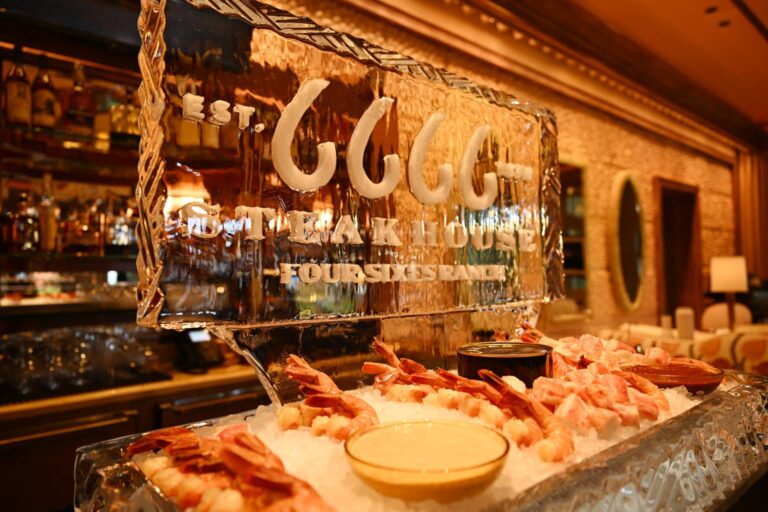
Several pieces from the new collection will appear at the Four Sixes Ranch Steakhouse, which is scheduled to open at MGM Grand in Las Vegas in early 2027.
Pottery Barn’s new collection will appear at the new 6666 Ranch Steak House at MGM Grand in Las Vegas.
Pottery Barn expands strategy to attract new shoppers
The Four Sixes partnership follows a series of collaborations designed to bring different styles, designers and recognizable names into Pottery Barn’s merchandise assortment.
The merchandise is intended to appeal to shoppers looking for recognizable designs, personalized gifts and seasonal decorations under a reliable brand.
During Williams-Sonoma’s August earnings call, CEO Laura Alber said collaborations were helping the company reach customers who might not otherwise shop at its brands. Alber also emphasized the company’s efforts to revive Pottery Barn’s traditional design identity, including more authentic furniture materials, updated finishes, and improved product photography.
And these initiatives have coincided with improving sales.
Pottery Barn, Williams-Sonoma’s largest brand, reported a 5.1% increase in comparable revenue during the second quarter of fiscal 2026, up from around 1% during the first quarter.
Management attributed the improvement partly to stronger demand for furniture and changes to the brand’s online shopping experience.
Williams-Sonoma expands beyond traditional furniture stores
The hospitality component of the Four Sixes partnership also reflects a larger opportunity for Pottery Barn’s parent company.
Williams-Sonoma has been expanding its business-to-business operations, supplying products and design solutions to commercial customers.
During the second quarter, its business-to-business revenue increased 14.5%, with its contract business growing 20%.
Company executives identified hotels, restaurants, multifamily properties, education, and entertainment as markets supporting the expansion.
The new Four Sixes agreement provides another example of how its home furnishings brands can participate in commercial design projects rather than relying exclusively on consumer furniture purchases.
The expansion is taking place despite persistent cost pressures across the home furnishings industry.
I previously reported that furniture retailers have been navigating higher tariffs, transportation expenses and changing consumer purchasing patterns. Williams-Sonoma has also faced rising fuel costs, which management said it was absorbing in its operating outlook earlier this year.
The company is scheduled to report third-quarter earnings on Nov. 19, providing an updated look at Pottery Barn’s sales and the broader group’s performance ahead of the holiday shopping season.
For customers interested in the new Western-inspired furnishings, the next significant date is Dec. 9, when the Four Sixes collection debuts.
Anthropic has priced its initial public offering at $83 per share, above its previously marketed range of $70 to $78, raising the gross value of the public offering to $81.34 billion ahead of the artificial intelligence company’s anticipated Nasdaq trading debut on Thursday, November 19.
The Claude developer confirmed the pricing on November 18, announcing the sale of 980 million Class A shares, substantially more than the 825 million shares outlined in its earlier registration statement. The stock is expected to trade under the ticker ANT, with the offering scheduled to close on November 20, subject to customary conditions.
The $83 price is approximately 6.4% above the previous range’s upper limit. It also places Anthropic’s estimated fully diluted valuation near $1.5 trillion, making the listing one of the largest initial public offerings in stock-market history.
How Much Capital Will Anthropic Actually Receive?
The offering’s final structure is important because its $81.34 billion headline value does not entirely represent new capital flowing into Anthropic.
Of the 980 million shares being sold, approximately 956.35 million are being issued by Anthropic, generating about $79.38 billion in gross proceeds before underwriting fees and other expenses. Existing shareholders are selling another 23.65 million shares, worth approximately $1.96 billion, with those proceeds going directly to the selling stockholders.
Separately, seven technology companies have agreed to purchase an aggregate $26 billion of Anthropic’s non-voting Class N shares through a concurrent private placement. The participants include Google, Nvidia, AMD, Broadcom, Micron, Microsoft and TSMC.
Assuming the transactions close as contemplated, Anthropic would receive approximately $105.38 billion in gross proceeds from its primary public offering and private placement combined, excluding any additional shares purchased through the underwriters’ option.
The final pricing represents an increase from the preliminary offering terms previously detailed by FinanceFeeds, which contemplated 825 million shares priced between $70 and $78.
Investor Takeaway
The expanded share offering strengthens Anthropic’s potential cash resources, but investors should distinguish capital raised for the company from proceeds received by selling shareholders. The additional shares also affect the ownership dilution experienced by existing investors.
Can Anthropic’s Revenue Growth Justify Its Valuation?
Anthropic’s latest amended SEC registration statement reported revenue of $16.96 billion for the third quarter of 2026, bringing sales for the nine months ended September 30 to $33.24 billion, compared with $2.55 billion during the corresponding period in 2025.
The company generated $4.59 billion in revenue during the full 2025 financial year and just $41 million in 2023, illustrating the extraordinary pace at which commercial demand for its AI products has expanded.
Customer spending has also accelerated. The number of customers generating at least $100,000 in trailing annual revenue exceeded 11,900 by September 30, compared with approximately 1,500 at the end of December 2025.
However, profitability presents a more complicated picture. Anthropic recorded a $1.26 billion operating loss during the first nine months of 2026, although this improved from a $5.22 billion operating loss during the comparable period in 2025.
Its reported net loss reached approximately $104 billion, largely reflecting non-cash fair-value adjustments to convertible notes, derivative liabilities and other financing instruments. That accounting loss should not be confused with cash consumed by ordinary operations.
The distinction between operating performance and financing-related accounting adjustments is particularly important when assessing an IPO valuation of this magnitude. FinanceFeeds previously examined Anthropic’s initial S-1, including its revenue growth, losses and governance arrangements.
Investor Takeaway
Anthropic’s revenue expansion supports a substantially larger business valuation than its earlier private-market history, but growth alone does not establish earnings sustainability. Investors will need to assess whether improving operating margins can offset the capital required to expand computing capacity.
How Much Does Anthropic’s Computing Infrastructure Cost?
Computing infrastructure remains one of the largest financial risks facing Anthropic as it expands Claude and its enterprise AI services.
The company’s SEC filing disclosed approximately $900.9 billion in aggregate compute-related purchase commitments and lease arrangements entered into as of and subsequent to September 30, 2026. Approximately $451.6 billion is expected to be incurred before the end of 2030, with much of the remainder extending into later years.
Compute and infrastructure expenses reached $18.81 billion during the first nine months of 2026, representing approximately 57% of revenue. That compares with 172% during the corresponding period in 2025, indicating a considerable improvement in infrastructure cost efficiency relative to sales.
Nevertheless, the filing cautions that short-term computing commitments remain more expensive than comparable multi-year arrangements. Continued demand growth does not guarantee proportional improvements in margins, particularly if capacity expansion outpaces customer usage.
What Should Investors Watch When ANT Begins Trading?
The IPO has attracted substantial institutional interest, with reports indicating that investor orders exceeded the shares available several times over. Oversubscription, however, is not a reliable measure of the stock’s eventual secondary-market performance.
The immediate questions concern the opening price relative to $83, trading liquidity and whether institutional demand remains strong after the initial allocations are completed.
Anthropic’s governance structure adds another consideration. Its founders will retain 50.1% of shareholder voting power through a special Class F share arrangement, limiting the influence of ordinary public shareholders over major corporate decisions.
Investor Takeaway
The $83 offering price establishes the initial valuation benchmark, not necessarily the price at which investors can purchase shares once trading begins. First-day performance, future share unlocks, operating profitability and the company’s substantial long-term infrastructure commitments will determine whether that valuation remains sustainable.
We use cookies to ensure that we give you the best experience on our website. If you continue to use this site we will assume that you are happy with it.Ok