Author

admin

Browsing

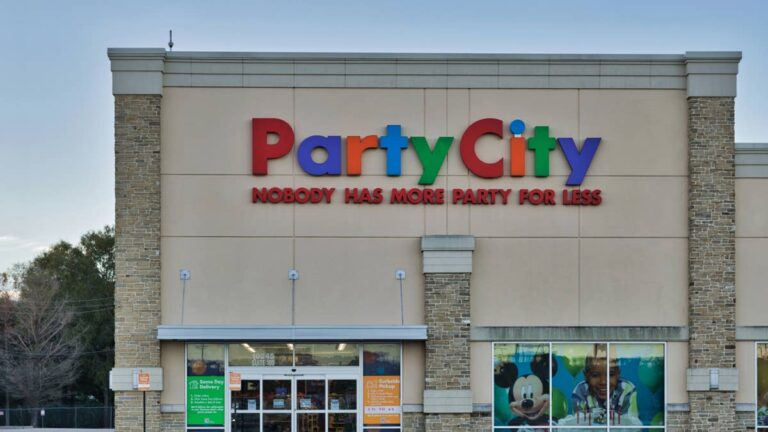
Shopping in-person for balloons and supplies for special event parties became a lot more difficult after Party City shut down over 700 of its stores after its 2024 bankruptcy.

Consumers could try checking out Walmart or Target, but the choices at those stores are very limited compared to what Party City offered.

Shoppers can always try online retailers for merchandise, but you can’t physically see and feel the products you are buying to make sure you are purchasing the right items. The options are shrinking as remaining independent Party City store operators file for bankruptcy and in some cases close their stores.

Party City’s brick-and-mortar stores have been disappearing after the company filed for bankruptcy in 2024 and closed over 700 locations.

Brett_Hondow / Getty Images

Party City franchisee files bankruptcy

Party City of Arkansas Inc., which operates the party supplies retailer’s franchise locations in Little Rock and Fayetteville, Ark., filed its Chapter 11 petition in the U.S. Bankruptcy Court for the Eastern District of Arkansas, seeking to reorganize its debts. The company continues operating its stores as of Nov. 10.

The Little Rock, Ark.-based debtor listed $1 million to $10 million in assets and liabilities according to its petition, filed on Nov. 5, 2026.

The Party City franchisee was not a debtor in franchisor Party City Holdco Inc.’s bankruptcy filing on Dec. 21, 2024.

Party City of Arkansas is one of a handful of Party City franchisees that continued operating store locations after the parent company filed for bankruptcy and closed about 700 locations.

Just 11 Party City stores remain

Independent Party City franchisees operated 19 brick-and-mortar locations in the U.S. and Puerto Rico when 2026 began. Since January, eight Party City independent store franchisees closed stores in Austin and San Antonio, Texas; Midlothian, Va.; Honolulu; and all four in Puerto Rico: Bayamon, P.R.; Caguas, P.R.; Guaynabo, P.R.; and Mayaguez, P.R., according to the Party City store locator.

The 11 remaining Party City store locations include: Fayetteville; Little Rock; Bakersfield, Calif.; Fontana, Calif.; Hawthorne, Calif.; Porter Ranch area of Los Angeles; Sherman Oaks area of Los Angeles; South Plainfield, N.J.; Memphis, Tenn.; Humble, Texas; and Shenandoah, Texas.

Hawaii store drops affiliation

The Honolulu independent Party City franchise store at 888 North Nimitz Highway ended its affiliation with the national franchisor in July 2026 and became a new establishment known as Party Hawaii, KHON-TV in Honolulu reported.

The new party supplies store will sell merchandise targeting its Hawaiian clientele, according to Andrew Shum, Party Hawaii’s vice president of operations.

“One is to focus on things like everyday sets that are just popular in Hawaii, like casino or cowboy,” Shum said. “The other one is to look at specific things like luau, or maybe making graduation more specialized for Hawaii.”

The store will also seek local vendors to provide Hawaiian products like local snacks or candies, Shum said.

Party City partners with Staples

Party City established a strategic partnership with Staples in April 2026, bringing over 700 store-in-store party supplies shop locations to Staples stores across the nation.

Customers can shop in the designated Party City section of Staples stores for latex and foil party balloons, décor, tableware, gift bags, costume accessories, greeting cards, invitations, and party supplies.

Staples print services will enhance Party City’s products, creating personalized invitations, banners, yard signs, and posters for customers’ special occasions.

“As we take the new Party City to more places than ever before, finding the right partners is essential,” said Party City owner Ad Populum’s CEO Joel Weinshanker. “Staples stood out immediately, not only for its national footprint, but for its strong connection to the communities we have both been part of for years.”

The Party City brand launched in 1986 in New Jersey and grew to over 850 locations in North America. Following Party City’s December 2024 bankruptcy filing, Ad Populum affiliate New Amscan won a bankruptcy auction for the debtor’s brand and operating assets for $20 million.

Related: 57-year-old children’s apparel chain files Chapter 11 bankruptcy

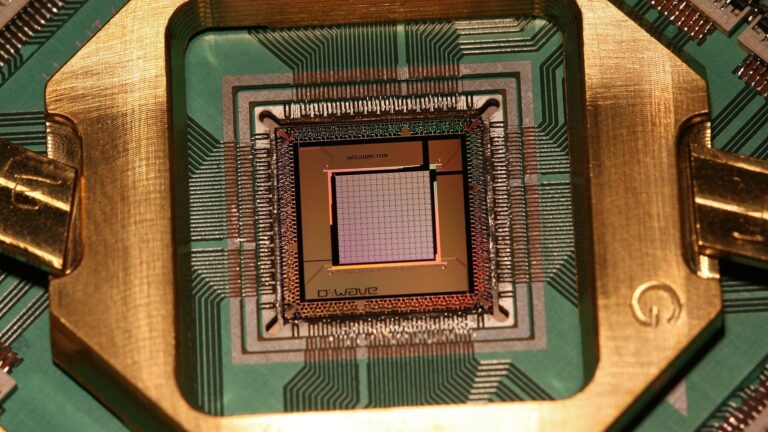
QBTS stock fell approximately 11% during Tuesday’s regular trading session after D-Wave Quantum reported third-quarter revenue above Wall Street expectations but disclosed weaker quarterly bookings, widening operating losses and declining cash reserves. The results, released before the November 10 market open, shifted investor attention toward the company’s ability to turn its substantial customer commitments into recognized revenue.

D-Wave Quantum (NASDAQ: QBTS) reported revenue of $4.51 million, compared with analyst estimates ranging from $4.33 million to $4.37 million. Revenue increased 21% year over year and approximately 46.5% from the previous quarter’s $3.08 million. However, the company recorded a loss of $0.13 per share, wider than the approximately $0.10 loss analysts expected.

Shares traded at $10.21 at 1:10 p.m. ET, down 10.99% from Monday’s $11.47 closing price, according to StockAnalysis. The stock had opened at $11.06 and traded as low as $10.11. Monday’s close represented a 7.40% gain, following an 18.01% advance on Friday, making Tuesday’s decline a reversal of a two-session rebound.

The results present a mixed picture. D-Wave has accumulated significantly more future business than a year ago, but the latest quarter generated only $1.9 million in new bookings, while operating expenses continued rising much faster than revenue. Management expects a substantial increase in fourth-quarter revenue from planned quantum computer deliveries, placing considerable weight on execution before year-end.

D-Wave Beats Revenue Estimates but Misses Earnings Expectations

D-Wave’s official third-quarter earnings release confirmed revenue of $4.513 million for the three months ended September 30, 2026. That exceeded the $4.37 million consensus reported by MarketBeat by approximately $143,000, or 3.3%.

The outcome also exceeded the more conservative revenue outlook management provided in August. During the second-quarter earnings call, then-Chief Financial Officer John Markovich said third-quarter revenue would likely increase modestly from approximately $3.1 million because two anticipated system deliveries were expected in the fourth quarter.

Although the resulting sequential growth was approximately 46.5%, the absolute increase amounted to only around $1.43 million. The discrepancy between the company’s cautious guidance and the higher analyst consensus had been a central question ahead of the announcement.

FinanceFeeds examined that issue in its November 4 QBTS stock analysis, which highlighted the importance of delayed system deliveries and the concentration of expected annual revenue in the final quarter.

D-Wave’s revenue growth came primarily from professional services and quantum computing as a service, known as QCaaS. Professional services revenue increased by approximately $1.5 million year over year, while QCaaS revenue grew by $800,000. System sales revenue declined by $1.5 million.

The changing revenue mix affected profitability. GAAP gross profit declined 11% to $2.4 million, while gross margin fell to 52.9%, down from 71.4% a year earlier. Management attributed the reduction primarily to the higher proportion of professional services, which carry lower margins, alongside additional stock-based compensation.

GAAP operating expenses increased 84% to $55.9 million, approximately 12 times quarterly revenue. The company reported a $48.2 million net loss, compared with $140 million a year earlier. Much of that improvement reflected the absence of substantial noncash warrant-related charges recorded in the previous year, rather than stronger operating profitability.

Adjusted EBITDA loss widened 83% to $37.7 million, reflecting continued spending on technology development and commercial expansion.

Quarterly Bookings Fall While Nine-Month Orders Surge

Bookings provide another view of D-Wave’s commercial progress. The company reported third-quarter bookings of $1.9 million, down 19% from approximately $2.3 million in the comparable 2025 quarter.

For the first nine months of 2026, however, bookings reached $37.4 million, representing an increase of 611% year over year. The substantial difference reflects the timing of large transactions, including a $20 million quantum computer agreement with Florida Atlantic University.

On Tuesday’s earnings call, Acting CFO Greg Golkov said the dollar value of D-Wave’s sales pipeline had expanded more than 75% from the end of June and more than tripled since the end of 2025. Management attributed the increase to growing interest in system purchases.

The distinction between bookings and revenue remains critical. Bookings measure customer orders expected to generate future revenue, whereas revenue is recognized as contractual performance obligations are satisfied. Large system orders can therefore support the company’s longer-term outlook without immediately increasing quarterly sales.

D-Wave reported remaining performance obligations of $38.3 million at September 30, up 1,221% from $2.9 million a year earlier. However, the balance declined from $40.7 million at the end of June.

Management expects approximately 59% of the September balance to become recognized revenue within 12 months and 71% within 24 months. Investors will need to assess whether those commitments convert at the expected pace.

The company’s balance sheet also weakened during the quarter. Cash and marketable investment securities declined to $503.4 million from $546.2 million at June 30, a decrease of approximately $42.8 million.

D-Wave disclosed a definitive agreement with the US Department of Commerce providing access to up to $100 million under the CHIPS and Science Act. The financing is conditional on meeting specified milestones, and management said no funds had been received under the arrangement as of September 30.

QBTS Stock Slides as Investors Assess the Earnings Mix

Tuesday’s trading showed that the modest revenue beat was insufficient to sustain the rally that carried QBTS higher during the previous two sessions.

The shares initially traded near $10.93 before the opening bell, down approximately 4.7%, according to the earlier FinanceFeeds premarket report on D-Wave’s earnings and bookings decline. Selling intensified during regular trading, with the stock falling approximately 11% by early afternoon.

The reaction came despite management highlighting customer deployments and technological progress. D-Wave reported that NTT DOCOMO implemented another production application using its hybrid quantum technology. The company also delivered an Advantage2 quantum computer for installation in Como, Italy, and introduced a beta version of its gate-model simulator.

Nevertheless, investors are weighing those developments against operating losses, the timing of commercial system sales and the gap between future orders and current revenue.

The stock’s decline also followed a substantial recovery from its November 5 intraday low of $8.48. After closing at $9.05 that day, QBTS advanced to $10.68 on Friday and $11.47 on Monday before reversing following the results.

The volatility illustrates the extent to which expectations for future commercialization can influence a company generating relatively limited quarterly revenue.

IonQ’s Q3 Results Set a Different Benchmark for Quantum Stocks

D-Wave’s report follows a considerably stronger revenue announcement from rival IonQ, which reported third-quarter results on November 5.

According to IonQ’s official financial results, revenue reached $173.83 million, exceeding the approximately $141.63 million analyst expectation cited ahead of the release. The company increased its full-year revenue guidance to $505 million to $515 million.

However, the revenue comparison requires qualification. IonQ’s reported total included $83.5 million from SkyWater Foundry Services, while its IonQ Platform segment contributed $90.3 million. Acquisitions therefore account for part of the difference in reported revenue scale.

The two companies also use different quantum computing architectures and commercial approaches. D-Wave offers quantum annealing systems and is developing gate-model technology, while IonQ’s platform includes trapped-ion computing and other quantum technologies.

Still, IonQ’s performance demonstrates why investors are increasingly examining recognized revenue, customer deployment schedules and operating costs rather than relying exclusively on future bookings or technological announcements.

Fourth-Quarter System Deliveries Become D-Wave’s Next Test

The immediate focus now turns to D-Wave’s expected fourth-quarter system sales, particularly the $20 million agreement with Florida Atlantic University.

During Tuesday’s earnings conference call, Golkov said D-Wave still expects to deliver that system and recognize a substantial portion of the associated revenue during the fourth quarter. Additional revenue related to installation and calibration is expected to be recognized in early 2027.

That schedule leaves an important execution risk. Because system transactions are much larger than recurring QCaaS contracts, their delivery dates can produce substantial fluctuations in quarterly revenue.

Investors should monitor whether D-Wave completes its anticipated system shipments before December 31, whether the associated revenue is recognized on schedule and how much installation-related income is deferred into 2027.

Gross margins will also warrant attention. A higher contribution from system sales could materially change the revenue mix compared with the service-heavy third quarter, although the effect on profitability will depend on the economics of the individual contracts.

Management’s longer-term plans include developing a 100,000-qubit annealing computer and a 10,000-qubit gate-model system. These initiatives may expand the company’s addressable market, but they also require continued investment while its existing commercial business remains loss-making.

The third-quarter results therefore leave investors with a clearer near-term test than the modest revenue beat alone. D-Wave has substantial contracted business, a growing sales pipeline and more than $500 million in cash and marketable securities. Yet quarterly bookings fell, operating costs increased and recognized revenue remains small relative to its spending.

For QBTS stock, the next major question is whether the expected fourth-quarter deliveries can convert that backlog into a meaningful increase in revenue. The timing and profitability of those shipments will provide stronger evidence of commercial progress than Tuesday’s headline earnings beat.

Oil prices dropped sharply on Monday after US President Donald Trump played down the possibility of renewed strikes on Iran, while gold advanced as easing crude prices reduced inflation concerns.

Nvidia shares fell as the company launched an investigation into reports involving CEO Jensen Huang, and Tesla CEO Elon Musk defended the decision to wind down Cybertruck production next year, saying the move was not driven by profitability concerns.

Oil prices fall as Trump downplays fresh Iran strikes

Oil prices extended last week’s decline on Monday after Trump said he was highly unlikely to order fresh attacks on Iran as long as negotiations to end the conflict continued.

Brent crude futures fell 5.68% to $92.80 a barrel, after touching an intraday low of $92.40.

US West Texas Intermediate futures declined 4.47% to $85.91.

The decline followed a 16% weekly plunge in Brent prices, its steepest weekly drop since the beginning of the Covid-19 pandemic.

Investors have increasingly priced in the possibility of de-escalation, although attacks on vessels near the Strait of Hormuz continued.

The situation remains uncertain, with Iran saying it would not negotiate without practical steps from Washington to meet its conditions.

Saudi Arabia and Oman also stressed the importance of diplomatic efforts to safeguard maritime security.

Supply concerns have also eased.

JP Morgan estimated the global oil surplus at around 1.4 million barrels per day in October, while a Reuters survey showed OPEC production increased by 1.38 million barrels per day to 22.87 million bpd.

However, attacks on shipping and Saudi energy infrastructure continue to pose risks.

A fire was extinguished after Saudi Arabia’s East-West pipeline was struck, although operations were not affected.

Gold rises as lower oil prices ease inflation concerns

Gold prices climbed on Monday as a weaker US dollar and declining crude prices supported bullion, with investors looking ahead to US inflation data.

Spot gold gained 1.49% to $4,126.06 an ounce, while US gold futures for December delivery settled 1.6% higher at $4,140.70.

Lower oil prices helped ease concerns that energy costs would keep inflation elevated and force central banks to maintain restrictive monetary policies.

A weaker dollar also made gold more affordable for overseas buyers.

Gold had gained around 5% last week amid hopes that the US midterm election results could support efforts to end the conflict with Iran.

However, stronger-than-expected US employment data subsequently reinforced expectations of higher interest rates.

Markets currently see an 84.5% probability of a Federal Reserve rate increase in December, according to CME’s FedWatch tool.

Investors are awaiting US consumer price data on Tuesday and producer price figures on Friday for further clues about the central bank’s policy outlook.

Nvidia investigates reports involving CEO Jensen Huang

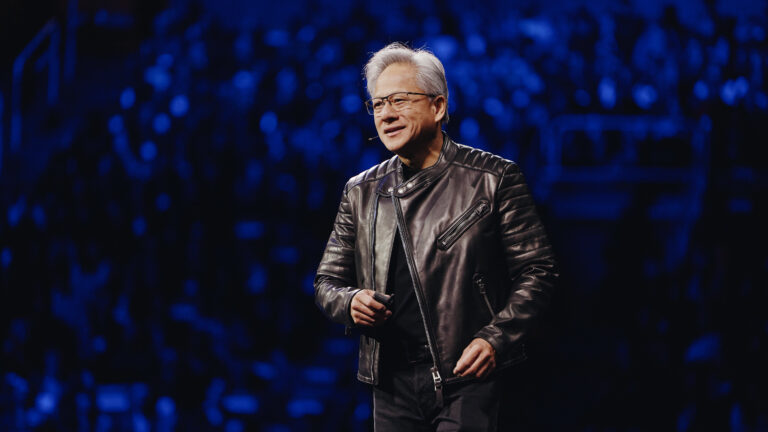
Nvidia shares fell 5.2% on Monday after the company announced an independent investigation into reports that CEO Jensen Huang had been targeted by a foreign intelligence operation.

The company’s independent directors and outside lawyers will examine the reports.

Nvidia said it had no reason to believe confidential information had been compromised and reaffirmed its confidence in Huang.

The development adds uncertainty for the chipmaker ahead of its November 17 earnings report, with shares already under pressure from concerns about AI valuations and the financing required for data-centre expansion.

The investigation also follows reports concerning Huang’s relationship with Alice Huang, a former executive at Singapore-based Megaspeed, which buys Nvidia chips.

US authorities have reportedly investigated suspected Chinese intelligence links, while Megaspeed faces separate scrutiny over restricted-chip exports.

Tesla to wind down Cybertruck production in eight months

Tesla CEO Elon Musk defended the company’s decision to wind down Cybertruck production in approximately eight months, rejecting reports that the move was driven by poor sales or unprofitability.

In a post on X, Musk said the Cybertruck’s order rate exceeded its production rate and that Tesla would try to build as many vehicles as possible before shutting down the production line.

He added that the company would have to return deposits to many customers.

Musk said the decision reflected the opportunity cost of continuing to manufacture the vehicle rather than expanding production of the Cybercab, Tesla’s planned autonomous vehicle.

Tesla sold 20,237 Cybertrucks in the US last year, down 48% from 38,965 in 2024, according to figures cited by Reuters.

The number was also well below Musk’s earlier annual sales prediction of 250,000 vehicles.

Musk said expanding factory capacity was difficult, arguing that Tesla needed to prioritise scaling Cybercab production.

AI disclosure: AI tools assisted with research and drafting of this piece. An Invezz editor reviewed the facts, sources and wording before publication. Any opinions or analysis are Invezz’s, not those of an automated system.

The post Evening digest: Oil falls, Nvidia investigates Jensen Huang reports appeared first on Invezz

Markets balance central bank policy tightening, falling oil prices from Middle East diplomacy, and tech sector resilience amid Nvidia’s executive scandal.

Central Bank Tightening Paths and Persistent Inflation

Major central banks, including the Federal Reserve, the Bank of England, and the Reserve Bank of Australia, remain focused on managing persistent inflation risks. While headline inflation figures in some regions have moderated, sticky service-sector prices and resilient labor market conditions continue to complicate monetary policy decisions. Federal Reserve officials have noted that strong consumer spending and ongoing cost pressures keep the door open for additional rate adjustments, stressing a cautious approach to future policy moves. Similarly, the Bank of England faces the dual challenge of incorporating productivity gains from artificial intelligence investments while addressing potential asset bubble risks. Down Under, the Reserve Bank of Australia has implemented further rate increases to contain broad-based domestic inflation, accepting slower growth as a necessary trade-off to anchor long-term price stability.

Middle East Diplomacy, Falling Oil Prices, and Currency Markets

Geopolitical developments in the Middle East have driven major shifts across commodity and foreign exchange markets. Renewed optimism surrounding potential US-Iran diplomatic talks has helped ease energy supply concerns, prompting a sharp drop of over 3% in West Texas Intermediate crude oil prices. This decline in oil prices, combined with a softening US Dollar Index, has created headwinds for commodity-exporting currencies like the Canadian Dollar. The Bank of Canada faces a complex policy environment as lower energy revenues coincide with consecutive months of domestic job losses, contrasting with the stronger economic metrics supporting the US Dollar. Meanwhile, lower Treasury yields and Greenback weakness have provided temporary support to risk-sensitive assets, lifting currencies such as the Euro, British Pound, and Australian Dollar, while driving gold back toward key resistance levels.

Nvidia Leadership Investigation and Equity Market Resilience

Equity markets experienced significant volatility following reports of an independent corporate investigation into Nvidia Chief Executive Jensen Huang. The board’s inquiry centers on personal conduct and potential foreign intelligence exposure related to a major customer, though initial reviews indicate no compromise of company secrets or national security. Despite an immediate overnight sell-off in Nvidia shares, broad market indices—led by the NASDAQ Composite—demonstrated notable resilience by staging a strong intraday rally. Investors redirected capital into alternative hardware and semiconductor firms, as well as broader technology infrastructure plays supported by high-profile multi-billion-dollar data center compute agreements. While regulatory scrutiny around AI export controls remains a key point of focus for analysts, the market reaction reflects investor confidence in the sector’s overarching structural demand.

Top economic events for next week:

  • 11/09/2026 23:30:00 – Westpac Consumer Confidence: This medium-impact Australian release provides a vital reading on consumer sentiment, influencing the Australian Dollar by gauging household willingness to spend and economic outlook.
  • 11/10/2026 00:01:00 – BRC Like-For-Like Retail Sales (YoY): This medium-impact British report tracks changes in retail sales performance, offering key insights into UK consumer demand and retail sector health for the Pound Sterling.
  • 11/10/2026 03:00:00 – Trade Balance USD: This medium-impact Chinese trade data release measures the country’s trade surplus or deficit in US dollars, directly impacting regional trade partners like Australia and broader global market sentiment.
  • 11/10/2026 07:00:00 – Eurogroup Meeting: A high-profile gathering of eurozone finance ministers that addresses regional fiscal policies, economic coordination, and monetary stability within the European Union.
  • 11/10/2026 09:00:00 – Fed’s Waller speech: This medium-impact address by a Federal Reserve official offers critical commentary on US monetary policy direction, interest rate paths, and economic health, shaping Greenback valuations.
  • 11/10/2026 13:30:00 – Consumer Price Index (YoY): A high-impact US inflation release that measures the annual change in consumer prices, serving as a primary metric for the Federal Reserve’s upcoming rate decisions.
  • 11/10/2026 18:30:00 – BoC Summary of Deliberations: This medium-impact Canadian release outlines the central bank’s policy discussions, helping traders understand how policymakers weigh inflation against labor market weaknesses.
  • 11/11/2026 07:00:00 – Harmonized Index of Consumer Prices (YoY): A high-impact European inflation report that standardizes price growth measurements across EU member states, steering the European Central Bank’s policy stance.
  • 11/11/2026 09:45:00 – ECB’s President Lagarde speech: A major high-impact address from the head of the European Central Bank, providing definitive clues on eurozone interest rate trajectories and economic stability.
  • 11/11/2026 12:00:00 – MBA Mortgage Applications: This US housing market indicator tracks weekly applications for mortgage purchases and refinancings, offering insight into consumer credit demand and real estate sector momentum.

The subject matter and the content of this article are solely the views of the author. FinanceFeeds does not bear any legal responsibility for the content of this article and they do not reflect the viewpoint of FinanceFeeds or its editorial staff.

The information does not constitute advice or a recommendation on any course of action and does not take into account your personal circumstances, financial situation, or individual needs. We strongly recommend you seek independent professional advice or conduct your own independent research before acting upon any information contained in this article.

After closing all its stores, filing for bankruptcy, and undergoing several ownership changes, Bed Bath & Beyond is attempting to rebuild its retail footprint.

The home goods retailer is making a comeback after years of store closures, but its latest strategy raises questions about whether it can avoid repeating the mistakes that contributed to its previous financial struggles.

Founded in 1971, Bed Bath & Beyond is now owned by Neighborhood Intelligence, Inc.

Bed Bath & Beyond opens its first standalone store since bankruptcy

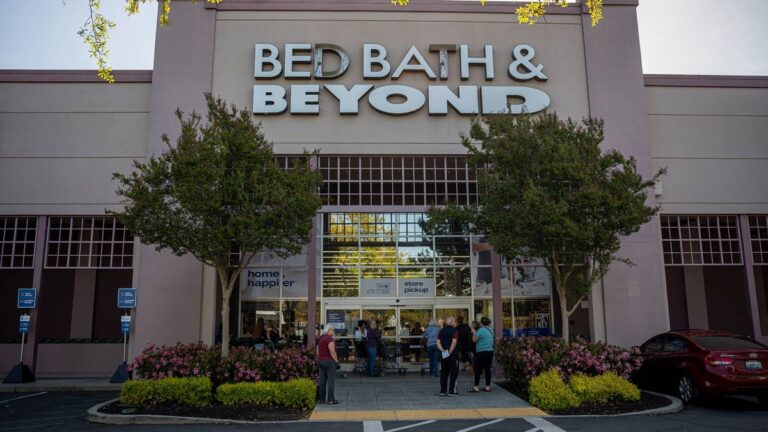
Bed Bath & Beyond has opened its first standalone store under its current ownership, three years after the original retailer filed for Chapter 11 bankruptcy in 2023.

The new store is located at 7580 W. Bell Road in Glendale, Arizona, and spans 19,000 square feet. It offers a familiar Bed Bath & Beyond shopping experience, updated to reflect today’s homes and lifestyles.

The location features the retailer’s iconic towel wall, bedding displays, kitchen gadgets, storage and organization, and home décor. Products from The Container Store, including its organization solutions, are also available.

Perhaps most notably, the retailer is bringing back its iconic 20% off coupon, a promotional strategy that became closely associated with its previous business model.

Although the coupon helped attract shoppers, Bed Bath & Beyond’s heavy reliance on discounts raised questions about its ability to maintain healthy profit margins and compete without promotions.

“Bed Bath & Beyond is a brand that generations of customers have welcomed into their homes, and we’re excited to bring it back to their neighborhoods,” said Neighborhood Intelligence President Amy Sullivan in a statement.

“We’re bringing back the things customers have always loved, from the iconic shopping experience to the brands, products, and value they remember, while introducing new ways to help customers make the most of every room in their home. Glendale is an important milestone, and we’re just getting started.”

Bed Bath & Beyond opens its first standalone store since bankruptcy and under its current ownership.

Bloomberg / Getty Images

Bed Bath & Beyond plans to open more stores after closing several locations

The Glendale opening is part of the company’s broader efforts to expand Bed Bath & Beyond through standalone stores and co-branded locations with The Container Store.

These planned openings fall under Neighborhood Intelligence’s (NXH) broader Everything Home strategy, which aims to connect customers with retail brands, home products, and services through an expanding network of neighborhood stores and digital experiences.

The company plans to open additional standalone Bed Bath & Beyond stores in Minnesota, Florida, and Mississippi in 2027.

“We want customers to rediscover Bed Bath & Beyond, find the things they love, and have a reason to come back again and again. That’s how we build lasting relationships with our customers and stronger businesses in every neighborhood,” said Sullivan.

However, the expansion comes as Neighborhood Intelligence continues to reduce its footprint across its business while eliminating locations that no longer meet its financial expectations.

Neighborhood Intelligence closes stores amid expansion and ownership changes

Bed Bath & Beyond has undergone several restructuring efforts and ownership changes over the last few years.

The original retailer filed for Chapter 11 bankruptcy in April 2023 after accumulating $1.8 billion in long-term debt. The filing led to the closure of all its existing stores, including 360 Bed Bath & Beyond locations and 120 buybuy BABY stores.

Here’s some of my previous coverage on Bed Bath & Beyond business:

The company’s financial struggles reflected broader challenges with its retail strategy, including its reliance on promotions and discounts to attract customers. While its 20% off coupon helped drive traffic, the retailer’s reliance on frequent promotions contributed to concerns about its ability to maintain margins and sell products at full price.

Two months after the bankruptcy filing, Overstock.com acquired Bed Bath & Beyond’s intellectual property and related assets for $21.5 million, allowing the online retailer to revive the brand.

The acquiring company subsequently operated under the names Beyond, Inc. and Bed Bath & Beyond, Inc. before adopting its current name, Neighborhood Intelligence, Inc., in August 2026.

Today, Neighborhood Intelligence owns several retail brands, including Bed Bath & Beyond, Overstock, buybuy BABY, Kirkland’s, and The Container Store, as well as home organization businesses Elfa and Closet Works. The company is also expanding its Home Services and Home Ownership businesses.

Despite its plans to reopen Bed Bath & Beyond stores, the company continues to close locations across its portfolio as it works to improve financial performance and reshape its retail operations.

During Neighborhood Intelligence’s third-quarter fiscal 2026 earnings call, CEO Marcus Lemonis said the company plans to close 11 The Container Store locations by the end of the year. It is also in the process of exiting 39 Kirkland’s stores that no longer meet profitability standards and have leases approaching expiration.

Together, the upcoming exits show how the company is prioritizing locations it considers financially sustainable as it expands its retail strategy.

Neighborhood Intelligence’s latest financial results also reflect changes across its business. During the third quarter of fiscal 2026, the company reported a 98% year-over-year revenue increase, primarily driven by its acquisitions of Kirkland’s and The Container Store. Its gross margin reached 34%.

These closures underscore the balancing act facing Neighborhood Intelligence as it attempts to revive a familiar retail brand while restructuring other businesses to build a more sustainable portfolio.

Related: Popular formerly bankrupt retail chain makes brick-and-mortar comeback

Rocket Lab (NASDAQ: RKLB) shares climbed 11.51% to $59.18 during Monday’s regular trading session as investors prepared for the company’s third-quarter results after the market close. The advance extends Friday’s 15.39% rally, which took the shares to $53.07, and puts the earnings announcement in focus as investors look for an updated timetable for the delayed Neutron rocket.

Rocket Lab will release its Q3 2026 financial results on Monday, November 9, after the US market closes. The company scheduled its conference call for 5 p.m. ET (2 p.m. Pacific Time), or 22:00 UTC, according to its October 20 investor-relations announcement.

The financial expectations are relatively clear. Rocket Lab previously guided for revenue of $250 million to $265 million, with a non-GAAP gross margin of 35% to 37% and an adjusted EBITDA loss of $17 million to $23 million. The more significant question for the call may be whether CEO Peter Beck provides a more specific target for Neutron’s first launch, which has moved from its previous 2026 schedule into 2027.

RKLB Stock Extends Friday’s 15% Rally Ahead of Earnings

Yahoo Finance recorded Rocket Lab at $59.18, up $6.11 or 11.51%, at 11:26 a.m. ET on Monday. The shares had closed Friday at $53.07, gaining $7.08 or 15.39% during that session. The latest move represents a substantial recovery from Thursday’s $45.99 close, although the stock remains volatile following the October announcement that Neutron’s first flight would be delayed.

The upcoming report arrives after a record second quarter. Rocket Lab generated $234 million in Q2 revenue, up 62% year over year, while its contracted backlog reached $2.36 billion, an increase of 137%. The company also disclosed more than $1 billion in new launch and space systems contracts entered into during the third quarter up to the August 10 announcement.

Those figures provide a strong revenue baseline, but the market will also assess whether the company can maintain its growth while continuing to fund Neutron’s development and its wider infrastructure expansion.

Rocket Lab’s $250 Million to $265 Million Revenue Guide

Rocket Lab’s Q3 guidance calls for revenue between $250 million and $265 million, compared with the $234 million reported in the preceding quarter. The company also expects GAAP gross margins of 29% to 31%, non-GAAP gross margins of 35% to 37%, and an adjusted EBITDA loss between $17 million and $23 million.

Analyst revenue estimates are clustered around the midpoint of that range. Koyfin puts expected revenue at $257.18 million, while Fiscal AI gives approximately $257.3 million. Both figures are close to management’s $257.5 million guidance midpoint.

EPS estimates are less consistent. Koyfin shows an expected GAAP loss of $0.07 per share, while Fiscal AI lists a loss of $0.02. These are provider-specific estimates and should not be treated as directly comparable without checking their accounting and adjustment methodologies.

The revenue expectations imply growth of approximately 66% from the $155.08 million reported in the third quarter of 2025. However, revenue growth alone will not settle the investment debate. Investors will also be watching gross margins, operating expenses and the adjusted EBITDA loss to assess whether the expanding business is moving toward improved operating economics.

FinanceFeeds previously examined the company’s record second-quarter performance, growing backlog and third-quarter guidance in its analysis of Rocket Lab’s Q2 results and the Neutron and Iridium investment outlook.

Neutron’s First Launch Has Moved Into 2027

The Neutron timetable is likely to attract particular attention during the earnings call. Rocket Lab’s August 10 Q2 release said production of the first-stage tank remained aligned with a target delivery to the launch pad in the fourth quarter of 2026. That was a pad-delivery milestone, not a confirmed maiden-launch date.

On October 14, Beck announced that Neutron’s inaugural flight would move into 2027 after manufacturing problems affected the carbon-composite propellant dome on the first-stage tank.

During the update, Beck explained that inspectors had found voids, or small air pockets, within the carbon-fiber layers of a newly cured forward dome. The company reproduced the problem during testing and adjusted its manufacturing process. A subsequent aft dome produced using the revised method was described by Beck as the highest-quality carbon-composite dome the company had manufactured.

However, Rocket Lab still needs to manufacture and inspect a replacement forward dome before assembling the complete first stage. Hydrostatic and cryogenic testing must follow. Beck said the company expected the first two steps to be completed before the first quarter of 2027, with the remaining assembly and testing work completed during that quarter, assuming progress stays on schedule.

He deliberately avoided committing to another launch date, saying: “I’d rather show you real-time progress than give you a date that I might have to walk back.”

That statement sets up a clear question for Monday’s call. Investors will want to know whether the manufacturing and testing milestones remain on schedule and whether management has gained enough visibility to narrow the launch window. A more specific date would provide greater visibility, but the company has so far made clear that it wants to complete the necessary engineering work before committing to another target.

FinanceFeeds covered the original setback in its October 15 report on Rocket Lab stock falling after the Neutron delay to 2027, including the subsequent reductions in price targets from KeyBanc and Clear Street.

What Investors Need From Rocket Lab’s Q3 Call

Beyond the headline revenue figure, the call will test whether Rocket Lab can maintain the momentum of its existing launch and space systems operations while Neutron remains in development. The $2.36 billion backlog reported in June provides substantial contracted business visibility, but investors will want more information about the timing of deliveries, contract execution and the contribution of the different business segments.

Management’s comments on the Iridium acquisition will also remain relevant. Rocket Lab announced the transaction as part of its broader ambition to become a vertically integrated space company, combining spacecraft manufacturing, launch services and satellite communications. The acquisition adds another layer to the company’s investment and execution requirements.

For Neutron, the most useful information would be confirmation that the replacement forward dome is progressing through manufacturing and inspection, alongside a clearer timetable for first-stage assembly and qualification testing. Investors should distinguish those engineering milestones from an actual launch commitment.

Rocket Lab’s Friday and Monday share-price advances show that investors are entering the results announcement with renewed buying interest. But the earnings report will need to support the optimism with continued revenue growth, controlled operating losses and tangible progress on Neutron. A new launch date would help narrow one of the company’s largest execution uncertainties, although the more important milestone remains demonstrating that the rocket can complete testing and reach its first flight reliably.

Berkshire Hathaway stock is doing well and is hovering near its all-time high as investors move to its safety amid the ongoing rout in the artificial intelligence (AI) industry. Its class A shares were trading at $856,612 on Friday, a few points below its all-time high of $878,395. It has soared by over 25% from the year-to-date high.

Berkshire Hathaway boosts buybacks as profits dive

Berkshire Hathaway, the 12th-largest company in the world, has done relatively well this year, a trend that has continued amid the artificial intelligence (AI) jitters.

The company published its financial results on Saturday, showing that it boosted its share repurchases as its profits dropped. It repurchased shares worth over $9 billion in the quarter. It bought 4,536 Class A shares and 12.38 million Class B shares. This is in top of the $2.4 billion buybacks it made in the second quarter.

Berkshire Hathaway’s results were mixed. Most notably, its profit dropped during the quarter, driven by its investments and underwriting business. Its insurance segment has remained under pressure in the past few quarters, mostly because of Geico. Its unrealized investment gains stood at $11 billion, much lower than the $21 billion it made in Q3’23. 

The insurance and other segments made over $91 billion in revenues in the last quarter, much higher than the $81.6 billion it made in the same period last year. The railroad, revenue rose to $6.8 billion, while its utilities and energy and services rose to $6.5 billion and $1.2 billion, respectively. 

Berkshire Hathaway maintains the biggest cash in the United States. A look at its balance sheet shows that its insurance and other cash and cash equivalents stood at over $36 billion, while the short-term investments stood at over $336 billion. Investments in fixed-maturity securities and equity securities stood at $17 billion and $335 billion, respectively. Its railroad, utilities, and energy business has over $4.6 billion in cash. 

Analysts have a mixed outlook on Berkshire Hathaway’s stock. UBS has a target of $942,405, while KBW and TD Cowen have $735,000 and $721,000, respectively.

Berkshire Hathaway stock technical analysis

BRK stock chart | Source: TradingView

On the charts, the Berkshire Hathaway stock has been in a strong bull run in the past few months. It has already crossed the important resistance level of $812,246, its highest level on May 2nd this year. 

The stock has remained above the 50-day and 200-day Exponential Moving Averages (EMA). Also, it has moved much higher than the Supertrend indicator, while the Relative Strength Index (RSI) has jumped to the overbought level. 

Therefore, the stock will likely continue rising as bulls target the key resistance level of $900,000. On the other hand, there is a risk that the stock may retreat and retest the key support of $812,246 and then resume the uptrend.

The post Berkshire Hathaway stock in focus as it boosts buybacks: what next? appeared first on Invezz

Updated 8 November 2026, 17:00 GMT. Palantir (PLTR) closed Friday 6 November at $160.38, up $5.39 or 3.48 percent (StockAnalysis), ending an eight-session losing streak that took the stock from $198.84 to $154.99. Friday’s gain came on about half of Thursday’s volume, and the shares still lost 12.9 percent on the week. Verdict: the bounce has not yet been tested by real buying, and US CPI on Tuesday is the first event that can do it. Reference levels: $152 below, $178 above.

Key facts

  • Friday close: $160.38, up 3.48 percent from $154.99; range $157.24-$163.97 on about 24.3 million shares (StockAnalysis, Yahoo Finance). After-hours trading was near $160.84.
  • The week: down 12.9 percent from the $184.11 close on 30 October.
  • Thursday: down 9.73 percent to $154.99 with a $152.60 low on 50.0 million shares, against a 30-day average of 23.8 million (Gotrade).
  • The streak: eight straight lower closes from 27 October to 5 November, a 22 percent fall from $198.84 (StockAnalysis).
  • 52-week range: $106.37 to $212.94 (Yahoo Finance). Friday’s close is 24.7 percent below the high.
  • Analysts: a “Buy” consensus from 33 analysts, with an average 12-month target of $222.25 and a range of $80 to $273 (StockAnalysis, updated 5 November).
  • Next company catalyst: fourth-quarter results, expected in February 2027 (Trefis).

What happened on Thursday

Palantir issued no announcement, earnings report or filing on 5 November (Trefis). The 9.73 percent fall came with the market: the S&P 500 lost 4.4 percent, the Nasdaq Composite 5.5 percent and the Technology Select Sector SPDR fund 8.0 percent, in a sell-off of stocks tied to AI capital spending (Trefis). Yahoo Finance linked the move to the Democratic win in Congress, according to Gotrade. Palantir fell further than Snowflake (down 7.2 percent) and Microsoft (down 3.6 percent), and only one session in the prior 365 days was worse: an 11.6 percent drop on 4 February 2026 (Trefis).

The stock was already falling before the rout. Third-quarter results on 2 November beat forecasts, but it kept sliding after them. Our desk covered the bookings slowdown in PLTR Stock $154.99: Eighth Straight Loss, and our post-results page has the full quarter, including the raised full-year revenue guide of $8.530-$8.534 billion. That page’s $155 bear level was reached on Thursday.

Why Friday’s bounce is unproven

Friday’s 3.48 percent rise compares with a 1.4 percent gain for the Invesco QQQ fund, which tracks the Nasdaq 100 (Yahoo Finance). Palantir out-gained the index, which is what a rebound after an eight-day fall should do. Three details keep the signal weak:

  • Volume: about 24.3 million shares, against 50.0 million on Thursday, so the rebound drew about half the participation of the sell-off.
  • Range: the $163.97 high stayed below Thursday’s $166.72 open and below the $164.55 low of 10 September, a level that used to be support (Yahoo Finance).
  • Valuation: at Thursday’s close the stock traded at 51.2 times trailing sales, against 3.2 times for the S&P 500 (Trefis). At that multiple, higher interest rates matter a great deal.

Rates are the immediate risk. The US added 165,000 jobs in October against about 65,000 expected, which lifted the odds of a December Fed rate hike to about 80 percent (GoldSilver, citing CME FedWatch). Our desk covered the release in US Economy Adds 165,000 Jobs as December Fed Rate Hike Odds Rise.

What Wall Street is saying

Analysts lifted or held their targets around the results, and most of these calls were made before Thursday’s close (StockAnalysis):

  • Goldman Sachs (Gabriela Borges): Buy, target raised to $235 from $230 on 5 November.
  • Bank of America (Ronald Epstein): Buy, $255 target reiterated on 5 November.
  • Barclays (Anthony Valentini): Buy, target raised to $273 from $265 on 4 November.
  • Freedom Capital Markets (Almas Almaganbetov): Buy, target raised to $250 from $230 on 4 November.

The $222.25 average sits 38.6 percent above Friday’s close, while the low end of the range, $80, is about half of it. The gap between those two numbers shows how far apart the views on valuation remain.

Palantir stock: bull, base and bear

Scenario PLTR What has to happen Anchor
Bear $152 A hot CPI print pushes December hike odds higher, AI stocks sell off again and Friday’s low gives way. Thursday’s $152.60 low; about 4.9 percent below $160.38.
Base $157-$172 The streak stays broken but buyers wait for Tuesday’s CPI and the week’s AI results before paying up. Friday’s $157.24 low to Wednesday’s $171.70 close.
Bull $178 CPI eases hike fears, CoreWeave and Nebius reassure on AI demand, and the stock recovers its entire post-results loss. The $178.34 close on 2 November, the last before the report; about 11.2 percent above $160.38.

The bear case sits below Friday’s close. Analyst targets are listed separately above. These are reference levels measured from the verified closing price, not forecasts.

What to watch this week

  • Monday’s volume: a gain on more than Friday’s 24.3 million shares would be the first sign of real buying.
  • Tuesday 10 November: US October CPI at 8:30 a.m. ET (BLS). CoreWeave reports its third quarter the same day.
  • $152.60: Thursday’s low. A close below it would be the lowest since 3 August (Yahoo Finance).
  • Thursday 12 November: Nebius reports before the open, another read on AI spending.
  • 17 November: Nvidia’s results, covered on our Nvidia week-ahead page, are the biggest AI event left this month.

Quick take: Palantir closed Friday at $160.38, up 3.48 percent and out of an eight-session losing streak, but on half of Thursday’s volume and still down 12.9 percent on the week. Tuesday’s CPI is the first real test. Expect $157-$172 until then; $152 needs Thursday’s low to break, $178 needs the market to erase the post-results loss.

FAQ

What is the Palantir stock price today?

US markets are closed for the weekend. Palantir closed Friday 6 November at $160.38, up 3.48 percent, and traded near $160.84 after hours (StockAnalysis). Regular trading resumes at 9:30 a.m. ET on Monday.

Why did Palantir stock drop 9.7 percent?

The 9.73 percent fall on 5 November came with a broad sell-off in AI-linked stocks. Palantir itself released no news that day (Trefis).

Did Palantir’s losing streak end?

Yes. The stock fell for eight straight sessions from 27 October to 5 November, then rose 3.48 percent on 6 November (StockAnalysis).

What is the Palantir stock price target?

The average 12-month target from 33 analysts is $222.25, with a low of $80 and a high of $273 (StockAnalysis, updated 5 November). That average is 38.6 percent above Friday’s close.

When does Palantir report earnings next?

Fourth-quarter results are expected in February 2027 (Trefis). The company reported its third quarter on 2 November.

What are the key levels for PLTR?

Support sits at $157.24 and $152.60, Friday’s and Thursday’s lows. Resistance is at $163.97, $166.72, $171.70 and $178.34 (StockAnalysis, Yahoo Finance).

Sources: StockAnalysis, 6-8 November (closes, after-hours price, analyst consensus and target changes); Yahoo Finance, 6 November (daily ranges, volume, 52-week range, QQQ, 10 September low); Trefis, 6 November (Thursday’s market moves, company news check, valuation, next results); Gotrade, 6 November (Thursday’s session and volume); GoldSilver, 6 November (payrolls and FedWatch odds); Bureau of Labor Statistics (CPI schedule).

Disclaimer: This article is for informational purposes only and does not constitute financial or investment advice. Stock prices are volatile. Do your own research and consult a licensed financial adviser before making investment decisions.

Shopify did almost everything Wall Street asked for in the third quarter. Investors sold the stock anyway.

Shares fell as much as 13.2% on Nov. 3 after the e-commerce platform reported results, The Motley Fool reported. Revenue rose 32% to $3.74 billion, and free cash flow hit $816 million, according to Shopify.

So why the selloff? A Deutsche Bank research report shared with TheStreet points to a problem most companies would love to have. Shopify has trained investors to expect beats, and this time the company only almost matched expectations.

Three numbers that spooked Shopify investors

Deutsche Bank analyst Bhavin Shah summed it up in a Nov. 3 note titled “3Q26 First Take; In-line quarter not enough.”

“While ~30% GMV [gross merchandise volume, which means the value of goods sold through Shopify] and revenue growth remains impressive, the lack of upside will be viewed as disappointing given (1) outperformance has been the norm and (2) the belief there could be very modest benefit from agentic commerce,” wrote Shah.

Here’s where the quarter came up short.

Merchandise volume. GMV rose about 29.5% to $119.1 billion. Wall Street expected a rise of 30.5%, to about $120.08 billion, the consensus target cited by InvestorsHub.

That’s a miss of under 1%.

Subscriptions. Subscription revenue rose 20% to $836 million, short of the $850 million expected. Shah wrote that the miss “could indicate potentially slower platform fee growth.”

Next quarter’s profit. Shah’s estimated guidance implies about $892 million in non-GAAP operating profit, versus a Wall Street consensus of $999 million. By my math, that’s roughly $107 million, or 11%, short. But these are estimates, not actual results.

Related: Morgan Stanley sees golden buying opportunity in a battered stock

None of these is a disaster on its own. Together, they broke the beat-and-raise streak investors had been paying up for.

Shah kept his Buy rating and $185 price target. The stock closed at $156.22 on Nov. 2, the note showed, so the target implied about 18% upside before the drop.

Where Shopify’s AI money is going

Non-GAAP operating profit reached $715 million, a 19.1% margin, ahead of Wall Street’s $678 million, Shah wrote–so Shopify beat that profit forecast.

The pressure shows up in costs. Infrastructure spending rose $40 million from a year earlier, including cloud hosting, infrastructure software and large language model usage. That’s up from a $37 million increase in the second quarter.

“In our view, the increase likely reflects higher platform usage and rising AI-related costs,” wrote Shah.

More Shopify:

Shopify’s pitch is that the spending is already paying off. AI-driven traffic to Shopify stores rose 2.6 times from a year earlier, and AI orders rose 3.3 times, Shopify President Harley Finkelstein said on the Q3 earnings call.

“Agents don’t just recommend products, but they’re also buying on behalf of some of the users,” Finkelstein said.

That last part matters for you as a shopper. If an AI agent ever checks out for you on a Shopify store, treat it like any purchase you made yourself and review the cart, price and return policy first.

For investors, the catch is timing. Shopify is paying for AI today, but agent shopping hasn’t yet moved GMV enough to show up as a beat.

Shopify grew revenue 32% to $3.74 billion, but GMV missed forecasts.

Diem.ph / Getty Images

Shopify is spending into the holidays

The fourth-quarter outlook gave investors something on both sides.

Revenue is guided to grow at a low-30s percentage rate, which Shah pegs at about 32% at the midpoint. Wall Street expected 30%.

Spending is the trade-off. Shopify guided operating expenses to 29% to 30% of revenue, above Wall Street’s 28%, the note showed.

CFO Jeff Hoffmeister said some third-quarter spending simply slid into the holiday quarter. “Some of the reduced spend will effectively shift to Q4, but nothing has changed about our marketing approach,” he said on the call.

Cash should hold up. Shopify guided its free cash flow margin to match the fourth quarter of 2025, which Shah puts at about $1.02 billion, ahead of Wall Street’s $984 million.

Before the call, Shah said investors would focus on four questions:

  • Where GMV growth is coming from, and where it’s weak
  • Early signs of agentic commerce in GMV and the financial model
  • How much Shopify plans to invest in the fourth quarter
  • How Shopify will make money from Sidekick, its AI assistant for merchants

My take: this looks more like a reset of expectations than a crack in the business. GMV growth in Europe and North America held steady at 30% and 28%, which Shah wrote “likely indicates momentum on key initiatives remains intact.”

The test comes next quarter. If agent-driven orders start lifting GMV, today’s AI bill will look cheap. If they don’t, that $107 million profit gap could become a pattern.

Related: Shopify’s booming sales come with a costly catch

Alphabet increased its SpaceX holding by approximately 3.85 million shares during the third quarter, bringing its position to 555 million shares, while its separate agreement to purchase Nvidia GPU capacity from Elon Musk’s company began generating monthly payments in October. The two developments deepen a relationship that now combines a substantial equity investment with a major artificial intelligence infrastructure commitment.

Alphabet’s latest Form 13F, filed with the U.S. Securities and Exchange Commission on November 6, shows that its SpaceX position increased from 551.19 million shares at the end of June to 555.04 million at September 30. At the November 5 closing price of $123.62, the holding was worth approximately $68.6 billion, although its value has fluctuated considerably with SpaceX shares since their June listing.

The original relationship dates back to 2015, when Google invested approximately $900 million in SpaceX. The additional shares represent a relatively small increase in ownership, but the more consequential development may be Alphabet’s agreement to pay SpaceX $920 million monthly for access to Nvidia GPUs supporting its Gemini Enterprise AI platform.

How Much Is Alphabet’s SpaceX Investment Worth?

Alphabet’s latest regulatory filing provides a clearer picture of its exposure to SpaceX. The company held 555,043,560 Class A shares at September 30, compared with 551,189,500 three months earlier. The increase of 3,854,060 shares represents approximately 0.7% growth in the position.

At the September 30 closing price of $150.86, the holding was valued at approximately $83.73 billion in the filing, down from $94.18 billion at the end of June. The decline occurred despite the additional shares because SpaceX stock fell during the third quarter.

Using the November 5 closing price of $123.62, the position’s market value declined further to approximately $68.6 billion. The difference illustrates how much Alphabet’s reported exposure depends on SpaceX’s public-market valuation rather than changes in the underlying share count.

Alphabet’s original $900 million investment has nevertheless generated an extraordinary increase in implied value. However, the current market value should not be confused with realized investment returns: the filings do not disclose the acquisition cost of the additional shares, and a substantial portion of the holding remains subject to restrictions on sale.

FinanceFeeds previously examined the major institutional investors holding SpaceX shares, with Alphabet emerging as one of the company’s largest disclosed institutional shareholders.

Investor Takeaway

Alphabet’s SpaceX investment creates substantial exposure to movements in another publicly traded company. The third-quarter figures show that an increase in share ownership does not necessarily translate into higher investment value when the underlying stock declines.

Why Is Google Paying SpaceX $920 Million Every Month?

The equity relationship is accompanied by a major commercial agreement covering approximately 110,000 Nvidia GPUs, alongside CPUs, memory and related computing equipment.

Under the agreement disclosed in June, Google committed to paying SpaceX approximately $920 million per month from October 2026 through June 2029. The arrangement provides additional computing capacity for Gemini Enterprise, Google’s AI platform for business customers.

Google described the capacity as a temporary bridge to meet demand that exceeded its expectations. Rather than waiting for additional in-house infrastructure, Alphabet can access computing resources operated through SpaceX’s expanding AI infrastructure business.

The financial scale is considerable. At the full monthly rate, the agreement represents approximately $11 billion in annualized payments, although the contract includes specific delivery and termination conditions.

SpaceX also has a separate GPU infrastructure agreement with Anthropic, illustrating how its computing operations are becoming an important commercial business alongside satellite connectivity and launch services.

Investor Takeaway

The GPU agreement gives Alphabet faster access to computing capacity but introduces a substantial external infrastructure expense. Investors will need to assess whether additional Gemini and Google Cloud revenue can justify the cost rather than simply measuring AI demand through infrastructure spending.

Does the SpaceX Relationship Increase Alphabet’s AI Infrastructure Risk?

The arrangement highlights a broader challenge facing Alphabet as it expands its artificial intelligence operations: securing sufficient computing capacity while controlling the cost of delivering AI services.

Alphabet continues investing in its own data centres, custom Tensor Processing Units and long-term energy arrangements. Renting Nvidia GPUs from SpaceX adds another source of capacity, reducing the need to rely exclusively on infrastructure developed internally.

However, outsourcing computing does not eliminate the financial exposure associated with AI expansion. It changes the structure of that exposure, replacing some direct infrastructure investment with contractual payments to an external provider.

FinanceFeeds previously examined Alphabet’s third-quarter earnings pressure, including its unrealized SpaceX losses and negative free cash flow. That analysis also highlighted the importance of separating growth in Google Cloud revenue from the costs required to support expanding AI workloads.

The GPU agreement also contains contractual flexibility. Either party can terminate it with 90 days’ notice after December 31, 2026, while Google’s contractual protections include provisions relating to SpaceX’s ability to deliver the agreed computing capacity.

For SpaceX, the agreement creates a substantial source of contracted infrastructure revenue. For Alphabet, it provides access to Nvidia hardware at a time when demand for AI computing continues to exceed available internal capacity.

What Should Investors Watch Next?

The next quarterly disclosures should provide a clearer picture of how Alphabet’s increased SpaceX exposure and external computing commitments affect its financial position.

On the investment side, future regulatory filings will show whether Alphabet continues increasing its SpaceX holdings. On the operating side, investors will be looking for evidence that Gemini Enterprise adoption and Google Cloud growth are generating enough additional revenue to justify the cost of external GPU capacity.

The distinction between investment gains and operating performance is particularly important. Alphabet can benefit from an increase in SpaceX’s share price while simultaneously facing higher computing expenses, meaning the two relationships can have very different effects on reported financial results.

Ultimately, the partnership gives Alphabet exposure to both the financial upside of SpaceX and its growing AI infrastructure business. Whether that combination produces lasting value will depend on SpaceX’s market performance and Alphabet’s ability to convert additional computing capacity into profitable AI services.