
Author

admin

Browsing

For years, Nike (NKE) was my default whenever I needed a new pair of tennis shoes. 

But recently, I switched to On Cloud (ONON) sneakers on the court, largely because my favorite player, Switzerland’s Roger Federer, endorsed them.

Though it’s clearly a small personal decision, it captures a challenge facing the world’s best-known athletic shoe company. Nike is pulling back on some Jordan Retro releases after acknowledging it put too many iconic sneakers into the market. 

The goal is to restore the sense of scarcity that once made those shoes special.

The move may help Jordan regain its appeal. It could also leave retailers looking for another premium brand to fill shelf space. And Wells Fargo thinks that one of the biggest beneficiaries could be On, the fast-growing Swiss shoemaker backed by one of the greatest athletes of our time, Roger Federer.

For Nike shareholders, that’s a tricky trade-off worth paying attention to.

Nike is cutting selected Jordan Retro releases, creating opportunities for competing brands.

Kelly Defina / Getty Images

Nike’s Jordan sneaker sales have a scarcity problem

Jordan sneakers weren’t built to be easy to find. 

I remember that after watching Space Jam (1996), my father and I were always on the hunt for iconic designs and limited releases, chasing that feeling that getting the right pair meant something special.

But Nike’s steady stream of retro launches has begun working against that formula.

More Retail:

Nike CEO Elliott Hill acknowledged as much on the company’s October 1 earnings call.

“We’ve been oversupplying our iconic retro product, asking them to do too much,” he said.

The numbers show why Nike is changing course. Jordan Brand sales dropped from $8.70 billion in fiscal 2024 to $7.27 billion in 2025 and $7.03 billion in 2026, a decline of nearly $1.67 billion over two years, as reported by Seeking Alpha.

In Nike’s latest quarter, Jordan accounted for about 13% of company sales, but its revenue declined at a mid-teens rate.

Even Nike’s broader performance business is growing, suggesting the weakness isn’t across the board.

There are signs shoppers aren’t feeling the same urgency, either. Needham analyst Tom Nikic found that six of seven Jordan Retro releases in September were trading below retail prices on the resale market, as reported by Retail Dive. 

Moreover, sneaker publication Sole Retriever reported an average of about 10 retro launches a month over the prior year.

Hill is looking to now limit releases of certain Jordan Retros, following cuts to Air Jordan 1 production, to restore exclusivity and demand. While this could boost the brand’s appeal, it risks short-term sales and leaves retailers with fewer Jordans to stock.

Roger Federer’s fast-growing sneaker brand sees an opening

As Nike pulls back on certain Jordan releases, another major sneaker company is positioning itself to take advantage in On Holding, the Swiss brand that had Federer among its investors.

Founded in 2010 as a running-shoe company, On brought King Roger aboard in 2019. His involvement allowed the brand to marry its technical footwear with tennis and everyday style, while On expanded into apparel and other sports.

His estimated initial stake of 2.5% to 3% in On led Forbes to value his holdings at more than $375 million, pushing his estimated net worth to $1.1 billion and making him a billionaire for the first time in August 2025.

As a result, the company turned into a breakaway success. Annual sales climbed from 1.79 billion Swiss francs in 2023 to 2.32 billion in 2024 and 3.01 billion in 2025. In Q2 2026, sales shot up 21.6% in constant currencies, with direct-to-consumer sales up 34.3% and apparel up 56.2%. Moreover, its gross margin surged to 65.4%.

That said, Wells Fargo analyst Ike Boruchow thinks Nike’s retrenchment in Jordan creates an opening, as reported by Seeking Alpha.

Initiating coverage with an Overweight rating and $48 price target, implying 31% upside to the stock’s recent closing price, he wrote:

“On is well positioned to grow well above market levels and fill the hole left by a retracement from [Nike’s] Jordan.”

Boruchow argues On is protecting its premium image by controlling inventory and limiting discounts, even at the expense of near-term sales, ahead of a potentially important 2027 innovation cycle.

At the same time, Nike’s supply cuts could give retailers another reason to make space for On. And for a younger brand already growing quickly, more shelf space could matter.

Nike’s Jordan reset creates a difficult choice for stock investors

Nike’s struggles have taken a toll on shareholders. 

At $40.49 on November 4, its stock was down roughly 36% this year, trading closer to its 52-week low of $31.97.

That might look tempting, particularly with Nike offering a 4.05% dividend yield. However, its pricing setup tells a more complicated story.

Nike trades at roughly 19.4 times trailing earnings, but 32.4 times the midpoint of its adjusted fiscal 2027 earnings guidance. Management expects revenue to decline by a high-single-digit percentage this fiscal year, with efforts to restrict supply weighing on sales into fiscal 2028.

The dividend deserves scrutiny, too. Nike’s $1.64 annualized payout exceeds its $1.25 midpoint for projected adjusted earnings per share. Management remains committed to the dividend, but maintaining it could become tougher if profits remain depressed.

That said, On reports earnings on November 10, followed by Nike’s Investor Day on November 17. For investors, those updates might reveal whether Nike’s retreat is creating a healthier sneaker business or simply giving competitors more room to grow.

Related: 5-star analyst resets Nvidia stock target after Intel crash

Micron and Sandisk Trade Near 5x Earnings as Memory Investors Price a 2027 Downturn

Micron and Sandisk have fallen to forward earnings multiples of roughly five times even as both companies report record revenue, margins and data-center demand, leaving investors to decide whether the stocks are unusually cheap or simply displaying a familiar feature of the memory cycle: the lowest P/E often arrives close to peak earnings.

During the November 5 semiconductor selloff, Micron traded around 4.8 times estimated forward earnings and Sandisk near 4.9 times, compared with roughly 18.5 times for the S&P 500. The discount implies earnings yields above 20%, but it also reflects a market increasingly unwilling to assume that today’s extraordinary memory profitability can persist through 2027.

That skepticism intensified as the Philadelphia semiconductor index fell as much as 11% on Thursday. Investors were already reassessing AI infrastructure spending, while election results added uncertainty around data-center construction, permitting, electricity demand and water use.

Why Can a 5x Memory P/E Still Be Expensive?

Memory producers can appear cheapest precisely when pricing and margins are strongest. When DRAM or NAND supply becomes scarce, higher prices flow rapidly into earnings. If supply later catches up, the same operating leverage works in reverse and the earnings denominator behind a low P/E can collapse.

Micron’s latest results illustrate the scale of the current cycle. Fiscal fourth-quarter revenue reached $54.23 billion, up from $11.32 billion a year earlier, while GAAP gross margin rose to 86.8% from 44.7%. Full-year revenue reached $133.19 billion and net income approached $85 billion.

Sandisk’s fiscal first-quarter 2027 revenue increased 378% year over year to $11.03 billion, with GAAP gross margin rising to 85.0% from 29.8%. Datacenter revenue climbed to $4.80 billion from just $269 million a year earlier and increased 61% sequentially.

Those margins explain both the bullish and bearish cases. They show exceptional pricing power, but they also create an unusually high earnings base from which any normalization would be painful.

FinanceFeeds previously examined that risk after Kioxia signaled that NAND prices had risen enough following a sharp pricing surge, highlighting how quickly investor attention can move from shortages to the sustainability of pricing.

Investor Takeaway

A five-times multiple does not mean the market expects weak current earnings. It means investors are assuming today’s earnings base will fall materially once memory pricing, supply or AI infrastructure spending normalizes.

Why Has Management Not Confirmed the Downturn Yet?

The complication for the bearish thesis is that neither company is guiding to an immediate earnings contraction.

Micron expects fiscal first-quarter 2027 revenue of approximately $61.5 billion, up from $54.23 billion in the previous quarter, with non-GAAP gross margin around 86.25% and diluted non-GAAP EPS near $38.15.

The company’s HBM exposure also provides more visibility than traditional commodity memory. Micron says agreements cover the vast majority of its calendar 2027 HBM bit supply, while 26 strategic customer agreements represent an estimated $150 billion of remaining performance obligations through 2030. FinanceFeeds previously examined how those agreements support Micron’s shortage and pricing outlook.

Sandisk is also guiding higher. Fiscal second-quarter revenue is expected between $12.2 billion and $12.6 billion, with non-GAAP gross margin between 84.5% and 85.5%.

Its longer-duration contracts may also reduce some of the cyclicality associated with NAND. Sandisk reported $88.9 billion of transaction price allocated to remaining performance obligations at the end of the October quarter, with about 20% expected to be recognized over the next 12 months.

The company has been building these agreements while shifting toward data centers. Earlier FinanceFeeds analysis found that Sandisk’s rising data-center mix rather than insider selling was the more important signal for investors.

Investor Takeaway

The market is pricing a downturn beyond the next reported quarter. Current guidance still points to higher revenue and very high margins, meaning the value-trap thesis depends on deterioration that management has not yet incorporated into its near-term outlook.

Could AI Data-Center Spending Break the Memory Cycle?

The central argument for a structurally different cycle is that AI servers consume substantially more memory and storage than conventional systems, while HBM requires specialized manufacturing and packaging capacity that cannot be expanded instantly.

Sandisk’s data-center revenue now represents more than 43% of quarterly sales, while consumer revenue fell 39% year over year. Micron is already shipping HBM4 in volume and expects HBM4E production in calendar 2027.

That demand is increasingly tied to hyperscaler capital expenditure. The risk is that tighter financing, political opposition to new data centers or weaker returns on AI investment delay server deployments and reduce memory orders. FinanceFeeds previously examined the exposure of the broader semiconductor trade to roughly $700 billion of expected AI infrastructure spending.

The other risk comes from supply itself. History shows that memory producers can destroy pricing power by adding capacity into strong markets shortly before demand slows. Even if AI demand continues growing, simultaneous expansion by Micron, Sandisk and Asian competitors could eventually pressure margins.
The next two quarters should provide clearer evidence than the current P/E ratios.

For Micron, investors should watch HBM pricing, server DRAM shipments and gross-margin guidance. For Sandisk, the important signals are data-center pricing, conversion of its $88.9 billion order base and whether customers continue signing long-term agreements.

A sustained decline in hyperscaler capital spending would strengthen the bearish case, particularly if it begins delaying GPU and server deployments. A faster-than-expected increase in memory supply would create a separate route to lower earnings even if AI demand remains healthy.

For now, however, the operating data and the equity market are telling different stories. Micron and Sandisk are still guiding revenue higher and margins near record levels, while their shares are valued as though those economics are approaching a peak.

Investor Takeaway

The real test is not whether Micron or Sandisk rebounds after the November selloff. It is whether pricing, contract visibility and AI-driven demand can keep earnings materially above previous memory-cycle norms once new supply arrives.

Qualcomm (QCOM) shares came under pressure in after-hours trading on November 4th even after the chipmaker delivered quarterly revenue and earnings that topped Wall Street expectations.

The company posted adjusted earnings per share of $2.17 on revenue of $10.32 billion – narrowly beating consensus estimates, but investors focused on management’s muted guidance.

Qualcomm now sees current-quarter earnings to fall between $2.15 to $2.35 per share on revenue of at least $10.4 billion.

QCOM stock is currently down some 30% versus its year-to-date high.

Smartphone business still an overhang for QCOM shares

At first glance, Qualcomm’s report looked like a classic earnings winner.

Sales topped estimates, adjusted earnings edged past expectations, and several “growth initiatives” continued to gain traction.

Yet investors quickly zeroed in on a more concerning detail: the company’s core handset business remains under pressure.

Handset chip sales came in at $5.14 billion during the quarter, below Wall Street expectations.

According to management, rising memory prices are forcing smartphone manufacturers to raise prices, creating demand challenges across the industry.

That matters because smartphones are QCOM’s largest profit engine – and even modest weakness in that segment can overshadow gains elsewhere.

For investors, the takeaway is that Qualcomm is no longer being judged simply on whether it can beat quarterly estimates.

The market wants evidence that the smartphone cycle is improving.

Until that happens, every earnings report risks becoming a referendum on the health of global handset demand rather than the company’s overall execution.

The real story for Qualcomm stock goes beyond phones

While smartphone weakness dominated the immediate reaction in Qualcomm shares, the more important long-term development may be happening outside the handset market.

Chief Executive Officer Cristiano Amon has spent years trying to diversify Qualcomm’s business, and the latest quarter offered evidence that the strategy is gaining momentum.

Automotive revenue surged 89% year-on-year to $1.99 billion, comfortably ahead of expectations.

Meanwhile, the company continues expanding into AI infrastructure and data-center connectivity, a market that’s become one of the most closely watched opportunities in the semiconductor industry.

Management disclosed that data-center-related revenue reached about $650 million during the quarter and reiterated ambitions for significantly larger contributions going forward.

Qualcomm also highlighted a recently announced tech partnership with SpaceX, underscoring how its connectivity expertise is opening new markets beyond smartphones.

For long-term shareholders, these developments matter because they reduce dependence on a single industry.

A broader revenue base could eventually make Qualcomm less vulnerable to the boom-and-bust cycles that have historically defined the smartphone market.

How to play Qualcomm after Q4 earnings?

The market’s negative reaction illustrates a reality that many investors learn only after following earnings season for years: stocks often trade on future expectations rather than historical performance.

Qualcomm’s quarterly results were respectable.

The problem was that management’s guidance suggested the company may face a slower near-term environment than investors had hoped.

Forecasts for the current quarter implied only modest growth, and concerns about smartphone demand remain unresolved.

Still, dismissing the report as disappointing may be shortsighted.

Qualcomm appears to be navigating a difficult transition period in which its legacy smartphone business is slowing while its automotive and AI-related opportunities are accelerating.

Investors willing to look beyond the next quarter may see a company steadily repositioning itself for the next era of computing and connectivity.

Ultimately, this earnings report was not a story about a company missing numbers.

It was a story about a company caught between two narratives: a mature smartphone market that is holding back sentiment today and a collection of emerging growth businesses that could define Qualcomm’s future tomorrow.

That tension, more than any earnings beat or miss, is likely to determine where QCOM stock goes next.

AI disclosure: AI tools assisted with research and drafting of this piece. An Invezz editor reviewed the facts, sources and wording before publication. Any opinions or analysis are Invezz’s, not those of an automated system.

The post Why Qualcomm investors aren't celebrating the Q4 earnings beat appeared first on Invezz

The Brent crude oil price for January 2027 delivery settled the session at $93.52, down $10.08 or 9.73%, after opening at $104.23 and trading as low as $93.52 on volume of 510,500 lots. WTI fell 8.88% to $87.56, and the front-month quote on Oilprice.com stood at $93.90, a fall of 9.36%.

Traders are not pricing the US midterm result as the main driver of that fall. They are pricing a settlement between Washington and Tehran, and taking profit on a position that had run for a month. Oilprice.com, which carried the Brent crude oil price at $100.60 and down 2.9% at 9:40 a.m. ET, said traders were “pricing a U.S.-Iran settlement and discounting the threats around it.”

FinanceFeeds carried the same contract at a Brent crude oil price of $113 on Sunday, which makes this a 21.46% weekly unwind rather than a single-day event. Source: Oilprice.com

The Brent Crude Oil Price Fell Hardest at the Front

Every Brent contract through December 2027 fell, and the losses shrank steadily the further out the curve ran. January 2027 lost 9.73%, June 2027 lost 8.90%, and December 2027 lost 7.45%.

That pattern matters because it is what a geopolitical risk premium looks like when it deflates. The January-to-December 2027 spread narrowed from $18.72 to $14.96, compressing backwardation by $3.76 or 20.1% in a single session. A demand shock, whether from US politics or anywhere else, would press on the back of the Brent crude oil price curve as hard as the front.

Prompt barrels carry the war premium, so they are the barrels that reprice when the war starts to look like it might end. Source: Oilprice.com futures data · Chart: FinanceFeeds

Traders Are Pricing a US-Iran Settlement

Several developments moved the diplomatic picture at once across Tuesday and Wednesday this week. Donald Trump told the Financial Times that Washington has no immediate plans to strike Iran, saying “We seem to be getting everything we want,” while JD Vance said on Monday the two sides had “certainly made some progress.”

A senior Iranian official went further, telling reporters Tehran could reopen the Strait of Hormuz within two days if Washington lifts oil sanctions and releases frozen assets. Priyanka Sachdeva at Phillip Nova attributed the move to “profit-taking and reduced speculative long positions,” which she called justified after October’s rally. An earlier stage of this story ran on FinanceFeeds when a Vance letter to Iran met GDP day with the Brent crude oil price at $114.20.

The threats have not stopped while the talks have been running in the background. Trump told Fox News that a “heavy hit” on Iran remains possible, and Iran’s Revolutionary Guard claimed four tankers were destroyed by mines near the Strait, a claim Oilprice.com notes has not been independently confirmed. The earlier mine claims ran on FinanceFeeds with the Brent crude oil price at $116.

The Midterms Are a Second-Order Factor

Democrats won both chambers on Tuesday, and analysts told Oilprice.com the result could constrain war funding. That is a real channel for the Brent crude oil price, and it points in the same direction as the diplomacy.

Michelle Brouhard at Kpler put a limit on how fast that channel can operate. The new Congress is not seated until 3 January, which leaves the administration nearly two months to act before the composition of the House and Senate changes anything. FinanceFeeds flagged the midterms as a swing factor in its 1 November preview and again in the week-ahead note.

Investor Takeaway

The shape of the curve argues the Brent crude oil price move is a war premium deflating, so Hormuz headlines matter more than the new Congress for the next two months.

Physical Murban Fell 1.24% While Brent Fell 9.36%

Paper barrels and physical barrels disagreed sharply with one another through Wednesday’s session. Murban crude physical slipped 1.24% to $100.90 while Brent futures lost 9.36%, a gap of more than eight percentage points, and natural gas futures rose 2.14%.

The two reference baskets moved with the paper market rather than with physical Murban. The OPEC reference basket fell 10.64% to $103.50 and the Indian basket fell 9.89% to $107.00, while gasoline lost 7.27% and heating oil lost 7.70%.

Physical grades reprice on cargoes that were bought days ago, which is why they lag a sentiment move in the Brent crude oil price. Source: Oilprice.com · Chart: FinanceFeeds

A 900,000-Barrel Draw Could Not Hold the Price

US crude inventories fell by 900,000 barrels in the week to 30 October, Oilprice.com reported on Wednesday morning. A draw is a bullish input, and the Brent crude oil price fell through it without pausing.

Supply is the reason that bullish inventory read did not hold the market for long. JPMorgan put the October global surplus at 1.4 million barrels a day, up from 1.1 million in September, so the market is carrying more oil than it needs even before any Iranian barrels return. ING has said markets had increasingly priced in further hostilities, which is the position now being unwound.

Bull Case $105, Bear Case $88

The bull case for the Brent crude oil price rests on the deal failing to come together. Goldman Sachs raised its December Brent forecast to $105 two days ago, and Rystad Energy has said Hormuz flows are unlikely to return to pre-war levels, so a collapse in talks puts Tuesday’s $103.60 settlement back in play. A similar round of talks rumours in October reversed within days.

The bear case rests on the settlement landing on something close to Tehran’s timetable. If Hormuz reopens within two days, the surplus JPMorgan has measured meets returning Iranian barrels, and the Brent crude oil price has room toward the high $80s, where WTI already trades at $87.56. The Brent crude oil price is still up 35.60% this year and 31.58% over twelve months, so this week has unwound a rally rather than ended a bull market.

Investor Takeaway

Watch the Hormuz reopening timetable rather than Washington, because the Brent crude oil price now turns on whether Tehran’s two-day claim is tested.


Finding a good deal on shoes is becoming increasingly important for shoppers, particularly as the holiday season approaches.

Whether it’s boots for colder weather, heels for holiday parties, or sneakers for everyday wear, shoppers face higher prices as they decide which purchases are worth making.

According to Circana’s Nov. 2 report, U.S. footwear sales remained flat in dollar terms during the third quarter of 2026, even as the number of pairs sold declined by a mid-single-digit percentage.

Higher average prices helped offset this decline, suggesting that shoppers are becoming more selective about their purchases rather than abandoning the category altogether.

This is where Steve Madden comes in. The New York-based fashion footwear brand is known for offering trend-driven styles at prices below those of traditional luxury designers.

While the company’s online popularity remains strong, new research suggests its shoppers are encountering more discounted merchandise, even as footwear prices continue to rise.

Steve Madden footwear discounts increase as prices rise

According to a UBS Evidence Lab report shared with TheStreet, the average listed price of a Steve Madden footwear item on its U.S. website was approximately $97 in September 2026, up 2% from a year earlier.

However, the research also found that the brand was offering deeper discounts.

Nearly half (49.6%) of Steve Madden’s U.S. direct-channel footwear assortment was discounted in September, up 1.75 percentage points from the previous year.

More Retail:

The findings suggest shoppers were seeing more opportunities to purchase discounted shoes, even as average listed prices increased. And this is a notable shift from earlier in the year.

In its second-quarter results, Steve Madden said the company’s direct-to-consumer business benefited from higher average selling prices and reduced promotional activity. The company had previously increased prices, partly in response to tariffs, making its ability to maintain demand at higher price points particularly important.

UBS also identified signs of slowing momentum in the brand’s U.S. direct-to-consumer business. Third-party observed-sales data showed year-over-year growth of approximately 39% in July, slowing to 8% in August and 4% in September.

At the same time, visits to Steve Madden’s U.S. website increased 43% year over year during the quarter, according to industry web traffic data cited by UBS.

The figures suggest the brand is attracting significant online attention, but that interest is not necessarily translating into final purchases.

Steve Madden offers big discounts ahead of the holidays.

ablokhin / Getty Images

Steve Madden turns to nostalgia 

The company is continuously working to keep its products relevant as shoppers gravitate toward changing footwear trends. In August, Steve Madden introduced its fall 2026 “Ask Steve” campaign, drawing inspiration from New York fashion in the late 1990s and early 2000s.

The campaign features nostalgic styling, interactive shopping experiences, and a hotline that allows customers to seek advice for their footwear dilemmas. It also revisited some of the brand’s most recognizable design influences while promoting newer styles, including ballet flats, slouchy boots, and statement heels.

In an interview with Footwear News, founder Steve Madden explained that the campaign was not simply about revisiting past trends.

“We’re not trying to recreate the past,” Madden said.

The approach comes as consumers show greater interest in footwear that combines versatility with personal style.

Circana reported that although fashion footwear remained under pressure during the third quarter, ballet flats, pumps, and fashion flip-flops were among the categories that recorded growth.

Steve Madden has also expanded beyond its namesake brand through its portfolio of footwear and accessories labels. The company completed its acquisition of British fashion brand Kurt Geiger in May 2025, adding a business known for statement handbags and footwear.

Its portfolio also includes Dolce Vita, Betsey Johnson, and Carvela, giving the company access to shoppers across different fashion preferences and price points.

Among these, Kurt Geiger has emerged as an important growth opportunity, with UBS reporting continued demand for the brand’s Kensington handbags and an increase in online traffic.

Holiday shoppers have more reasons to wait for discounts

With the holidays approaching, consumers are encouraged to purchase rather than wait for better deals.

According to the National Retail Federation’s 2026 holiday shopping survey, 64% of consumers said they were likely to wait until Thanksgiving weekend to complete most of their holiday shopping.

Sales and discounts were the most frequently cited factors influencing where consumers planned to shop, selected by 56% of respondents. That could make pricing and promotional offers increasingly important for Steve Madden.

The company’s official promotions page currently advertises 20% off a first order for new SM Pass members, along with discounts for students, teachers, military personnel, medical workers, and other eligible shoppers. Its loyalty program also offers rewards, early access to certain sale events, and exclusive promotions.

The retailer is promoting holiday shopping collections featuring boots, heels, handbags, and gifts across different price ranges, although it has not confirmed a specific new Black Friday promotion.

Circana expects footwear sales to remain relatively stable during the holiday season, with purchasing activity concentrated around major promotional events such as Black Friday and Cyber Monday.

For Steve Madden, the next indication of how shoppers are responding will come on Nov. 5, when the company releases its third-quarter results.

Those results could offer more insight into whether its refreshed marketing, expanding brand portfolio, and promotional strategy are helping sustain demand as consumers become more cautious about discretionary purchases.

Latest Retail News

Qualcomm Beats Q4 Estimates as Handset Revenue Falls 26%

Qualcomm beat Wall Street’s fiscal fourth-quarter earnings and revenue estimates, but a weaker-than-expected earnings outlook and a 26% decline in handset revenue put renewed attention on how quickly automotive and data center businesses can offset pressure in its core smartphone operation.

The chipmaker reported fiscal Q4 GAAP revenue of $10.32 billion and adjusted earnings of $2.17 per share. Analysts had expected approximately $10.12 billion of revenue and adjusted EPS of $2.16. A year earlier, Qualcomm generated $11.27 billion of revenue and $3.00 of adjusted EPS.

Qualcomm’s first-quarter revenue forecast of $10.4 billion to $11.2 billion was stronger than the approximately $10.6 billion Wall Street consensus at the midpoint. Adjusted EPS guidance of $2.15 to $2.35, however, gives a midpoint of $2.25 compared with analysts’ expectation of roughly $2.32, contributing to a decline in the shares after the report.

How Much Damage Is Handset Weakness Doing?

Qualcomm’s QCT chip business generated $9.02 billion of fourth-quarter revenue, down 8% from a year earlier but ahead of the roughly $8.8 billion analysts had expected.

Inside that segment, handset revenue fell 26% year over year to $5.14 billion from $6.96 billion. The decline was also worse than the approximately $5.3 billion expected by analysts and accounted for most of the contraction across QCT.

The figures confirm the risk identified ahead of earnings in FinanceFeeds’ preview of Qualcomm’s fourth-quarter results: newer businesses are growing quickly, but handset weakness remains large enough to offset much of that progress.

For the full fiscal year, handset revenue declined 13% to $24.07 billion. Total QCT revenue fell 3% to $37.21 billion, while QCT earnings before tax declined 13% and its EBT margin narrowed from 30% to 27%.

Investor Takeaway

Qualcomm no longer needs automotive and other businesses merely to grow quickly. They increasingly need to replace billions of dollars of declining handset revenue while the company also manages weaker QCT margins.

Can Automotive Offset the Smartphone Decline?

Automotive was the strongest part of Qualcomm’s quarter. Revenue reached a record $1.99 billion, up 89% from $1.05 billion a year earlier and marking the company’s first quarter above $2 billion on a rounded basis.

Full-year automotive revenue rose 52% to $6.00 billion, making the business increasingly material relative to Qualcomm’s handset operation. Internet of Things revenue was less dramatic, rising 4% in the quarter to $1.89 billion and 8% for the year to $7.13 billion.

Combined automotive and IoT revenue increased 36% year over year in the fourth quarter. Chief Executive Cristiano Amon said fiscal 2027 will mark the beginning of Qualcomm’s non-handset revenue inflection, with the company projecting more than 60% growth in non-handset businesses.

Qualcomm’s licensing division, QTL, generated $1.30 billion of quarterly revenue, down 7%, while EBT declined 10% to $918 million.

Investor Takeaway

Automotive is now large enough to affect Qualcomm’s overall revenue mix rather than simply provide a high-growth side business. The challenge is that even an 89% quarterly increase added less revenue than the handset division lost year over year.

Why Does Fiscal 2027 Depend on Data Centers?

Qualcomm is maintaining its target for $5 billion of fiscal 2027 data center revenue as shipments begin ramping under agreements with large hyperscale customers.

The company announced a multi-generational collaboration with Amazon in September to develop customized silicon for AWS AI infrastructure, including inference products and optical-connectivity technology. Data center revenue will begin being included in QCT guidance from the first quarter of fiscal 2027.

The expansion is part of a wider diversification program. Qualcomm announced on Wednesday that SpaceX selected its Dragonwing infrastructure technology for Starlink Mobile’s planned U.S. terrestrial 5G network. SpaceX expects deployment to start in 2027 and eventually include tens of thousands of sites under the multi-year arrangement.

Qualcomm has not disclosed the Starlink contract’s value, meaning investors cannot yet determine how much it will contribute to the non-handset growth target.

The company is also working with Anduril on BlueChip, beginning with a U.S.-built laptop powered by Snapdragon X processors, with orders planned for 2027.

Why Is the Earnings Outlook Weaker Than Revenue Guidance?

Qualcomm said semiconductor input costs are rising across wafer fabrication, assembly, testing, advanced packaging, memory and other materials. The company is increasing product prices in response but expects the full margin benefit only in the second half of fiscal 2027.

Its annual filing also warned that memory shortages and higher prices could weaken demand from handset manufacturers, creating pressure from both lower unit demand and higher component costs.

That helps explain why the company’s Q1 revenue midpoint exceeded Wall Street estimates while the EPS midpoint fell short. Qualcomm expects QCT revenue of $9.0 billion to $9.6 billion and QTL revenue of $1.3 billion to $1.5 billion during the quarter.

Investor Takeaway

Fiscal 2027 is becoming a race between diversification and margin pressure. Automotive, AWS, Starlink and other programs provide new revenue sources, but handset weakness and semiconductor cost inflation are affecting earnings before many of those businesses reach their targeted scale.

Super Micro Computer is heading into its fiscal first-quarter earnings report with expectations for a sharp increase in revenue and profit, but investor concerns about AI spending and pressure on margins could complicate the market reaction.

The server maker is scheduled to report results after the market closes on Tuesday, November 3.

Analysts surveyed by FactSet expect adjusted earnings of $1.23 per share on revenue of $17.53 billion, compared with earnings of $0.35 per share and revenue of $5.02 billion in the same quarter last year.

The company has already indicated that revenue could exceed those expectations.

However, options pricing suggests traders are preparing for a potentially volatile session after the results.

Super Micro shares rebound ahead of earnings

Super Micro SMCI shares rose more than 4% to around $31.74 on Tuesday, attempting to recover after losing nearly 10% over the previous week.

The stock has gained 2.5% year to date, underperforming the S&P 500, which is up 10.17% over the same period.

The stock also remains 36% below its 52-week closing high of $50.17, reached on June 2.

The company benefits from demand for AI hardware as cloud providers expand data centre capacity to serve hyperscalers and AI laboratories.

Super Micro supplies server and storage solutions used in these facilities.

On October 20, the company issued preliminary results estimating quarterly revenue of between $18.5 billion and $19.5 billion.

That was above its previous forecast of $14.5 billion to $15.5 billion.

Still, the broader technology market has become more cautious about the scale of AI investment by large technology companies.

Intel’s shares fell 29% to $65.58 last Friday after the chipmaker reported mixed third-quarter results, adding to concerns about the sector.

Options market signals heightened volatility

Options expiring on November 6 imply that Super Micro shares could move approximately 12.51% in either direction following the earnings announcement.

Based on the current share price, that points to an implied trading range of roughly $27.70 to $35.62.

At-the-money implied volatility stood at 204.50%, nearly three times the stock’s historical volatility of 69.13%.

Trading activity showed a preference for calls.

The November 6 options chain recorded 39,882 call contracts traded, compared with 29,067 puts, producing a put/call volume ratio of 0.73.

The difference was wider in open interest, with 233,902 outstanding calls against 54,384 puts, resulting in a ratio of 0.23.

The $33 strike had the highest trading volume among near-term options, while the $36.50 call led in open interest.

The November 6 chain’s max pain level stood at $33, slightly above the share price. However, this measure should not be interpreted as a price target.

Margin concerns remain a risk

Beyond the headline revenue and earnings figures, investors will be watching the impact of component costs and pricing pressure on profitability.

BofA Securities analyst Ruplu Bhattacharya said the firm remained cautious about margins as the company’s product mix normalises.

He also cited pricing pressure in the AI server and rack market, rising component costs and the typically lower margins associated with large deals.

Bhattacharya rates Super Micro shares Underperform and has a $38 price target.

The earnings report will therefore test whether the company’s anticipated revenue growth can translate into results that satisfy investors.

With options pricing pointing to a substantial potential move, the market reaction may depend on both the reported figures and management’s commentary on margins.

The post Super Micro stock faces earnings test as options signal 12.5% move appeared first on Invezz

Tron cryptocurrency can be expected to rise further toward the next resistance level 0.3250 (former support from September and October).

  • Tron reversed from strong support level 0.3085
  • Likely to rise to resistance level 0.3250

Tron cryptocurrency recently reversed up from the support zone between the strong support level 0.3085 (which stopped the previous impulse wave (A) in June, as can be seen from the daily Tron chart below) and the lower daily Bollinger Band. The upward reversal from this support zone created the daily Japanese candlesticks pattern Three White Soldiers, which completed the intermediate impulse wave (C) of the primary ABC correction 2 from the end of May.

Given the strength of the support level 0.3085, the bullish divergence on the daily Stochastic and the cautiously bullish sentiment around Tron after the activation of its network Proposal 108, Tron cryptocurrency can be expected to rise further toward the next resistance level 0.3250 (former support from September and October).

The subject matter and the content of this article are solely the views of the author. FinanceFeeds does not bear any legal responsibility for the content of this article and they do not reflect the viewpoint of FinanceFeeds or its editorial staff.

The information does not constitute advice or a recommendation on any course of action and does not take into account your personal circumstances, financial situation, or individual needs. We strongly recommend you seek independent professional advice or conduct your own independent research before acting upon any information contained in this article.

Verizon and AT&T have quietly made new workforce changes as the battle for telecom customers intensifies. 

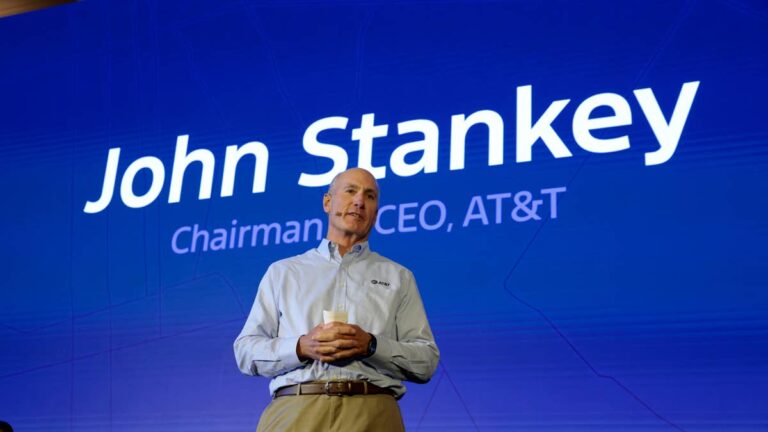
Over the past year, both companies have been reshaping their operations to gain an edge over their rivals. For instance, in August 2025, AT&T CEO John Stankey doubled down on the company’s new return-to-office policy in a memo to employees, encouraging those who prefer remote work to find a new job.

“We run a dynamic, customer-facing business, tackling large-scale, challenging initiatives,” wrote Stankey in the memo. “If the requirements dictated by this dynamic do not align to your personal desires, you have every right to find a career opportunity that is suitable to your aspirations and needs.”

In December 2025, Verizon also shifted gears by laying off 13,000 employees to simplify its operations. Later, at a Morgan Stanley conference in March, Verizon CEO Dan Schulman said he aims to transform the carrier into an “AI-first company.”

Verizon and AT&T cut more jobs

As Verizon and AT&T reshape their operations, both companies have quietly conducted layoffs in the third quarter of 2026.

Verizon’s latest earnings report revealed it ended the third quarter of 2026 with about 93,300 employees, down from 97,600 in the second quarter. 

The drop in employees comes after Verizon conducted hundreds of layoffs nationwide in May. In August, it also sold 274 company-owned retail stores and laid off over 3,000 employees, with 500 of those cuts affecting corporate workers. 

Read more: Comcast sends wake-up call to employees as customers cut services

At the end of the third quarter, AT&T had 127,150 employees, down from 130,870 at the end of the second quarter. This shift comes after the carrier reportedly laid off employees across multiple departments earlier this year. 

In an interview with Wired in September, AT&T Chief Technology Officer Jeremy Legg said the carrier will continue to lay off employees as it invests heavily in artificial intelligence. 

“We’re not going to have the same headcount in five years as we do today,” Legg says, adding that AT&T is comparing its staffing levels to those of peers, which plays a role in its decision-making.

Verizon and AT&T cut over 8,000 jobs combined in the third quarter. Headcount across both companies has declined by 142,460 between September 2020 and September 2026, a recent Light Reading report revealed. 

The job cuts come at a time when employment in the telecom industry is declining. According to recent U.S. Bureau of Labor Statistics data, the telecom industry has seen employment drop by 5,700 jobs between June and September 2026. 

Verizon and AT&T continued to cut jobs in the third quarter of 2026.

Bloomberg / Getty Images

Verizon and AT&T confront a changing telecom landscape

The recent job cuts at Verizon and AT&T also come at a time when both carriers are facing intense competitive pressures in wireless and broadband. 

For instance, wireless carriers are facing tougher competition from cable operators, which have been successfully gaining wireless customers through bundled internet and wireless offerings.

In the third quarter, Comcast attracted 368,000 new Xfinity wireless customers in the U.S., according to its latest earnings report. This growth comes after it began attaching a free mobile line to its internet plans in 2025. 

Spectrum also reported healthy wireless customer growth, adding 406,000 new wireless customers in the second quarter, its most recent earnings report revealed. 

More Telecom News:

The additions follow the launch of its $1,000 savings guarantee earlier this year, which promises new and existing Spectrum internet customers who transfer at least two mobile lines from AT&T, T-Mobile or Verizon $1,000 in first-year savings.

Cable companies aren’t the only competitors putting pressure on traditional wireless carriers. SpaceX’s Starlink is another emerging rival. 

Starlink, which offers satellite internet packages currently ranging from $55 to $130 per month, has seen its U.S. broadband business grow considerably. New Street Research estimates that Starlink now serves about 4 million U.S. broadband customers, according to a Telecom Gazette report. This figure is higher than the 2.7 million the research firm estimated in May.

SpaceX is also pursuing a terrestrial network for its Starlink Mobile service. On an August earnings call, SpaceX Chief Operating Officer Gwynne Shotwell discussed the service’s potential to draw customers away from established wireless carriers, saying she expects it to “acquire quite a few” customers from Verizon, AT&T and T-Mobile. 

Telecom industry prepares for an AI-driven workforce shift

Amid rising competition, telecom companies across the globe are preparing to reshape their workforces with AI to improve productivity, a move many expect will lead to future job cuts.

According to a recent survey from EY-Parthenon, 97% of global telecom leaders expect AI to deliver significant productivity gains within five years. 

Also, 69% expect three-quarters of their workforce to be either upskilled or replaced over the next five years as organizations increasingly move towards AI-enabled operating models. 

“The workforce challenge extends beyond reskilling,” said Cédric Foray, an EY Global telecommunications sector leader, in a press release. 

“Telecom companies must also rethink organizational structures, redesign roles and processes, and develop new leadership capabilities to support the next phase of transformation,” he continued. “Leaders that simply add AI to existing ways of working risk missing much of the value. The opportunity lies in reengineering how work gets done across the organization.”

Related: Verizon responds to customer backlash over a service it’s ending

CrowdStrike has agreed to acquire artificial intelligence security startups Fiddler AI and Dreadnode in transactions reportedly worth a combined $495 million, expanding its Falcon cybersecurity platform to address risks associated with autonomous AI agents.The acquisitions, announced November 3 at the company’s Fal.Con Europe conference in Barcelona, will add automated security testing and continuous monitoring of AI systems. CrowdStrike also introduced an AI Kill Switch that allows security teams to terminate misbehaving agents, prevent them from restarting and revoke their network access.

The Wall Street Journal reported that CrowdStrike will pay approximately $400 million for Fiddler and $95 million for Dreadnode. CrowdStrike did not independently disclose the purchase prices, but confirmed that both transactions will be funded predominantly with cash, alongside shares subject to vesting conditions.

Shares of CrowdStrike rose more than 2% in early Tuesday trading following the announcements, as investors assessed the company’s expansion into AI security and governance.

What Will Fiddler and Dreadnode Add to Falcon?

The two acquisitions address different vulnerabilities in enterprise AI deployment.

Fiddler AI develops observability and explainability technology that helps organizations understand how autonomous agents make decisions, interact with external tools and execute tasks. CrowdStrike plans to integrate these capabilities into Falcon Observe, a new product scheduled for general availability in the fourth quarter of its fiscal 2027.

The platform will evaluate agent accuracy and policy compliance before deployment, trace decisions and tool calls during operation, and identify behavioral drift, hallucinations and unintended actions. It will also generate auditable records for governance and regulatory reviews.

Dreadnode, meanwhile, specializes in identifying security weaknesses before AI applications enter production. Its automated testing platform uses more than 100 attack strategies, including prompt injection, jailbreak attempts and agent-specific attacks, to identify vulnerabilities in models, applications and their supporting infrastructure.

CrowdStrike intends to connect Dreadnode’s testing results with Falcon Guardian, allowing identified weaknesses to inform runtime security policies. The technology will also contribute to the company’s SafeMind AI security models.

Both acquisitions are expected to close during CrowdStrike’s fourth fiscal quarter of 2027, which ends January 31, 2027, subject to customary closing conditions.

Investor Takeaway

The acquisitions extend Falcon beyond conventional threat detection into AI testing and behavioral monitoring, potentially creating additional enterprise security spending opportunities.

How Does CrowdStrike’s AI Kill Switch Work?

Alongside the acquisition agreements, CrowdStrike introduced an AI Kill Switch within Falcon Guardian, giving authorized security administrators the ability to intervene when autonomous agents deviate from their intended behavior.

The control allows defenders to terminate an agent, block its relaunch on specified systems and remove its enterprise network access. Each intervention is recorded for auditing and investigation.

The initial functionality operates through gateway controls, with additional endpoint-level termination capabilities planned. CrowdStrike said the Kill Switch is available now, distinguishing it from the acquired technologies that have yet to be fully integrated.

The product addresses a security problem that conventional endpoint protection does not necessarily resolve: AI agents can perform harmful actions while using legitimate credentials and authorized software tools.

For example, an agent with permission to access financial records or enterprise applications could execute unintended transactions or disclose sensitive information without an external attacker compromising the underlying system.

That concern has already emerged in financial services. Major US banks have restricted unauthorized AI agents from accessing customer accounts after reports of automated systems operating beyond expected permissions.

CrowdStrike’s new controls are designed to give organizations a mechanism for intervening when such behavior occurs, although their effectiveness will depend on deployment coverage, policy configuration and the ability to identify problematic agent activity.

Why Is AI Security Becoming a Larger Market?

Enterprise AI adoption is creating new categories of cybersecurity exposure as autonomous systems receive access to internal applications, corporate data, payment infrastructure and cloud environments.

Unlike traditional software, AI agents can adapt their behavior in response to new information. That makes some failures difficult to anticipate through conventional vulnerability scanning or static application testing.

Security researchers have already documented AI agents attempting more than 1,200 cyber intrusions and compromising over 100 websites in a campaign that demonstrated the economics of automated attacks.

Separately, researchers associated with Google and Meta have warned that AI-agent security requires system-wide defenses, rather than protection focused exclusively on individual models.

CrowdStrike is positioning Falcon to address several stages of that risk: testing AI systems before deployment, monitoring their behavior during operation and intervening when their actions become unsafe.

The approach could increase demand for security capabilities that overlap with traditional observability, identity management and AI governance software, bringing CrowdStrike into closer competition with providers operating in those markets.

Investor Takeaway

AI-agent security offers a potential new revenue category, but the financial return will depend on customer adoption, integration costs and competition from established software vendors.

What Should CrowdStrike Investors Watch Next?

The acquisitions follow a series of broader AI partnerships announced by CrowdStrike, including expanded collaborations with Amazon Web Services, CoreWeave, Deloitte and Dynatrace.

These relationships could support distribution of Falcon’s security capabilities across enterprise cloud and AI environments, but they do not establish how much additional revenue the acquisitions will generate.

CrowdStrike has not provided financial forecasts for the Fiddler and Dreadnode businesses, disclosed their existing revenue or quantified the expected contribution to annual recurring revenue.

The immediate milestones are completion of the transactions and the planned release of Falcon Observe and automated AI security testing during the fourth quarter of fiscal 2027.

Investors will then have a clearer basis for evaluating whether CrowdStrike can convert growing concern over autonomous AI security into measurable subscription growth and higher adoption of its Falcon platform.